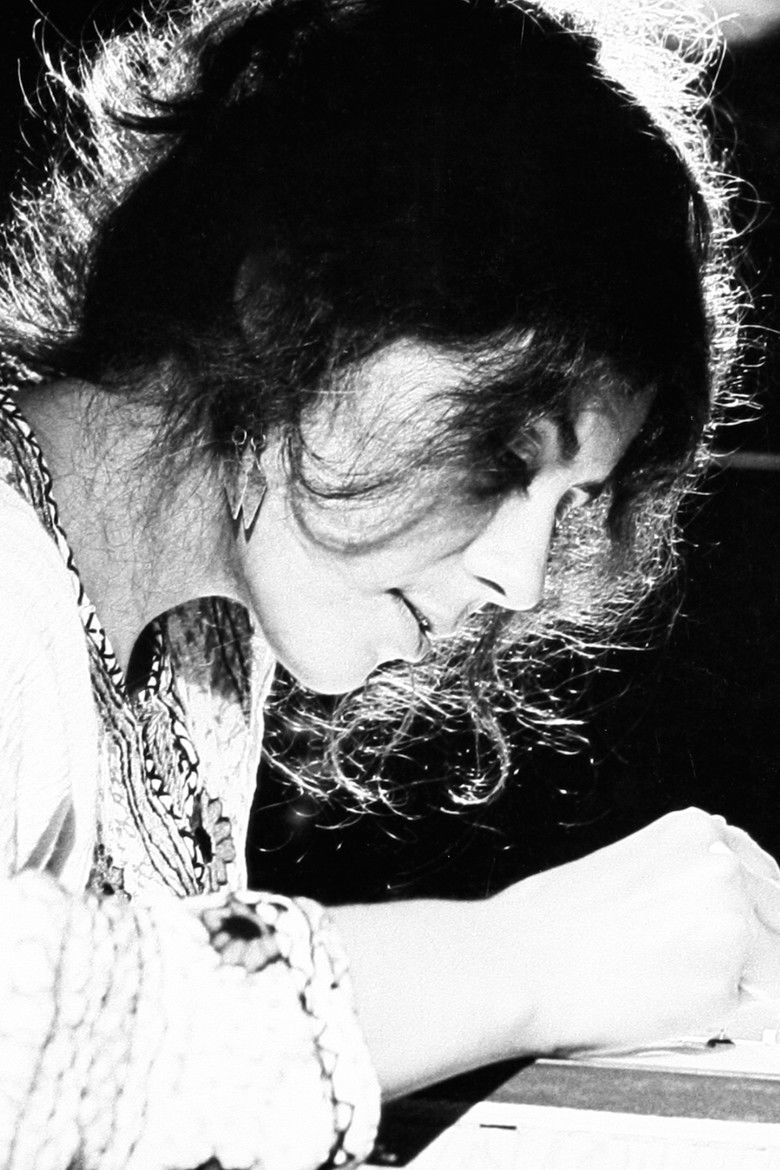
Caroline Leaf
Caroline Leaf (born August 12, 1946) is a legendary Canadian-American independent filmmaker, animator, and fine artist. She is globally renowned for pioneering fluid, handcrafted, "under-the-camera" animation techniques, primarily working with the National Film Board of Canada (NFB). Her work is celebrated for its emotional depth, psychological realism, and seamless visual transitions.
Main movies and TV shows
- The Street (1977) — Director
- Two Sisters (1991) — Director, Writer
- The Metamorphosis of Mr. Samsa (1978) — Director, Writer
- The Owl Who Married a Goose: An Eskimo Legend (1974) — Director
- Kate and Anna McGarrigle (1981) — Director
- I Met a Man (1991) — Director
- Interview (1979) — Director
- The Fox and the Tiger: A Chinese Parable (1986) — Director
- Pies (1983) — Writer
- Sand or Peter and the Wolf (1969) — Director
- Slavery (2004) — Director, Writer
- Suite for Freedom (2004) — Director
- Brain Battle (1995) — Director
- A Dog's Tale: A Mexican Parable (1986) — Director, Writer
- The Owl and the Pussycat (1985) — Director, Writer
- An Equal Opportunity (1982) — Director, Writer
- Orfeo (1970) — Director
Facts
- Born: August 12, 1946 (age 80)
- Place of birth: Seattle, United States
- Nationality: United States
- Occupations: Director, Screenwriter, Animator, Producer
- Education: Radcliffe College, Harvard University
Detailed biography
Biography and early work
Leaf was born in Seattle, Washington and lived in Boston. She attended Radcliffe College, Harvard University, and majored in architectural sciences and visual arts from 1964 to 1968. During her last year of studies, she enrolled in an animation class. The class was taught by Derek Lamb as a creative practice, not as a professional training. Lamb encouraged his students to focus on movement. Leaf worked with beach sand spread on a lightbox. This is when she created sand animation. Using this technique, she produced her first film Sand, or Peter and the Wolf and was awarded a scholarship from Harvard University. After graduation, she moved to Italy for a year to focus on her drawing. Returning to Harvard, she made her second animated film, Orfeo painting on glass. She then did freelance work from a studio in Boston and made How Beaver Stole Fire. Leaf moved to Montreal to work as an animator / director for the National Film Board of Canada in 1972. She worked at the NFB in the French and English animation departments until 1991. She made nine animated and live puppet films and a documentary film during those years.
Career
Leaf made her first film, Sand, or Peter and the Wolf, in 1969 at Harvard University. The short was made by pouring sand on a light box and manipulating the shapes frame-by-frame. Her second film at Harvard, Orfeo, was painted on glass under the camera. In 1972, she was invited to join the National Film Board of Canada's French Animation Studio. Her first film for the NFB was The Owl Who Married a Goose: An Eskimo Legend.
Making the film involved two trips to the Canadian Arctic, first to collaborate on designs with the Inuvialuk artist Agnes Nanogak and afterwards to record the sound effects for the film. Her most renowned short film was The Street, which was drawn directly under the camera with a mix of paint and glycerin. It was adapted from the short story by Mordecai Richler, and was nominated for the Academy Award for Best Animated Short Film at the 49th Academy Awards. It is also featured in the Animation Show of Shows.
Leaf co-directed an animated documentary film called Interview with Veronika Soul. She made a documentary film on the singers Kate & Anna McGarrigle, produced by Derek Lamb. In 1990, she made her first animation in nearly a decade by scratching into the emulsion of exposed black 70 mm colour film and reshooting it on 35 mm film. She worked for two years using this technique on her film Two Sisters original version called Entre Deux Soeurs. The tone and story of this film is dark. Two Sisters won the award for best short film at the Annecy International Animation Film Festival in 1991.
Leaf worked as an animator/director at the NFB until 1991. In 1991, she left animation to establish herself as a fine arts artist working in oils. In 2004, she contributed animation to a film about the Underground Railroad produced by Acme Filmworks in Los Angeles called Suite for Freedom. Her part was called Slavery.
Animation techniques and influence
Leaf discovered a spontaneous and artistic hand crafted way of animating in her animation class at Harvard and developed it in her professional career, pioneering: sand and paint-on-glass animation, along with hand etching on film stock. All of her techniques have been described as having "fluid transitions". She used different techniques to best tell the story of each of her films which showcased her narrative-based style. She created simple anecdotal and fictional stories based on literary works. Her films contain characters with relatable and complex issues. Her stories are mostly adaptations from literature and reflect her often dark narrative content. Every decision when I am animating is for the benefit of the story."
Leaf is also considered an influential Canadian filmmaker for her long standing service with the National Film Board of Canada and her representation of Canadian culture in her films. This can mainly be seen in her films The Street, The Owl who Married a Goose, and Kate and Anna McGarrigle.
Painting and drawing
Since 2000, Leaf has maintained a studio in London, England, and developed a personal style of painting in oils as well as drawings on paper. Her work is abstract and very much guided by mark-making and a personal search to create spaces a viewer is invited to enter. She has also developed a lively landscape style of direct observation from nature and works on field trips with paper and pencil and also iPad, using programs called Brushes and ProCreate.
Residencies
Michael Nock Foundation, Hong Kong, 2014
Abbaye de Fontevraud, France, 2014
Banff Centre for Arts and Creativity, Canada, summer 1997
Source: Wikipedia — Text licensed under CC BY-SA 4.0