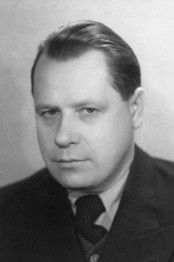
Ilya Kopalin
Ilya Petrovich Kopalin (1900–1976) was a Soviet film director renowned for his impactful documentaries. He is best remembered for capturing some of the most historic moments of the 20th century, including the Yalta Conference, where he filmed Stalin, Churchill, and Roosevelt, as well as the momentous flight of Yuri Gagarin, the first human to journey into space. Kopalin's work as a filmmaker focused on documenting significant events in Soviet history, earning him recognition as a key figure in Soviet documentary filmmaking.
Main movies and TV shows
- Moscow Strikes Back (1942) — Director
- Moscow (1927) — Director
- Velikoye proshchaniye (1953) — Director
- A Celebration of Our Youth (1955) — Director
- For Peace and Friendship (1954) — Director, Writer
- Crimean Conference (1945) — Director
- City of Great Destiny (1961) — Director
- First Flight to the Stars (1961) — Director
- The Unforgettable Years (1957) — Director
- Warsaw Meetings (1955) — Director
- International Concert (1954) — Director
- Albania (1953) — Director, Writer
- Land Renewal (1950) — Director
- New Albania (1949) — Director
- Day of the Victorious Country (1948) — Director
- The Liberated Czechoslovakia (1946) — Director, Writer
- Berlin Conference (1945) — Director
- The Court Is in Session (1943) — Director
- To Protect Native Moscow (1942) — Director
- Towards the Sun (1941) — Director
Facts
- Born: July 20, 1900
- Place of birth: Pavlovskoe, Russia
- Died: June 12, 1976, Moscow, Russia, aged 75
- Nationality: Russian Empire, Russian Socialist Federative Soviet Republic, Soviet Union
- Occupations: Director, Film editor, University teacher, Pedagogue
- Languages: Russian
Detailed biography
Life
He was born the son of a peasant on 2 August 1900 in the village of Pavlovskaya, Zvenigorod on the outskirts of Moscow. In his youth he worked in a factory in Moscow. After October 1917 he trained first as a land surveyor then as a pilot. A chance meeting with Dziga Vertov led him instantly into an interest in the cinema. Aged 24 he went to work for Vertov as a camera-man, working on films such as Kinoglaz, but later would work independently. His early films look at country life and agriculture in the newly created USSR.
His work gained him six Stalin Prizes and the Order of Lenin. He died in Moscow on 12 June 1976.
Source: Wikipedia — Text licensed under CC BY-SA 4.0