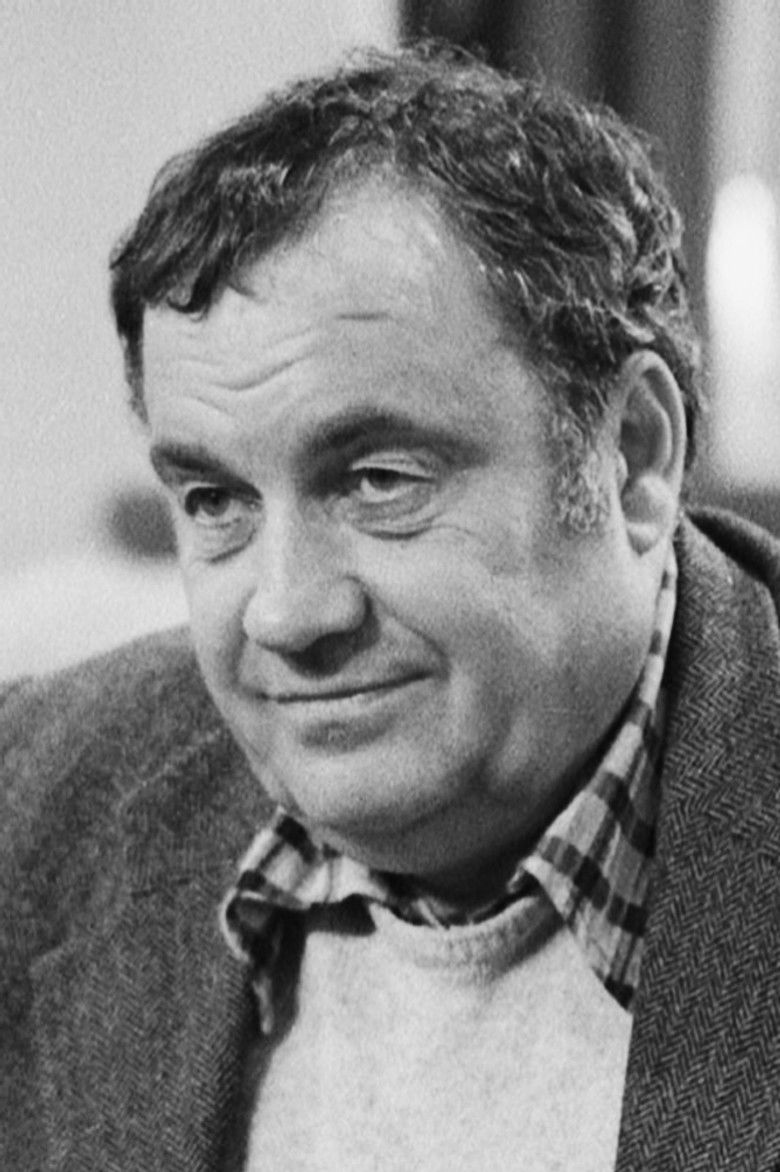
Eldar Ryazanov
Eldar Aleksandrovich Ryazanov (18 November 1927 – 30 November 2015) was a Soviet and Russian film director, screenwriter, poet, actor and pedagogue. Description above from the Wikipedia article Eldar Ryazanov, licensed under CC-BY-SA, full list of contributors on Wikipedia.
Main movies and TV shows
- The Irony of Fate, or Enjoy Your Bath! (1976) — airplane passenger
- Office Romance (1977) — (uncredited)
- Unbelievable Adventures of Italians in Russia (1974) — doctor on the airplane wing
- Beware of the Car! (1966) — Director, Writer
- The Garage (1979) — спящий сотрудник
- Station for Two (1983) — railroad supervisor (uncredited)
- Carnival Night (1956) — Director
- Ruthless Romance (1984) — Director, Writer
- Old Men: Robbers (1972) — Director, Writer
- Ballad of a Hussar (1963) — Director
- Say a Word for the Poor Hussar (1981) — Director, Writer
- Zigzag of Success (1968) — Director, Writer
- Promised Heaven (1991) — (uncredited)
- Dear Yelena Sergeyevna (1988) — sosed
- Forgotten Tune for the Flute (1987) — episode (uncredited)
- Give Me a Complaints Book (1965) — главный редактор газеты «Юность» (нет в титрах)
- Girl without an Address (1958) — Director
- Sovershenno seryozno (1961) — Director, Writer
- Andersen. Life Without Love (2006) — Хозяин гробовой мастерской
- Hello, Fools! (1996) — Director, Writer
Facts
- Born: November 18, 1927
- Place of birth: Samara, Russia
- Died: November 30, 2015, Moscow, Russia, aged 88
- Nationality: Russia, Soviet Union
- Occupations: Director, Screenwriter, Actor, Writer
- Languages: Russian
- Education: Gerasimov Institute of Cinematography
Family
- Spouse: Zoya Fomina
- Children: Olga Ryazanova
Detailed biography
Biography
Eldar Aleksandrovich Ryazanov was born in Samara. His father, Aleksandr Semyonovich Ryazanov, was a diplomat who worked in Tehran. His mother, Sofya Mikhailovna (née Shusterman), was of Jewish descent.
In 1930, the family moved to Moscow, and soon his parents divorced. He was then raised by his mother and her new husband, Lev Mikhailovich Kopp. In 1937 his father was arrested by the Stalinist government and subsequently served 18 years in the correctional labour camps.
Ryazanov began to create films in the early 1950s. In 1955, Ivan Pyryev, then a major force in the Soviet film industry, suggested to him to begin work on his film Carnival Night. At first, Ryazanov refused, as he wanted to make "serious films", but then was convinced to begin, as Pyryev believed that "anybody could shoot a melodrama, but only a few can create good comedy." He won instant success, and began to release more films.
He was named a People's Artist of the USSR in 1984, and received the USSR State Prize in 1977. He won the Nika Award for Best Director in 1991 for the film Promised Heaven.
Among his most famous films are Carnival Night (1955), Hussar Ballad (1962), Beware of the Car (1966), The Irony of Fate (1975), Office Romance (1977), The Garage (1980), Station for Two (1982) and A Cruel Romance (1984). Ryazanov's main genre was tragicomedy.
Illness and death
Ryazanov had an acute ischemic stroke in November 2014. He was admitted to a Moscow hospital on 21 November 2015 due to shortness of breath. He died around midnight on 30 November 2015, of heart and lung failure, at the age of 88.
Legacy
Ryazanov was one of the most successful film directors of the Soviet Union, and his films are still well-known in the post-USSR landscape. The Irony of Fate is still aired every December 31 in most post-USSR countries, except for Ukraine since the 2014 Revolution of Dignity. A street in Moscow was named after him in 2017, and a museum and memorial dedicated to his memory was opened on the site of his childhood home in Samara.
Criticism
In his book "Nepoladki v russkom dome" Sergey Kara-Murza wrote that "Ryazanov and the artists close to him, consumed by anti-Soviet feeling, lovingly reflected and thereby in many ways created a certain social and spiritual world - and this world turned out to be possible only when it was surrounded and protected by the crude structures of the Soviet way of life."
Source: Wikipedia — Text licensed under CC BY-SA 4.0