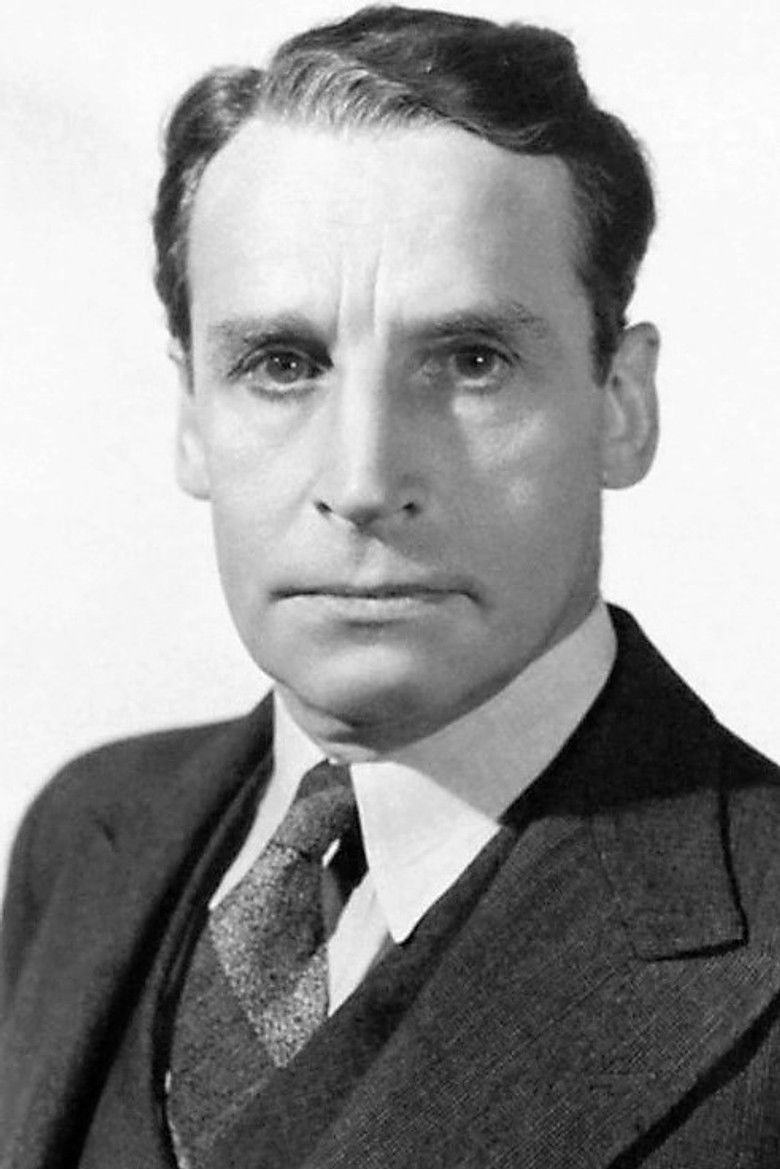
Henry Daniell
From Wikipedia, the free encyclopedia Charles Henry Daniell (5 March 1894 – 31 October 1963) was an English actor who had a long and prestigious career on stage as well as in films. He is perhaps best known for his villainous roles in films like The Great Dictator, The Philadelphia Story and The Sea Hawk. Daniell was given few opportunities to play a 'good guy', including a supporting part as Franz Liszt in the biographical film Song of Love (1947). His last name is sometimes spelled "Daniel". Daniell's film debut came in 1929 in Jealousy. He appeared as Professor Moriarty in the Basil Rathbone-Nigel Bruce Sherlock Holmes film The Woman in Green (1945). He appeared in other films such as Charlie Chaplin's The Great Dictator (1940) (playing Garbitsch, to sound like "garbage", a parody of Joseph Goebbels), and The Body Snatcher (1945, with Boris Karloff and Bela Lugosi) – as well as two other films in the Sherlock Holmes/Basil Rathbone series: The Voice of Terror (1942) and Sherlock Holmes in Washington (1943) with fellow Moriarty George Zucco. Daniell played the sleazy Baron de Varville opposite Greta Garbo in Camille (1936). Another early triumph was his portrayal of Cecil in The Private Lives of Elizabeth and Essex (1939). He also played the treacherous Lord Wolfingham (no relation to Francis Walsingham) in The Sea Hawk (1940), fighting Errol Flynn in what is often considered one of the most spectacular sword fighting duels ever filmed. When Michael Curtiz cast him in this film, Henry Daniell initially refused because he couldn't fence. Curtiz accomplished the climactic duel through the use of shadows and over-shoulder shots, with a double fencing Flynn with ingenious inter-cutting of their faces. Towards the end of the Second World War, he appeared in one of his most memorable film roles, as the cruel Mr. Brocklehurst in Jane Eyre (1944), opposite Joan Fontaine who played Eyre. That same year he appeared in The Suspect as Charles Laughton's blackmailing next-door neighbour. In the 1950s and 1960s, he did much television, and also appeared as the malevolent Dr. Emil Zurich in Edward L. Cahn's The Four Skulls of Jonathan Drake (1959), and in an episode of Maverick, "Pappy" opposite James Garner the same year. An absolute professional, he was always on the set when needed, and impatient when delays in filming took place. Much in demand for his dry, sardonic delivery, Daniell moved easily from big-budget films, such as (uncredited) Mutiny on the Bounty (1962), to television without difficulty. In 1957, Daniell appeared as King Charles II of England in the NBC anthology series The Joseph Cotten Show in the episode "The Trial of Colonel Blood", with Michael Wilding in the title role. In the same year he played the instructing solicitor to Charles Laughton's leading counsel barrister in Witness for the Prosecution (1957). The actor claimed one of his favourite roles was as Tony Curtis' supervisor in the acclaimed Blake Edwards film Mister Cory (1957) at a time when the actor's career was clearly slowing down, but Daniell retained some of the best and most memorable lines in the movie, "A gentleman never grabs. Manners, Mister Cory. I find them a prerequisite in any circumstance."
Main movies and TV shows
- The Great Dictator (1940) — Garbitsch
- Witness for the Prosecution (1957) — Mayhew
- My Fair Lady (1964) — Ambassador (uncredited)
- The Philadelphia Story (1940) — Sidney Kidd
- Mutiny on the Bounty (1962) — Court-martial Judge (uncredited)
- Holiday (1938) — Seton Cram
- War and Peace (1956) — (uncredited)
- The Comancheros (1961) — Gireaux
- Lust for Life (1956) — Theodorus van Gogh
- The Body Snatcher (1945) — Dr. Wolfe 'Toddy' MacFarlane
- The Sea Hawk (1940) — Lord Wolfingham
- The Woman in Green (1945) — Professor James Moriarty
- Jane Eyre (1943) — Henry Brocklehurst
- Camille (1936) — Baron de Varville
- Voyage to the Bottom of the Sea (1961) — Dr. Zucco
- Combat! (1962) — Minister
- Sherlock Holmes and the Voice of Terror (1942) — Sir Anthony Lloyd
- The Egyptian (1954) — Mekere
- The Private Lives of Elizabeth and Essex (1939) — Sir Robert Cecil
- Sherlock Holmes in Washington (1943) — William Easter
Facts
- Born: March 5, 1894
- Place of birth: London, United Kingdom
- Died: October 31, 1963, Santa Monica, United States, aged 69
- Nationality: United Kingdom
- Occupations: Actor
- Languages: English
- Education: St Paul's School, Gresham's School
Detailed biography
Early life
Daniell was born in Barnes, then lived in Surrey, and was educated at St Paul's School in London and at Gresham's School in Holt, Norfolk.
English stage
He made his first appearance on the stage in the provinces in 1913, and on the London stage at the Globe Theatre on 10 March 1914, in a walk on role in the revival of Edward Knoblock's Kismet. He followed it with Monna Vanna and The Sphinx.
In 1914, he joined the 2nd Battalion of the Norfolk Regiment during World War I, but was invalided out the following year after being severely wounded in combat. Thereafter, he appeared at the New Theatre in October 1915 as Police Officer Clancy in Stop Thief! and, from May 1916, at the Theatre Royal, Haymarket.
Broadway and early films
In April 1921, Daniell appeared at the Empire Theatre in New York City, as Prince Charles of Vaucluse in Clair de Lune, and subsequently toured for the next three years, reappearing in London at the Garrick Theatre in August 1925 as Jack Race in Cobra.
Daniell returned to Broadway in The Woman on the Jury (1923) and The Second Mrs. Tanqueray (1924).
He again went to New York for the first six months of 1929, appearing at the Morosco Theatre in January as Lord Ivor Cream in Serena Blandish, returning in July to London where he played John Carlton in Secrets at the Comedy Theatre.
He again toured America in 1930–31, this time appearing on the Pacific Coast at Los Angeles as well as New York once more. He returned to London for another packed programme of stage performances, which he continued in Britain and the United States while also beginning his film career in 1929 with The Awful Truth, with leading lady Ina Claire.
He was also in Jealousy (1929) with Jeanne Eagels in her last role. He was in The Last of the Lone Wolf (1930) and returned to Broadway for Heat Wave (1931) and For Services Rendered (1933). He appeared in the West End in Walter Hackett's Afterwards in 1933.
Daniell returned to films in the British The Path of Glory (1934) then was back on Broadway in Kind Lady (1935).
On Broadway he was in Murder Without Crime (1943) and Lovers and Friends (1943-44) with Katherine Cornell. On Broadway, Daniell was in revivals of The Winter's Tale (1946), Lady Windermere's Fan (1946–47), and The First Mrs. Fraser (1947).
Film career, 1936–1950
Metro-Goldwyn-Mayer cast him in The Unguarded Hour (1936), Camille (1936) with Greta Garbo (as the Baron de Varville), Under Cover of Night (1936), The Thirteenth Chair (1937), The Firefly (1937), and Madame X (1937).
Columbia borrowed him for a role in Holiday (1938), returning to MGM for Marie Antoinette (1938), playing Nicholas de la Motte. He appeared in Yankee Fable on Broadway.
At Warner Bros., Daniell appeared in The Private Lives of Elizabeth and Essex (1939) as Robert Cecil, 1st Earl of Salisbury, with Bette Davis and Errol Flynn in the leads, directed by Michael Curtiz.
He followed it with We Are Not Alone (1939), All This, and Heaven Too (1940), and The Sea Hawk (1940). In the latter, directed by Curtiz, he played the treacherous Lord Wolfingham (no relation to Francis Walsingham), fighting Errol Flynn in what has been considered one of the most spectacular sword fighting duels ever filmed. When Michael Curtiz cast him in this film, Daniell initially refused the role because he could not fence. Curtiz accomplished the climactic duel through the use of shadows and over-shoulder shots, with a double fencing Flynn with ingenious intercutting of their faces.
Charlie Chaplin borrowed him for a part in The Great Dictator (1940) (playing Garbitsch, to sound like "garbage", a parody of Joseph Goebbels), then he returned to MGM for The Philadelphia Story (1940), and A Woman's Face (1940).
At Warner, Daniell had a role in a B movie, Dressed to Kill (1941). He did The Feminine Touch (1941) at MGM, Four Jacks and a Jill (1942) at RKO, and Castle in the Desert (1942) at Fox.
Daniell appeared in the Basil Rathbone-Nigel Bruce Sherlock Holmes film Sherlock Holmes and the Voice of Terror (1943) at Universal. For the studio, he was also cast in Nightmare (1942) and The Great Impersonation (1942).
Back at MGM, he was in Reunion in France (1942), then he returned to Universal for another Sherlock Holmes film, Sherlock Holmes in Washington (1943). At Warner Bros., he was in Mission to Moscow (1943) playing Minister von Ribbentrop. He returned to Broadway for a revival of Hedda Gabler (1942).
He appeared in Watch on the Rhine (1943), Jane Eyre (1943), and The Suspect (1944), as Charles Laughton's blackmailing next-door neighbour.
Daniell had a lead role in The Body Snatcher (1945) with Boris Karloff and Bela Lugosi, followed by Hotel Berlin (1945) and a third Sherlock Holmes film, The Woman in Green (1945), this time as Holmes arch-nemesis Professor Moriarty.
Daniell was King William III in Captain Kidd (1945). He had the lead in a TV version of Angel Street (1946) then was William of Pembroke in The Bandit of Sherwood Forest (1946) at Columbia.
Daniell appeared as composer Franz Liszt in Song of Love (1947) starring Katharine Hepburn. He was villainous in The Exile (1947), Wake of the Red Witch (1948), and Siren of Atlantis (1949). On Broadway, he appeared in That Lady (1950).
Later films
Daniell appeared in some big screen epics such as The Egyptian (1954) (directed by Curtiz), The Prodigal (1955), and Diane (1956), but was increasingly in television: Lux Video Theatre, Jane Wyman Presents The Fireside Theatre, TV Reader's Digest, Producers' Showcase (an adaptation of The Barretts of Wimpole Street), and Telephone Time.
He had a rare contemporary part in The Man in the Gray Flannel Suit (1956) and was in Lust for Life (1956). In 1957, he played the instructing solicitor to Charles Laughton's leading counsel barrister in Witness for the Prosecution (1957).
Daniell claimed one of his favourite roles was as Tony Curtis's supervisor in the Blake Edwards film Mister Cory (1957), at a time when his career was clearly slowing down. He spoke some of the best and most memorable lines in the movie, "A gentleman never grabs. Manners, Mister Cory. I find them a prerequisite in any circumstance." He could also be seen in the films Madison Avenue (1961), Voyage to the Bottom of the Sea (1961), The Comancheros (1961), The Notorious Landlady (1962), Five Weeks in a Balloon (1962), The Chapman Report (1962), and Mutiny on the Bounty (1962).
His last role was a small uncredited appearance as the British ambassador in the 1964 film My Fair Lady directed by his old friend George Cukor. He appears in the embassy ball scene. He is seen as Eliza arrives and when introduced to her shakes her hand and says "Miss Doolittle". Later, Daniell presents Eliza to the Queen of Transylvania with the one line, "Miss Doolittle, ma'am." In the commentary on the DVD, at the moment he appears on-screen in the role, it is mentioned that the day he shot the scene was "his last day on earth", as he died from a heart attack that very evening either (reports differ) at his home, or on the set of My Fair Lady on 31 October 1963.
Death
An obituary distributed by United Press International and datelined Hollywood reported, "Daniell was stricken yesterday from Halloween day at his home in nearby Santa Monica a few hours before he was due to report on the set of the film version of My Fair Lady at Warner Bros. studio." He died of a myocardial infarction.
Personal life
Daniell married Ann Knox and, in the years following World War II, lived in Los Angeles, California. They had one child.
Source: Wikipedia — Text licensed under CC BY-SA 4.0