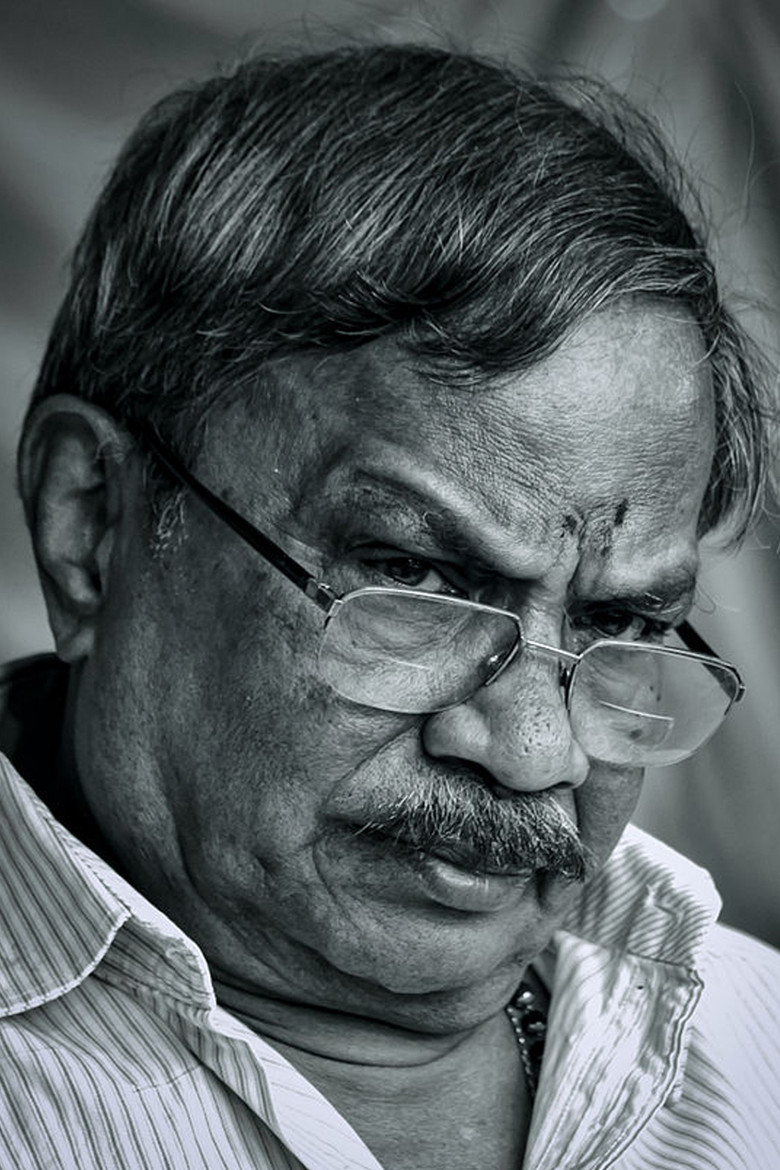
M T Vasudevan Nair
Madathil Thekkepaattu Vasudevan Nair (born 9 August 1933), popularly known as MT, is an Indian author, screenplay writer and film director. He is a prolific and versatile writer in modern Malayalam literature, and is one of the masters of post-Independence Indian literature. He was born in Kudallur, a small village in the present day Palakkad district (Palghat), which was under the Malabar District in the Madras Presidency of the British Raj. He has been involved deeply in the film industry and has worked as a script writer, director, lyricist and producer of Malayalam films. He has directed seven films and written the screenplay for around 54 films. He won the National Film Award for Best Screenplay four times for: Oru Vadakkan Veeragatha (1989), Kadavu (1991), Sadayam (1992), and Parinayam (1994), which is the most by anyone in the screenplay category. He was awarded the highest literary award in India, Jnanpith, in 1995 for his overall contribution to Malayalam literature. In 2005, India's third highest civilian honour Padma Bhushan was awarded to him.
Main movies and TV shows
- Oru Vadakkan Veeragatha (1989) — Writer
- Kerala Varma Pazhassi Raja (2009) — Writer
- Neelathamara (2009) — Writer
- Thazhvaram (1990) — Writer
- Vaishali (1988) — Writer
- Daya (1998) — Writer
- Sadayam (1992) — Writer
- Perumthachan (1991) — Writer
- Utharam (1989) — Writer
- Oru Cheru Punchiri (2000) — Director, Writer
- Amrutham Gamaya (1987) — Writer
- Uyarangalil (1984) — Writer
- Nirmalyam (1973) — Director, Writer
- Ezhamathe Varavu (2013) — Writer
- Anubandham (1985) — Writer
- Oppol (1981) — Writer
- Vilkkanundu Swapnangal (1980) — Writer
- Manorathangal (2024) — Creator, Writer
- Ennu Swantham Janakikutty (1998) — Writer
- Sukrutham (1994) — Writer
Facts
- Born: July 15, 1933
- Place of birth: Kudallur, India
- Died: December 25, 2024, Kozhikode, India, aged 91
- Nationality: India, British Raj, Dominion of India
- Occupations: Director, Screenwriter, Writer, Short story writer
- Languages: Malayalam, English
- Education: Government Victoria College, Palakkad
Detailed biography
Early life and education
Madath Thekkepaattu Vasudevan Narayanan Nair was born on 15 July 1933 in the village of Kudallur, then in Ponnani Taluk (now in Pattambi Taluk, Palakkad District). His birthplace fell under Malabar District in erstwhile Madras Presidency of the British Raj. He was the youngest of four children born to T. Narayanan Nair and Ammalu Amma. His father was in Ceylon, and he spent his early days in Kudallur and in his father's house in Punnayurkulam, a village in the present-day Thrissur district. Although his family did not nurture an interest in reading, Nair started writing at an early age and had his work published in magazines.
Nair attended Malamakkavu Elementary School and then Kumaranelloor High School. He had to break education after high school, and when he joined college in 1949, he was advised to opt for the science stream as it was felt that a degree in science secured a job faster than any other degree. He obtained a degree in chemistry from Victoria College, Palakkad in 1953.
Nair taught mathematics in Pattambi Board High School and Chavakkad Board High School for over a year and worked in M.B. Tutorial College, Palakkad during 1955–56. He also worked as a gramasevakan at a block development office in Taliparamba, Kannur for a few weeks before joining Mathrubhumi Weekly as subeditor in 1957.
Short stories
Nair began writing at a very young age, inspired by his elder brothers who wrote time and again in several literary journals and poet Akkitham Achuthan Namboothiri who was his senior at high school. He initially wrote poems but soon changed to prose writing. His first published work was an essay on the diamond industry of ancient India, titled "Pracheenabharathathile Vaira Vyavasayam", which appeared in Keralakshemam, a biweekly published by C. G. Nair from Guruvayoor. His first story "Vishuvaghosham" was published in Madras-based Chitrakeralam magazine in 1948. The story explores the feelings of a boy too poor to have firecrackers of his own, as he stands listening to the sounds of crackers coming from the houses of the rich celebrating the new year festival of Vishu: an overwhelming sense of loss, the painful realisation that this is the way things are and the way they're likely to stay. His first book, Raktham Puranda Manaltharikal was published in 1952.
Nair's first literary prize came to him while he was a student at Victoria College, Palakkad – his short story "Valarthumrigangal" (Pet Animals) won first prize in the World Short Story Competition conducted by The New York Herald Tribune, Hindustan Times, and Mathrubhumi in 1954. It was a short story delineating the pathetic plight of circus artistes. The numerous stories that followed dealt with themes culled from widely different milieus and contexts but were uniformly successful and popular.
The noted collections of his stories are Iruttinte Athmavu, Olavum Theeravum, Bandhanam, Varikkuzhi, Dare-e-Salam, Swargam Thurakkunna Samayam, Vaanaprastham and Sherlock. "Iruttinte Athmavu" ("Soul of Darkness"), one of the most celebrated among his short stories, is the heart wrenching story of a 21-year-old man, regarded as a lunatic by everyone and treated abominably. The story reveals the insanity behind the civilised and supposedly sane world. The story "Sherlock" moves between the rural milieu familiar to Nair's readers and the sophisticated world of Indian immigrants in the US, highlighting the contrast between them with subtle irony. Nair wrote passionately of the cruelty hidden at the heart of a seemingly idyllic rural life ("Kurukkante Kalyanam" or "The Jackal's Wedding" and "Shilalikhithangal" or "Stone Inscriptions") and of the privations endured by those dependent on the agricultural cycle ("Karkitakom" and "Pallivalum Kalchilambum" or "Sacred Sword and Anklets"). In the story "Vanaprastham", he studies the delicately balanced relationship between a teacher and a student that has miraculously survived the years.
Nair was of the opinion that short story is a genre in which a writer can achieve near perfection. He, along with T. Padmanabhan, served as bridges between the early modern short story writers in Malayalam, of the so-called renaissance, and the new short story of the late fifties and sixties.
Naalukettu and Asuravithu
Nair's debut novel Pathiravum Pakalvelichavum (Midnight and Daylight) was serialised in Mathrubhumi Weekly in 1957. His first major work Naalukettu (The Legacy; 1958) is a veritable depiction of the situation which prevailed in a typical joint family when its fortunes is on a steady decline. The title attributes to Nālukettu, a traditional ancestral home (Taravad) of a Nair joint family. The novel remains a classic in Malayalam fiction. It contributed to the renewal of a literary tradition initiated by S. K. Pottekkatt, Thakazhi Sivasankara Pillai, Vaikkom Muhammad Basheer and Uroob in the 1950s. It was given the Kerala Sahitya Akademi Award in 1959. It has had 23 reprints and was translated into 14 languages and had a record sale of a half a million copies (as of 2008) and still features in the best-seller lists. Nair himself adapted the novel into a television film for Doordarshan in 1995. It won the Kerala State Television Award for the year 1996.
Asuravithu (The Demon Seed; 1972) which is set in a fictional Valluvanadan village named Kizhakkemuri can be considered almost as a sequel to Naalukettu. It has the same geophysical and socio-cultural setting. The novel describes the plight of the protagonist Govindankutty, the youngest son of a proud Nair tharavadu, as he is trapped between the social scenario, social injustice and his own inner consciousness. In Asuravithu there are clear indications of the damaging impact of an alien culture in the pollution of the indigenous culture and the disintegration of the family and the community. These two early novels—Naalukettu and Asuravithu—depict a phase in which the economic and cultural scenario of Kerala manifested symptoms which were to develop into dangerous ecocidal tendencies at a later stage.
Manju and Kaalam
His later novels, such as Manju (Mist; 1964) and Kaalam (Time; 1969), are characterised by profuse lyricism which cannot be found in Naalukettu or Asuravithu. The eco-feminist theme of patriarchal domination and exploitation gained more prominence in Manju, Nair's only novel with a female protagonist (Vimala). Set in the splendid landscape of Nainital, it stands apart as set in a milieu different from the usual one, the Valluvanadan village. The plot of the novel is allegedly similar to a Hindi story Parinde (Birds, 1956), by Nirmal Verma. However, both Nair and Verma had rejected these claims.
In the novel Kaalam, Nair returned to his favourite milieu, the dilapidated joint-family Nair tarwad set against the wider backdrop of the Valluvanadan village in the backdrop of the crumbling matrilineal order of Kerala in a newly independent India. Sethu, the protagonist, is toppled over by the eddies of social, cultural and economic transformation. Kaalam, though not strictly autobiographical, has a strong autobiographical element in it. Manju had a film adaptation in 1983, written and directed by Nair himself. The novel also had a Hindi-language film adaptation titled Sharad Sandhya.
Randamoozham
Randamoozham (The Second Turn; 1984), retells the story of the Mahabharatha from the point of view of Bhimasena, supposed to be the son of Vayu; this is demystified or demythified in the novel. In this novel, Bhima gains, through the author's ironic undertones, a new psychological depth. "I have not changed the framework of the story by the first Vyasa, Krishna-Dwaipayana. I have read between his lines and expanded on his pregnant silences," says the author.
Varanasi
Nair's novel Varanasi (2002) is based around a journey to Varanasi, a pilgrim centre in North India. With no intricate plot, the novel is an experiment. It was well received in the literary circles but received criticism from critic and painter M. V. Devan.
Other works
Nair wrote the novel Arabi Ponnu (The Gold of Arabia) along with N. P. Mohammed. Nair and Mohamed stayed in a rented house in Karuvarakkundu village, Malappuram for a period of two weeks to complete this work.
Nair authored two books on the craft of writing—Kaathikante Panippura and Kaathikante Kala—and his anecdotal columns articles on various topics and speeches on different occasions have been compiled under the titles Kilivaathililude, Kannanthalippookkalude Kaalam, Vakkukalude Vismayam and Eekakikalude Sabdam. Manushyar Nizhalukal and Aalkkoottathil Thaniye are his travelogues.
Other activities
Nair occupied many important positions in various literary bodies, including the presidency of Kerala Sahitya Akademi and the chairmanship of Tunchan Memorial Trust.
Nair joined the Mathrubhumi Group of Publications in 1956. He served as editor of periodicals and chief editor of Mathrubhumi Illustrated Weekly.
He espoused and promoted secularism through his literature, cinema, and public life. Nair created secular intellectual movement in Kerala in the 1990s for peace with many intellectuals.
Film career
Nair is one of the most distinguished and well accepted script writers and directors in Malayalam cinema. He has directed seven films and written the screenplay for around 54 films. He won the National Film Award for Best Screenplay four times for: Oru Vadakkan Veeragatha (1989), Kadavu (1991), Sadayam (1992), and Parinayam (1994), which is the most by anyone in the screenplay category.
Nair wrote his first screenplay in 1965 for Murappennu, at the behest of producer Shobhana Parameswaran Nair. The film was an adaptation of his story "Snehathinte Mukhangal". The Hindu described it as "a well-made film with a compelling plot" and as "one of the most significant films in the history of Malayalam cinema".
Nair was the first and foremost script writer in Malayalam who wrote screenplays after having learnt cinema as a distinctive visual art which has its own language, grammar and structure. It was only after he began writing screenplays the Malayali viewers began to consider film script as a distinctive genre which has its own genuine features. Also, it was M.T who elevated this medium of writing as a literary form.
Nair's screenplays have won social attention for the portrayal of the social and cultural crisis in the contemporary life of Kerala. The
disintegration of human values and relationship which creates identity crisis, sense of loss, dehumanisation, alienation from one's own surroundings, etc. have been presented in its depth by Nair more than any other writers. The best examples are Kanyakumari, Varikkuzhi, Vilkkanundu Swapnangal, Sadayam, Asuravithu, Edavazhiyile Poocha Mindappoocha, Akshrangal, Aalkkoottathil Thaniye, Aaroodam etc. A salient aspect of Nair's screenplays is the effective presentation of the ecological or geographical factors and elements making use of the visual possibilities of their portrayal. Another unique feature is the language employed in them. Some of his screenplays are known for giving new interpretations to historical characters and historical stories. For instance, he gives the legends woven around the popular story of Perumthachan a new interpretation in his screenplay, based on his own assessment of Perumthachan's character. According to the folklore Vadakkanpattu (Northern Ballads), Chandu is said to have betrayed his cousin because he was jealous of Aaromal's popularity and abilities. But Nair's Oru Vadakkan Veeragatha, set in 16th-century Kerala, presents an alternative version of the same legend, as it presents the incident from Chandu's perspective, suggesting that grave injustice has been done to Chandu by wrongly accusing him of replacing the rivets.
In 1973, Nair made his directorial debut with Nirmalyam which won the National Film Award for Best Feature Film. The film is about a village oracle whose services are no longer needed by the community and whose family begins to fall apart. Nair scripted and directed many more films including the award-winning Bandhanam, Kadavu and Oru Cheru Punchiri. Kadavu won awards at the Singapore International Film Festival and Tokyo International Film Festival. His cinema work also includes three documentaries and one TV series. He has written songs for the 1981 film Valarthumrugangal which were set to tune by M. B. Sreenivasan.
Nair was the chairman of Indian Panorama of the 46th National Film Awards (1998). He has also been a member of Film Finance Corporation, National Film Development Corporation and Film Censoring Committee. He has also served as a faculty in the Film and Television Institute, Pune.
Literary style and themes
Nair was born and brought up in a sylvan village on the banks of Nila. The writer has so often acknowledged his indebtedness to the ethos of his village and to Nila which has ever been the mainspring of his creative inspiration. Nila occurs and re-occurs in Nair's fiction, as a presence and as a symbol, endorsing this view. The staple locale of his fiction is the Valluvanadan village. The landscape and ethos of the Valluvanad region and the transformations undergone by them in the course of the century, involving relics of the tarawad and the communal tensions provide a challenging theme for the highly evocative style of Vasudevan Nair's narrative art. The temporal milieu of Nair's fiction stretches over the second half of the twentieth century, a period of tremendous social, cultural and economic changes.
It was in the sixties that Nair rose to prominence as a writer. The phase of social realism had come to an end. In his opinion, class-war the ideal which had inspired the writers belonging to the preceding generation had almost lost its relevance by the time he entered the literary career. The prominent Malayalam writers of the pre-independence phase—Thakazhi, Vallathol and Kesavadev—were all stimulated by the progressive leftist ideals. They focussed their attention on social conflict as the theme for their writings—Conflict between capital and labour, between the landlord and the tenant, between the oppressor and the oppressed. Nair felt that this theme of conflict was an outdated phenomenon in the context of present Kerala. The protagonists of Nair are men out of society and at war with themselves, a sharp contrast to the heroes of Kesavadev or Thakazhi who fight a losing war against the hostile forces in the society. Nair, in spite of his broad and deep sympathy for the marginalised, doesn't identify himself with any particular political ideology or movement.
Recognition, awards, and honours
Nair is regarded as one of the masters of post-Independence Indian literature.
He was bestowed with honorary D.Litt. degree by the Calicut University and Mahatma Gandhi University.
As of 2016 the Library of Congress in Washington, D.C., United States, had a collection of 62 books authored by Nair (including some English translations) or about him.
Novels
Naalukettu (The Legacy). Thrissur: Current. 1958. ISBN 978-81-226-0727-7. {{cite book}}: ISBN / Date incompatibility (help)
Pathiravum Pakalvelichavum (Midnight and Daylight) (in Malayalam). Thrissur. ISBN 9788126409792.
M. T. Vasudevan Nair; N. P. Mohammed (1960). Arabi Ponnu (The Gold of Arabia). Thrissur: Current. ISBN 978-81-713-0516-2. {{cite book}}: ISBN / Date incompatibility (help)
Asuravithu (The Demon Seed). Thrissur: Current. 1962. ISBN 978-81-7130-331-1. {{cite book}}: ISBN / Date incompatibility (help)
Manju (Mist). Thrissur: Current. 1964.
Kaalam (Time). Thrissur: Current. 1969.
Vilapayathra. Kottayam: SPCS. 1978. ISBN 978-8122611366.
Randamoozham (The Second Turn). Kottayam: SPCS. 1984. ISBN 81-226-0731-4.
Varanasi. Thrissur: Current. 2002. ISBN 978-8122613674.
Short story collections
Raktham Puranda Mantharikal (Blood-soaked Sand). Palghat: Kalaradhaka Sangham. 1952. ISBN 978-8122610550. {{cite book}}: ISBN / Date incompatibility (help) (Collection of 5 stories)
Veyilum Nilavum (Sunlight and Moonlight). Madras: Janatha Printing & Publishing House. 1954.
Vedanayude Pookkal (Flowers of Sorrow). Palghat: Samadarsi. 1955.
Ninte Ormakku (For Your Memories). Thrissur: Current. 1956. ISBN 978-8126422180. {{cite book}}: ISBN / Date incompatibility (help) (Collection of 6 stories)
Olavum Theeravum (Ripple and Shore). Trivandrum: Janatha. 1957. ISBN 978-8122612028. {{cite book}}: ISBN / Date incompatibility (help) (Collection of 6 stories)
Iruttinte Athmavu (The Soul of the Darkness). Thrissur: Current. 1957. ISBN 9788122608540. {{cite book}}: ISBN / Date incompatibility (help)
Kuttyedathy. Thrissur: Current. 1959. ISBN 978-8122612837. {{cite book}}: ISBN / Date incompatibility (help) (Collection of 5 stories)
Nashtappetta Dinangal (Lost Days). Thrissur: Current. 1960. (Collection of 5 stories)
Bandhanam (The Binding). Thrissur: Current. 1963. ISBN 978-8130016238. {{cite book}}: ISBN / Date incompatibility (help) (Collection of 5 stories)
Kaliveedu (Playhouse). Calicut: Poorna. 1966. ASIN B096RQDM12. (Collection of 5 stories)
Pathanam (The Fall). Thrissur: Current. 1966. ISBN 978-8122611823. (Collection of 4 stories)
Varikkuzhi (The Trap). Thrissur: Current. 1967. (Collection of 5 stories)
M.T.yude Thiranjedutha Kathakal. Thrissur: Current. 1968. ISBN 978-8122609219. (Collection of 34 stories)
Dar-S-Salam. Thrissur: Current. 1970. ISBN 9788124000601. (Collection of 5 stories)
Ajnjathante Uyaratha Smarakam. Thrissur: Current. 1973. ISBN 9788122609219. (Collection of four stories)
Abhayam Thedi Veendum. Kottayam: SPCS. 1978. (Collection of 3 stories)
Swargam Thurakkunna Samayam (When the Heaven's Gates Open). Calicut: Poorna. 1980. ISBN 978-8122612868.
Vanaprastham (Into the Forest). Thrissur: Current. 1992. ISBN 9788122606300. (Collection of 4 stories)
Sherlek. Thrissur: Current. 1998. ISBN 978-8122612844. (Collection of 4 stories)
Children's literature
Manikyakallu. Thrissur: Current. 1957. ISBN 978-8171301782. {{cite book}}: ISBN / Date incompatibility (help)
Daya Enna Penkutty. Calicut: Malayalam. 1987. ISBN 978-8126421367. With illustrations by N. P. Hafiz Mohamad
Thanthrakkari. Calicut: Guru. 1993. ISBN 978-8171309016. With illustrations by Madanan
Essays
Kilivaathililude. Thrissur: August Books. 1992. ISBN 9788126463718. (Collection of essays)
Ekakikalude Sabdam. Kottayam: DC Books. 1994. ISBN 8171303838. (Collection of essays and an interview with Toni Morrison)
Ramaneeyam Oru Kaalam. Calicut: Olive. 1998. ISBN 978-8187480402. (Collection of 34 essays in five parts)
Memoirs
Kannanthalippookkalude Kaalam. Thrissur: Current. 2003. ISBN 978-8122613322. (Collection of 27 essays)
Snehadarangalode. Calicut: Haritham. 2003. ISBN 978-8122609073. (Collection of memoirs about 19 persons and the screenplay for the documentary Thakazhi)
Ammaykku. Thrissur: Current. 2005. ISBN 978-8122613537.
Chithratheruvukal. Calicut: Olive. 2010. ISBN 978-8122611380.
Plays
Gopuranadayil. Calicut: Poorna. 1980. ISBN 978-9383155347.
Speeches
M. N. Karassery, ed. (1999). Vakkukalude Vismayam. Calicut: Pappiyon. (Collection of 32 speeches)
Jalakangalum Kavadangalum. Kannur: Kairali Books. 2011. ISBN 978-9381649732. (Collection of speeches)
Studies
Kaathikante Panippura. Thrissur: Current. 1963. ASIN B01N8VHN4I.
Hemingway: Oru Mukhavura. Thrissur: Current. 1964. ISBN 9789386429896. {{cite book}}: ISBN / Date incompatibility (help)
Kaathikante Kala. Kottayam: DC Books. 1984. ISBN 978-8122609226. (Collection of 7 essays)
Translations
M. T. Vasudevan Nair; N. P. Mohammed (2001). Lokakatha. Calicut: Pappiyon. ISBN 978-8187474807. (New edition of Jeevithathinte Granthathil Ezhuthiyath. Also includes conversations between N. P. Mohammed and M. T. Vasudevan Nair)
Travelogues
Manushyar Nizhalukal. Thrissur: Mangalodayam. 1963. (Travelogue about the journeys through Eastern Europe)
Aalkkoottathil Thaniye. Thrissur: Current. 1972. ISBN 978-8126477081.
Vankadalile Thuzhavallakkar. Kottayam: SPCS. 1998. ISBN 978-8182645332. (Travelogue about the journeys through China)
Personal life and death
Nair married twice. He first married writer and translator Prameela in 1961. They separated after 15 years of marriage. He had a daughter from this marriage, Sithara, who works as a business executive in the United States.
In 1977 he married dance artist Kalamandalam Saraswathi, with whom he had a daughter, dancer Aswathy Nair.
Nair resided in Sithara, Kottaram Road, Kozhikode, named after his eldest daughter.
He died on 25 December 2024, at the age of 91. He had been admitted to Baby Memorial Hospital in Kozhikode on 15 December due to breathing difficulties. Despite medical intervention, his condition worsened, and he suffered a cardiac arrest, leading to his death.
Source: Wikipedia — Text licensed under CC BY-SA 4.0