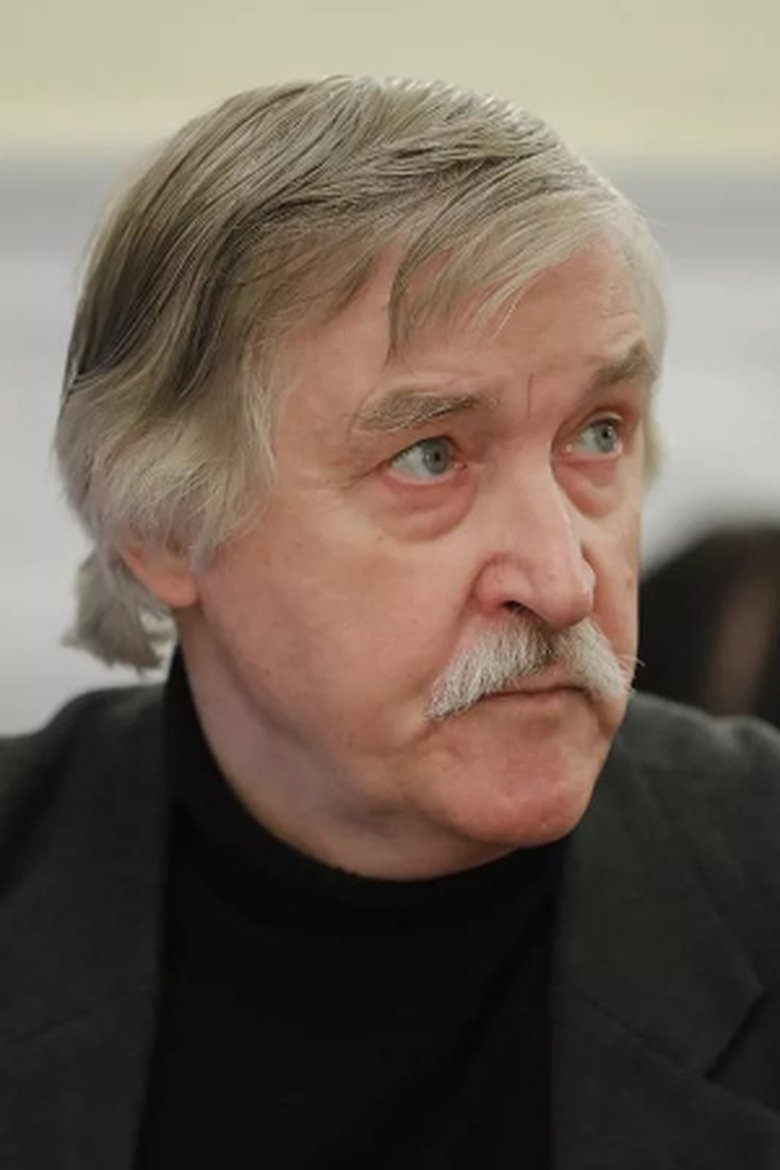
Leonid Nosyrev
Leonid V. Nosyrev (January 22, 1937) - Soviet and Russian artist, animator, director, screenwriter. Honored Artist of the Russian Federation.
Main movies and TV shows
- Antoshka (1969) — Director
- The Magic Ring (1979) — Director
- Laughter and Grief by the White Sea (1987) — Director, Writer
- The Little Tiger on the Sunflower (1981) — Director, Writer
- Mister Pronka (1991) — Director
- Red, Red, Freckled (1971) — Director
- Arkhangelsk Stories (1986) — Director
- Mosaic (1969) — Director
- Pomor True Story (1987) — Director
- Tops and Roots (1974) — Director, Writer
- If You Don't Like It, Don't Listen (1977) — Director, Writer
- Komarov (1975) — Director
- Хомяк-молчун (1972) — Director
- Two Jolly Geese (1970) — Director
- Happy Merry-Go-Round (1969) — Director
- Pinezhsky Pushkin (2003) — Director
- Dreamers from the Village Ugory (1994) — Director
- Chuffyk (1993) — Writer
- The Jester Balakirev (1993) — Writer
- The Rain (1978) — Director, Writer
Facts
- Born: January 22, 1937 (age 89)
- Place of birth: Ivanteyevka, Russia
- Nationality: Russia, Soviet Union
- Occupations: Director, Screenwriter, Painter, Animator
- Languages: Russian
- Education: Lomonosov Moscow State University
Detailed biography
Biography
In 1956, Nosyrev finished Fedoskino school of miniature painting. Upon further completion of the courses for animation artists at Soyuzmultfilm in 1961, he began to work at the studio. In 1975, he also graduated from the Moscow State University, specializing in the theory and history of art.
As a cartoonist, Nosyrev participated in the creation of various Soviet animated films, including The Story of a Crime (1962), Toptyzhka (1964), The Vacation of Boniface (1965), The Most, the Most, the Most, the Most (1966), The Glass Harmonica (1968), The Bremen Town Musicians (1969), and The Small Boat (1970).
In 1968, Nosyrev was promoted to a director at Soyuzmultfilm. He was also among the founders of Happy Merry-Go-Round film magazine. Since 1996, Nosyrev has been teaching at the Gerasimov Institute of Cinematography.
Source: Wikipedia — Text licensed under CC BY-SA 4.0