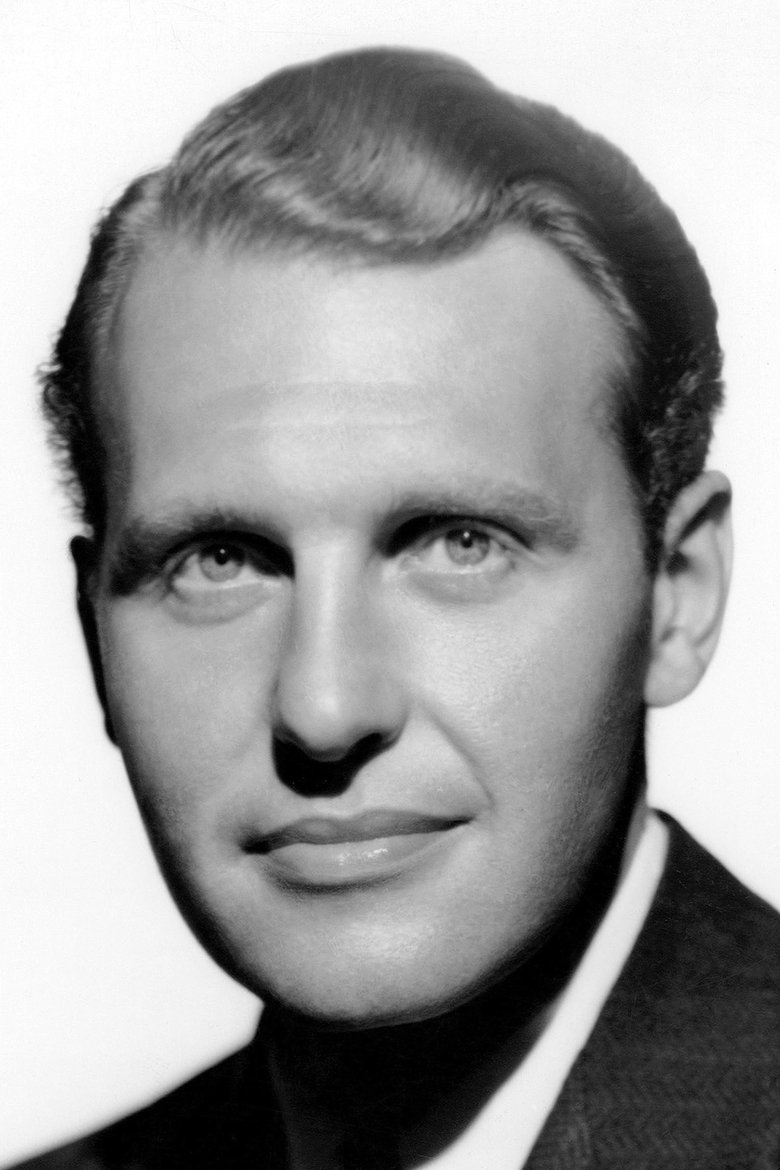
Ralph Bellamy
From Wikipedia, the free encyclopedia. Ralph Rexford Bellamy (June 17, 1904 – November 29, 1991) was an American actor whose career spanned 62 years on stage, screen and television. During his career, he played leading roles as well as supporting roles, garnering acclaim and awards, including an Academy Award nomination for Best Supporting Actor for The Awful Truth (1937). His film career began with The Secret Six (1931) starring Wallace Beery and featuring Jean Harlow and Clark Gable. By the end of 1933, he had already appeared in 22 movies, most notably Rebecca of Sunnybrook Farm (1932) and the second lead in the action film Picture Snatcher with James Cagney (1933). He played in seven more films in 1934 alone, including Woman in the Dark, based on a Dashiell Hammett story, in which Bellamy played the lead, second-billed under Fay Wray. Bellamy kept up the pace through the decade, receiving a nomination for the Academy Award for Best Supporting Actor for his role in The Awful Truth (1937) with Irene Dunne and Cary Grant, and played a similar part, that of a naive boyfriend competing with the sophisticated Grant character, in His Girl Friday (1940). He portrayed detective Ellery Queen in a few films during the 1940s, but as his film career did not progress, he returned to the stage, where he continued to perform throughout the 1950s. Bellamy appeared in other movies during this time, including Dance, Girl, Dance (1940) with Maureen O'Hara and Lucille Ball, and the horror classic The Wolf Man (1941) with Lon Chaney, Jr. and Evelyn Ankers. He also appeared in The Ghost of Frankenstein in 1942 with Chaney and Bela Lugosi. Bellamy appeared in numerous television series. In 1949, Bellamy starred in the television noir private eye series Man Against Crime (also known as Follow That Man) on the DuMont Television Network; initially telecast live in its earliest seasons, the program lasted until 1956 and was simulcast for a season on Dumont and NBC, and ran on CBS during a different year. The lead role was taken by Frank Lovejoy in 1956, who subsequently starred in NBC's Meet McGraw detective series. An Emmy Award nomination for the mini-series The Winds of War (1983) – in which Bellamy reprised his Sunrise at Campobello role of Franklin D. Roosevelt – brought him back into the spotlight. Highly regarded within the industry, Bellamy served as a four-term President of Actors' Equity from 1952–1964. Description above from the Wikipedia article Ralph Bellamy, licensed under CC-BY-SA, full list of contributors on Wikipedia.
Main movies and TV shows
- Pretty Woman (1990) — James Morse
- Coming to America (1988) — Randolph Duke / Homeless Man #1 (uncredited)
- Rosemary's Baby (1968) — Dr. Sapirstein
- Trading Places (1983) — Randolph Duke
- Little House on the Prairie (1974) — Dr. Marvin Haynes
- His Girl Friday (1940) — Bruce Baldwin
- The Wolf Man (1941) — Colonel Montford
- The Awful Truth (1937) — Dan Leeson
- The Professionals (1966) — Grant
- The Twilight Zone (1985) — (segment "Monsters!")
- The Love Boat (1977) — Arnold Hamilton
- Amazon Women on the Moon (1987) — Mr. Gower (segment "Titan Man")
- The Ghost of Frankenstein (1942) — Erik Ernst
- Oh, God! (1977) — Sam Raven
- Matlock (1986) — Sen. Lambert Crawford
- The Boy in the Plastic Bubble (1976) — Dr. Gunther
- Gunsmoke (1955) — Sheriff Bassett
- L.A. Law (1986) — August Redding
- Dance, Girl, Dance (1940) — Steve Adams
- Carefree (1938) — Stephen Arden
Facts
- Born: June 17, 1904
- Place of birth: Chicago, United States
- Died: November 29, 1991, Santa Monica, United States, aged 87
- Nationality: United States
- Occupations: Screenwriter, Actor, Writer
- Languages: French, English
Family
- Spouse: Ethel Smith
Detailed biography
Early life
Bellamy was born Ralph Rexford Bellamy on June 17, 1904, in Chicago, Illinois. He was the son of Lilla Louise (née Smith), a native of Canada, and Charles Rexford Bellamy. He ran away from home when he was 15 and managed to gain employment in a road show. He toured with road shows before finally landing in New York City. He began acting on stage there and, by 1927, owned his own theater company. In 1931, he made his film debut and worked constantly throughout the decade both as a lead and as a capable supporting actor. He co-starred in five films with Fay Wray.
Career
His film career began with The Secret Six (1931), starring Wallace Beery and featuring Jean Harlow and Clark Gable. By the end of 1933, he had already appeared in 22 movies, including Rebecca of Sunnybrook Farm (1932) and the second lead in the action film Picture Snatcher with James Cagney (1933). He played in seven more films in 1934 alone, including Woman in the Dark, based on a Dashiell Hammett story, in which Bellamy played the lead, second billed under Fay Wray. Bellamy received a nomination for the Academy Award for Best Supporting Actor for his role in The Awful Truth (1937) with Irene Dunne and Cary Grant, and played a similar part, that of a naive boyfriend competing with Grant's sophisticated character, in His Girl Friday (1940). He portrayed detective Ellery Queen in a few films during the 1940s, but as his film career did not progress, he returned to the stage, where he continued to perform throughout the 1950s. Bellamy appeared in other movies during this time, including Dance, Girl, Dance (1940) with Maureen O'Hara and Lucille Ball, and the horror classic The Wolf Man (1941) with Lon Chaney Jr. and Evelyn Ankers. He also appeared in The Ghost of Frankenstein (1942) with Chaney and Bela Lugosi.
Bellamy appeared on Broadway as Franklin Delano Roosevelt in Sunrise at Campobello, winning a Tony Award for the role in 1957. He reprised the role in the 1960 film version.
In the summer of 1961, Bellamy hosted nine original episodes of Frontier Justice. In 1950, Bellamy became a member of The Lambs, an actors club located in New York.
Bellamy appeared in Death Valley Days ("The Vintage Years", 1962) as Daniel Quint, a minister. In the story, a young woman whom Quint befriends on a stagecoach ride, Lorna Erickson (Merry Anders), sets him up to be robbed by her paramour (William Bryant).
Highly regarded within the industry, Bellamy served four terms as the president of Actors' Equity from 1952 to 1964. On film, Bellamy starred in The Professionals (1966) as an oil tycoon, and in Roman Polanski's Rosemary's Baby (1968) as an evil physician. He turned to television during the 1970s. He played many roles in numerous shows, sometimes as a series regular. In 1970, he played the lead role of Ethan Arcane in the series The Most Deadly Game. Bellamy portrayed Adlai Stevenson in the TV movie The Missiles of October (1974), a treatment of the Cuban Missile Crisis. He was a member of the cast of the short-lived series Hunter in 1977.
An Emmy Award nomination for the mini-series The Winds of War (1983)—in which Bellamy reprised his Sunrise at Campobello role of Franklin D. Roosevelt—brought him back into the spotlight. This role was followed by his role as Randolph Duke, a conniving millionaire commodities trader in Trading Places (1983). The Eddie Murphy film Coming to America (1988) included a brief cameo by Bellamy and Don Ameche, reprising their roles as the Duke brothers. Around this time, he again portrayed Franklin Roosevelt in War and Remembrance (1988), the sequel to The Winds of War.
Among his later roles was an appearance as a once-brilliant but increasingly senile lawyer sadly skewered by Jimmy Smits' character on an episode of L.A. Law. Bellamy continued working regularly and gave his final performance in Pretty Woman (1990).
Death
On November 29, 1991, Bellamy died from a lung ailment at Saint John's Health Center in Santa Monica, California. He was 87 years old.
Personal life
Throughout the 1930s and 1940s, Bellamy was seen socially with a select circle of friends known affectionately as the Irish Mafia, but they preferred the less sensational Boy's Club as its name. This group consisted of a group of Hollywood A-listers who were mainly of Irish descent (despite Bellamy having no Irish family connections). Others included James Cagney, Pat O'Brien, Spencer Tracy, Lynne Overman, Frank Morgan and Frank McHugh. Bellamy opened the Palm Springs Racquet Club in Palm Springs, California, with fellow actor Charles Farrell in 1934.
Bellamy was married four times: first to Alice Delbridge (1927–1930), then to Catherine Willard (1931–1945), then to organist Ethel Smith (1945–1947), and finally to Alice Murphy (1949–1991; his death).
A Democrat, Bellamy was in attendance at the 1960 Democratic National Convention in Los Angeles.
Source: Wikipedia — Text licensed under CC BY-SA 4.0