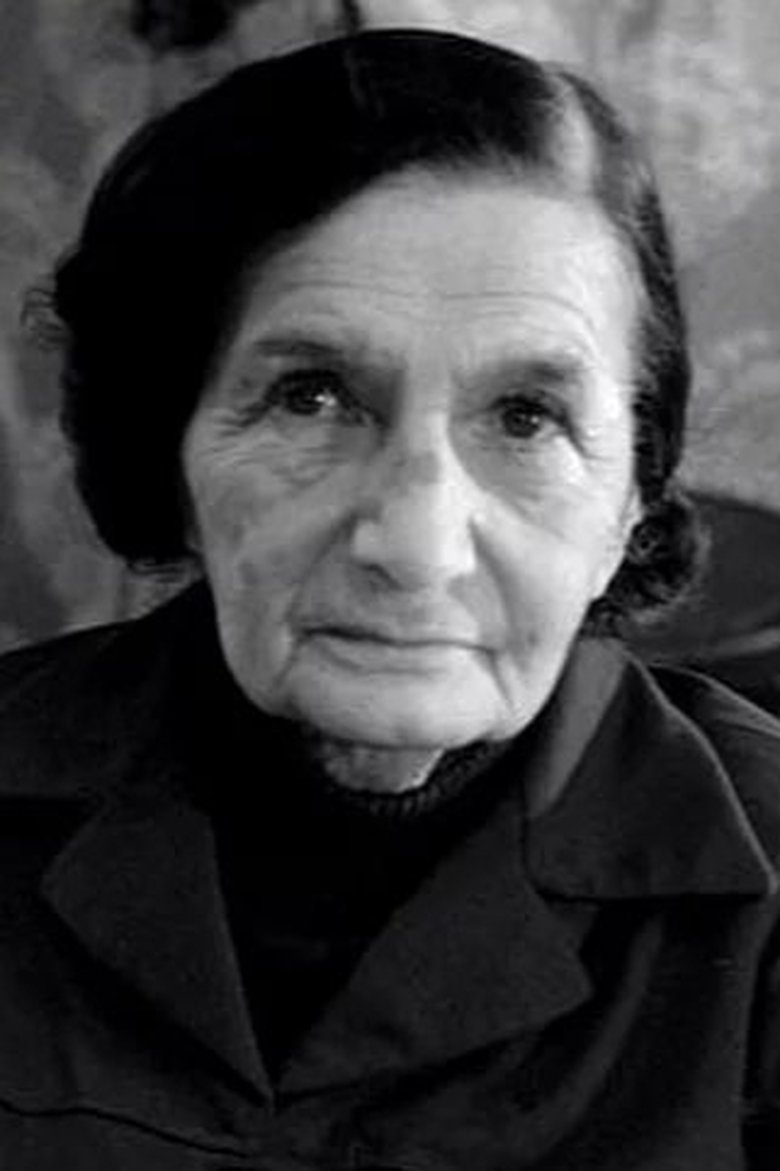
Nadezhda Kosheverova
Film director Nadezhda Kosheverova is mostly famous for her fascinating fairy tale movies, which have become classics of the Russian cinema. Nadezhda Nikolaevna Kosheverova was born in Saint Petersburg on September 23rd (Gregorian Calendar), 1902. In 1923 she graduated Actor's School at Petrograd Theater Free comedy and till 1928 performed as an actress on stages of Leningrad theaters, including the N. P. Akimov Leningrad Theater of Satire. The future film director also studied at the film studio of the Factory of Eccentric Actor from 1925 to 1928. Since 1929 Nadezhda Kosheverova worked at Lenfilm, where she started her career as the assistant of the film director Maxim Trilogy. She made her first debut as a director with the film Once in Autumn (Odnazhdy Osen’y) in 1937; the work has not been preserved, unfortunately. She gained her first success after the release of the lyrical comedy Arinka (1940) co-directed by her jointly with Yuri Muzykant in 1939. Before the beginning of the Second World War, the young film director managed to create a feature film about the Finnish war Galya, which was banned by the censor. For the first time Nadezhda Kosheverova resorted to the fairy tale genre, destined to become her major creative direction, in 1944. Her debut in this genre was the musical film Cherevichki based on Tchaikovsky’s opera with the same name and co-directed with Mikhail Shapiro. Her film Cinderella (Zolushka), released in 1947, was a wild success thanks to the brilliant scenario by Yevgeni Shvarts, design by Nikolai Akimov, and perfectly accurate casting brought the fairy tale recognition among spectators and critics. Continuing her work as a comedy dramatist with Captive Driver (Shofyor ponevole, 1958) and Be Careful, Grandma! (Ostorozhno, babushka!, 1960) Kosheverova tried to remain true to her favourite genre of the traditional children’s magic fairy tale. In 1968 Kosheverova released one of her best and most famous fairy tales - A Very Old Story (Staraya, staraya skazka) starring splendid Oleg Dal and the then unknown Marina Neyolova. Oleg Dal nicknamed Kosheverova “Kurosavochka” and later always agreed to play in her fairy tales. Fairy Tale about Enamoured House Painter (1987) became her last work as a film director. Nadezhda Kosheverova died in Moscow on February, 22nd 1989 and was laid to rest at the cemetery near Komarovo Settlement in the suburbs of Leningrad (now Saint Petersburg).
Main movies and TV shows
- Cinderella (1947) — Director
- A Very Old Story (1968) — Director
- Shadow (1971) — Director
- Tiger Girl (1954) — Director
- Donkey's Hide (1982) — Director
- How Ivanushka the Fool Travelled in Search of Wonder (1977) — Director
- Driver Involuntarily (1958) — Director
- Honeymoon (1956) — Director
- Cain the XVIII-th (1963) — Director
- The Nightingale (1980) — Director
- New Attraction Today (1966) — Director
- Be Careful, Grandma! (1961) — Director
- And Then Came Bumbo... (1984) — Director
- Tsarevich Prosha (1974) — Director
- The Tale About the Enamored Painter (1987) — Director
- Spring in Moscow (1953) — Director, Writer
- Galya (1940) — Director
- Arinka (1939) — Director
- Shadows (1954) — Director
- The Slippers (1945) — Director, Writer
Facts
- Born: September 10, 1902
- Place of birth: Saint Petersburg, Russia
- Died: February 22, 1989, Moscow, Russia, aged 86
- Nationality: Soviet Union
- Occupations: Director, Screenwriter
Family
- Spouse: Nikolay Akimov, Andrei Moskvin
Detailed biography
Life
Kosheverova was born in Saint Petersburg to Nikolai Kosheverov, a merchant with a house on Sergievskaya Street. As a girl she was fond of dolls and puppets, which she explained as her inspiration for entering the world of cinema: "The cinema is like a puppet theater, because a lot of people work on creating the film, and the viewer sees only what they are supposed to see."
In 1923 she graduated from the acting school of the Bolshaya Komediya Theater and until 1928 worked as an actress in the theaters of Leningrad, including at Leningrad Comedy Theatre under Nikolay Akimov. In the late twenties she studied at the Factory of the Eccentric Actor (FEKS), an avant-garde acting collective.
Beginning in 1929 she worked at Lenfilm, first as an assistant director on The Youth of Maxim (1934), The Return of Maxim (1937), and The Vyborg Side (1939).
Her first effort as a director was Once in Autumn (1937), which has since been lost. Her first success was the musical comedy Arinka (1939), directed in collaboration with Yuri Muzykant.
Before the outbreak of World War II she directed Galya, a film whose subject matter (related to the Winter War) led to its being banned from release.
In 1944 Kosheverova turned to the fairy tale genre, which would remain her main focus for the rest of her career. Her first fairy-tale feature was the film-opera Cherevichki (1944), directed in collaboration with Mikhail Shapiro.
In 1947 she experienced considerable success with Cinderella, another collaboration with Shapiro. The film was praised for its performances and script by Evgeny Schwartz. Kosheverova would go on to create other hit comedies (Shofyor Ponyevolye (1958) and Be Careful, Grandma! (1960). Several of her films starred Oleg Dal.
In 1963 Kosheverova and Mikhail Shapiro collaborated on Cain XVIII, a fairy tale film with political undertones, and a script by Nikolai Erdman. The script was carefully revised to avoid giving offense to the censors, but a scene of cross-dressing infuriated Nikita Khrushchev, who ordered the film banned as "homosexual propaganda". It was not shown again until the 1990s.
Kosheverova's last directorial work was the 1987 film The Tale of the Painter in Love.
She died in Moscow on 22 February 1989, and is buried in the village of Komarovo near Saint Petersburg.
Family
Her first husband was film director Nikolay Akimov, with whom she collaborated on the films Cinderella and Shadows. Her second husband was the director of photography Andrei Moskvin, her collaborator on the Maxim films and The Vyborg Side. Her second marriage produced a son, Nikolai.
Source: Wikipedia — Text licensed under CC BY-SA 4.0