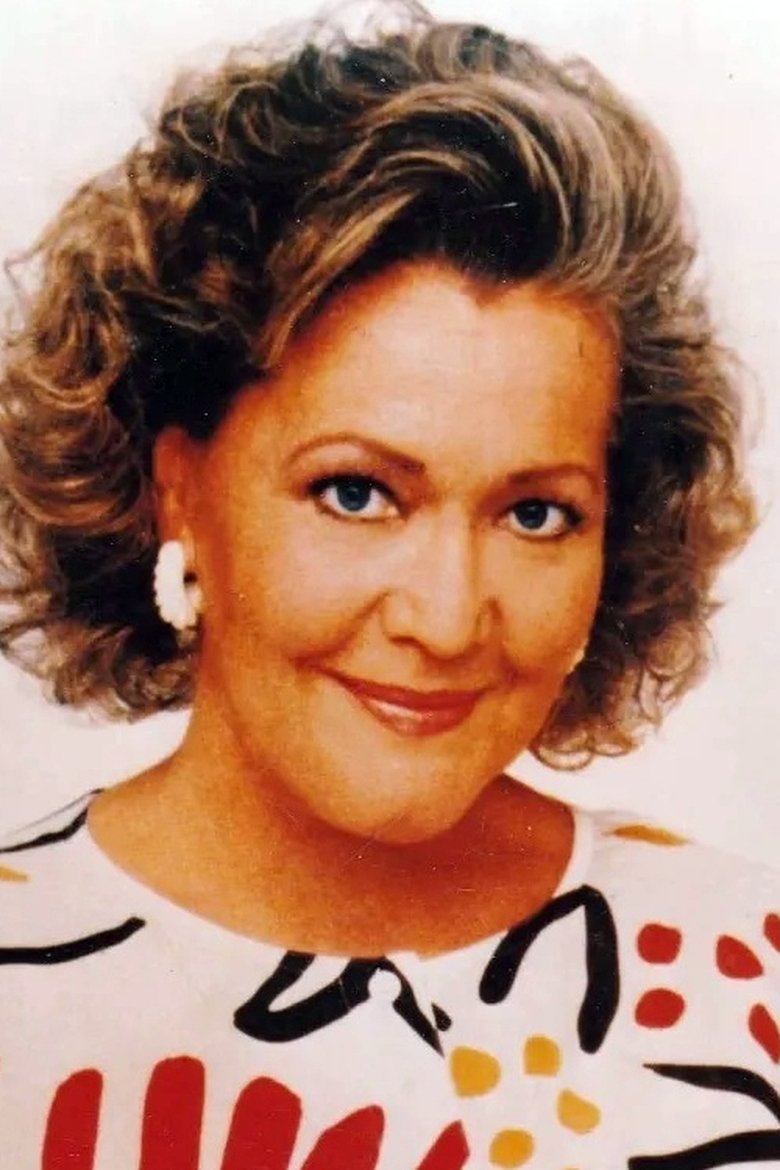
Leonie Rysanek
Leopoldine Rysanek (14 November 1926 – 7 March 1998) was an Austrian dramatic soprano. Rysanek was born in Vienna and made her operatic debut in 1949 in Innsbruck. In 1951 the Bayreuth Festival reopened and the new leader Wieland Wagner asked her to sing Sieglinde in Die Walküre. He was convinced that her unique, young and beautiful voice, combined with her rare acting abilities, would create a sensation. She became a star overnight, and the role of Sieglinde followed her for the rest of her career. Her final performance was at the Salzburg Festival in August 1996, as Klytämnestra in Elektra by Richard Strauss. Her Metropolitan Opera debut came in 1959 as Lady Macbeth in Verdi's Macbeth, replacing Maria Callas who had been "fired" from the production. Over her lengthy career, she sang 299 performances of 24 roles there. She starred in productions of Verdi's Nabucco, in the title role of Ariadne auf Naxos by Richard Strauss, the Empress in Die Frau ohne Schatten, also by Strauss, and Janáček's Káťa Kabanová. She made her farewell there as the Countess in Tchaikovsky's The Queen of Spades in January 1996. She was appointed curator of the Vienna Festival a few months after her retirement, a post she held until her death in Vienna at age 71 (she had been diagnosed with bone cancer during her last Met performances). Two days later, a Metropolitan Opera production of Wagner's Lohengrin with Ben Heppner in the title role was dedicated to her memory. In that opera, she had sung the role of Ortrud in the 1985–86 production. Leonie Rysanek's voice is regarded as in-line with the spinto and dramatic soprano categories. Although her voice fell in the upper end of the jugendlich-dramatisch and dramatischer Sopran categories in the German repertoire, it was exclusively dramatic by Italian operatic standards. Her endurance in the high tessitura of Strauss' operas is widely praised. She is known for singing the music of Richard Strauss. She was especially praised as the Empress (Kaiserin) in Die Frau ohne Schatten, the title role in Salome, the Marschallin in Der Rosenkavalier and Chrysothemis in Elektra. She occasionally sang Ariadne/Prima Donna in Ariadne auf Naxos and female leads in Strauss operas rarely staged (Die ägyptische Helena and Die Liebe der Danae). However, cautious of playing out of her league, she didn't tackle Salome until 1972 when she was age 46, although she kept the role of Sieglinde in her active repertoire from her early 20s until age 62. She avoided offers to sing Isolde in Wagner's Tristan und Isolde despite speculation that the role would be perfect for her. She sang Brünnhilde in Die Walküre in 1950 in Innsbruck but did not return to this role. She stated in interviews that her great respect for her colleague Birgit Nilsson was a factor in her avoidance of that soprano's signature roles. One of her performances in Die Walküre took place in the same week as her appearance as Gilda in Rigoletto. Rysanek sang the title role of Tosca often, and Turandot a few times. She also sang Leonore in Beethoven's Fidelio. ... Source: Article "Leonie Rysanek" from Wikipedia in English, licensed under CC-BY-SA 3.0.
Main movies and TV shows
- Elektra (1981) — Elektra
- Elektra (1980)
- Salome (1990) — Herodias
- Lohengrin - Metropolitan Opera (1986) — Ortrud
- Strauss: Elektra (1980) — Crisotemis
Facts
- Born: November 14, 1926
- Place of birth: Vienna, Austria
- Died: March 7, 1998, Vienna, Austria, aged 71
- Nationality: Austria
- Occupations: Opera singer
- Languages: German
Family
- Siblings: Lotte Rysanek
Detailed biography
Career
Rysanek made her operatic debut in 1949 in Innsbruck, Austria.
In 1951, at the Bayreuth Festival reopening following World War II, Wieland Wagner asked her to sing as Sieglinde in Die Walküre, conducted by Herbert von Karajan.
On 18 September 1956, Rysanek made her American debut at the San Francisco Opera in Der fliegende Holländer, the first of 19 roles in San Francisco. She also performed there in the operas Ariadne auf Naxos, Macbeth, Turandot, Un ballo in maschera, La forza del destino, Tannhäuser, Aida, Salome (as Salome and Herodias), Tosca, Der Rosenkavalier, Die Frau ohne Schatten, Die Walküre, Lohengrin (as Elsa and Ortrud), Jenůfa (as Kostelnička), and The Queen of Spades (as the Countess). Her last San Francisco performance was on 12 December 1993.
Rysanek debuted at the Metropolitan Opera in 1959 as Lady Macbeth in Verdi's Macbeth, replacing Maria Callas in the production. Throughout her career, she sang 299 performances in 24 roles there. She starred as Abigaille in the Met's first-ever productions of Verdi's Nabucco, in the title role of Richard Strauss's Ariadne auf Naxos, as the Empress in Strauss's Die Frau ohne Schatten, and in Janáček's Káťa Kabanová. Her other roles at the Met included the title-role in Aida, Elisabetta in Don Carlos, Leonora in La forza del destino, Desdemona in Otello, Amelia in Un ballo in maschera, the title-role in Tosca, Senta in Der fliegende Holländer, Elisabeth in Tannhäuser (opera), Elsa and later Ortrud in Lohengrin (opera), Sieglinde in Die Walküre, Kundry in Parsifal, Chrysothemis and later Klytämnestra in Elektra (opera), the Marschallin in Der Rosenkavalier, the title-role in Salome (opera), Leonore in Fidelio, and Kostelnicka in Jenůfa. For her 25th anniversary with the company in 1984, the Met put on a gala performance of the first act of Die Walküre and the second act of Parsifal, making her one of the very few artists in the Met’s history to have received such an honor. The applause at the end reportedly lasted 20 minutes.
From late 1995 to early 1996, she performed as the Countess in Tchaikovsky's The Queen of Spades for her final season at the Metropolitan Opera, during which she received confirmation of a cancer diagnosis. She left the Metropolitan Opera in early 1996 and her final performance was at the Salzburg Festival in August 1996, as Klytämnestra in Elektra by Richard Strauss.
Voice and roles
Rysanek was known for her performances in the operas of Richard Strauss. Her Strauss roles included the Empress (Kaiserin) in Die Frau ohne Schatten, the title role in Salome, the Marschallin in Der Rosenkavalier and Chrysothemis in Elektra. She was an acclaimed Ariadne (prima donna) in Ariadne auf Naxos and sang the title-roles in rarely-staged Strauss operas (Die ägyptische Helena and Die Liebe der Danae). She did not sing Salome until 1972, when she was 45, although she kept the role of Sieglinde in her active repertoire from her early 20s until age 62.
She avoided offers to sing Isolde in Wagner's Tristan und Isolde. She sang Brünnhilde in Die Walküre in 1950, in Innsbruck, but did not return to the role. Among her achievements was her performance in Die Walküre the same week as her appearance as Gilda in Rigoletto.
Rysanek sang the title role of Tosca often, and sang Leonore in Beethoven's Fidelio. In Wagner works, she often sang Elisabeth in Tannhäuser, as well as Elsa and Ortrud in Lohengrin. One of the roles most closely associated with her, in addition to Strauss's Kaiserin and Chrysothemis, was Sieglinde in Die Walküre.
Rysanek also took on a number of leading Verdi roles, most notably Desdemona in Otello, Lady Macbeth, Amelia in Un ballo in maschera, Elisabetta in Don Carlos, Leonora in La forza del destino, and the title role in Aida. In 1960, she sang Abigaille in the Metropolitan Opera's inaugural staging of Nabucco. Beyond the German and Italian repertoire, she also developed a keen interest in Czech opera, particularly the works of Smetana and Janáček, despite Czech not being a language spoken in her home.
Rysanek sang Turandot and was praised for her role as Kundry in Parsifal at the Met Opera, Vienna, and the Bayreuth Festival. She had begun her career when Kirsten Flagstad was still alive and Birgit Nilsson and Astrid Varnay were at the peak of their vocal abilities. In 1981, Karl Böhm persuaded her to sing Elektra for a Unitel film (with the soundtrack recorded in the studio), instead of a live production in an opera house. In her later years, Rysanek reverted to mezzo-soprano roles like Herodias in Salome, Klytemnestra in Elektra, and the Kostelnička in Janáček's Jenůfa.
Personal life
Rysanek, like her sister soprano Lotte Rysanek, was born in Vienna as one of six children to a Czech father and an Austrian mother. She attended the Vienna Academy at 16, where she studied with baritone Alfred Jerger as well as baritone Rudolf Grossman, who became her husband.
She was appointed curator of the Vienna Festival a few months after her retirement, which she held until her death from bone cancer in 1998, at the age of 71. Two days later, the premiere of a Metropolitan Opera new production of Wagner's Lohengrin with Ben Heppner in the title role was dedicated to her. She had sung five performances as Elsa and eight as Ortrud in three previous Met productions between 1964 and 1986.
Source: Wikipedia — Text licensed under CC BY-SA 4.0