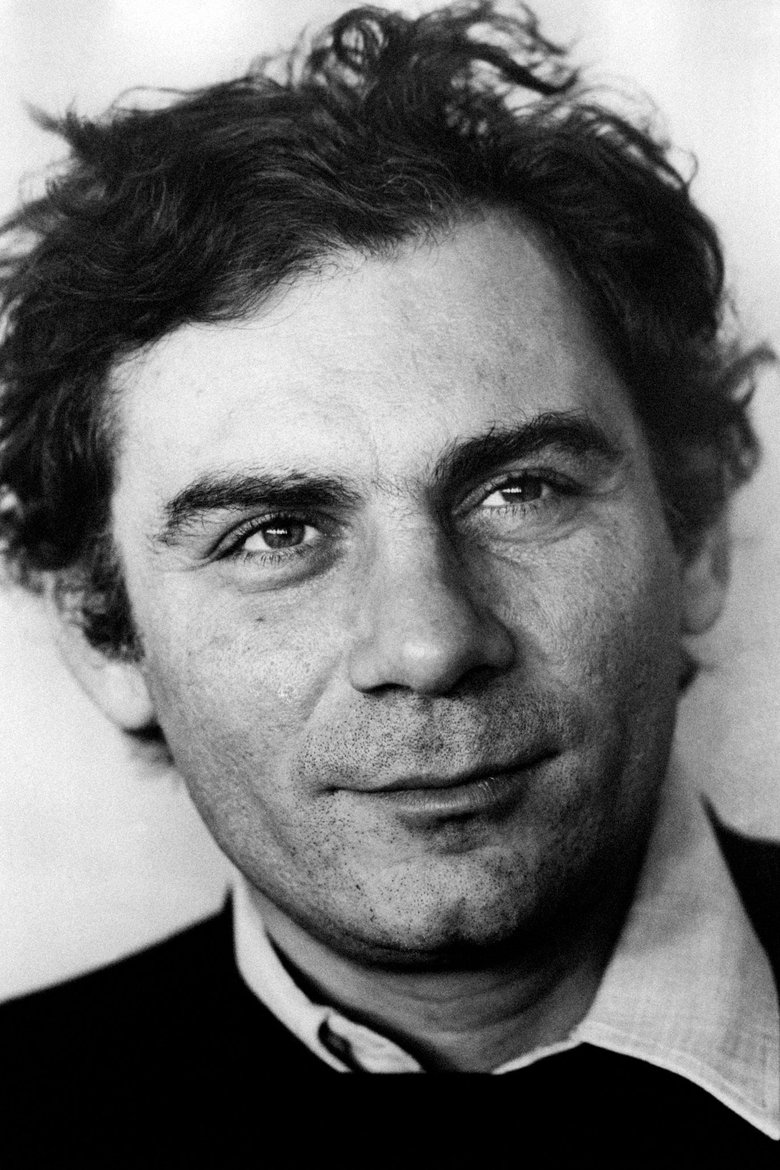
Gian Maria Volonté
Gian Maria Volonté (9 April 1933 – 6 December 1994) was an Italian actor. He is perhaps most famous outside of Italy for his roles as the main villain in Sergio Leone's A Fistful of Dollars (credited in the USA as "Johnny Wels") and For a Few Dollars More. In Italy and much of Europe, he was notable for his roles in high-profile social dramas depicting the political and social stirrings of Italian and European society in the 1960s and 1970s, including four films directed by Elio Petri - We Still Kill the Old Way (1967), Investigation of a Citizen Above Suspicion (1971), The Working Class Goes to Heaven (1971) and Todo modo (1976). He is also recognized for his performances in Jean-Pierre Melville's Le Cercle Rouge (1970) and Giuliano Montaldo's Sacco & Vanzetti (1971). Description above from the Wikipedia article Gian Maria Volonté, licensed under CC-BY-SA, full list of contributors on Wikipedia.
Main movies and TV shows
- A Fistful of Dollars (1964) — Ramón Rojo
- For a Few Dollars More (1965) — El Indio
- Investigation of a Citizen Above Suspicion (1970) — Dottore
- Le Cercle Rouge (1970) — Vogel
- For Love and Gold (1966) — Teofilatto dei Leonzi
- The Working Class Goes to Heaven (1971) — Lulù Massa
- Sacco & Vanzetti (1971) — Bartolomeo Vanzetti
- Slap the Monster on Page One (1972) — Bizanti
- One Way or Another (1976) — M.
- A Bullet for the General (1967) — Chuncho Munos / 'El Chuncho'
- Many Wars Ago (1970) — Lt. Ottolenghi
- We Still Kill the Old Way (1967) — Professore Paolo Laurana
- The Mattei Affair (1972) — Enrico Mattei
- Girl with a Suitcase (1961) — Piero Benotti
- Face to Face (1967) — Professor Brett Fletcher
- Christ Stopped at Eboli (1979) — Carlo Levi
- Chronicle of a Death Foretold (1987) — Dr. Cristo Bedoya
- Lucky Luciano (1973) — Charles 'Lucky' Luciano
- The Magnificent Cuckold (1964) — Assessore
- Giordano Bruno (1973) — Giordano Bruno
Facts
- Born: April 9, 1933
- Place of birth: Milan, Italy
- Died: December 6, 1994, Florina, Greece, aged 61
- Nationality: Italy, Kingdom of Italy
- Occupations: Actor, Screenwriter, Director
- Languages: Italian
- Education: Accademia Nazionale d'Arte Drammatica Silvio D'Amico
Family
- Partner: Angelica Ippolito, Armenia Balducci
Detailed biography
Early life
Volonté was born in Milan, Lombardy, but grew up in Turin, Piedmont. His father Mario was a Fascist officer from Saronno, north of Milan, who in 1944 was in command of the Black Brigades of Chivasso, near Turin. His mother, Carolina Bianchi, belonged to a wealthy Milanese industrial family, and his younger brother Claudio was an actor as well. He went to Rome to train for an acting career at the Accademia Nazionale di Arte Drammatica Silvio D'Amico, obtaining a degree in 1957.
Career
Volonté made his debut in 1960 in Under Ten Flags, directed by Duilio Coletti. Just four years later, he played "Ramón Rojo" in A Fistful of Dollars (1964), and "El Indio" in For a Few Dollars More (1965), both for cash reasons as he considered the two films to be generic exploitation entertainment and was more interested in projects with a political message. Both films were directed by the then-unknown Sergio Leone, and Volonté's roles in them would bring him his greatest recognition from American audiences.
He played Carlo Levi in Christ Stopped at Eboli (1979), which was based on Levi's autobiographical account of his years in internal exile in Aliano, Southern Italy, in the 1930s. Volonté played the memorable role of the Bandito-turned-guerrilla, El Chuncho, in A Bullet for the General (1966).
Volonté's performances as memorable, neurotic characters, or as a gifted leader of brigands or revolutionaries, together with the unexpected, worldwide success of the films, gave him international fame. Volonté had already played comedies, including On the Tiger's Back (1961) by Luigi Comencini, and confirmed his versatility in For Love and Gold (1966). However, he found his main dimension in dramatic roles for Bandits in Milan (1968), by Carlo Lizzani, Slap the Monster on Page One (1972) by Marco Bellocchio, The Working Class Goes to Heaven (1972) by his friend Elio Petri, and Il sospetto (1975) by Francesco Maselli.
In 1968, Volonté won a Silver Ribbon as best actor for A ciascuno il suo, also directed by Elio Petri. Volonté received the same award for two other performances: Petri's Investigation of a Citizen Above Suspicion (1971, winner of an Academy Award as best foreign film), considered by many to be his finest; and in The Abyss (1989).
In 1983 he won the award for Best Actor at the 1983 Cannes Film Festival for La Mort de Mario Ricci. Four years later, at the 37th Berlin International Film Festival, he won the Silver Bear for Best Actor for Il caso Moro. In 1988 Volonté starred in the Cannes Film Festival Official Selection, The Abyss, as a physician-alchemist. The film was directed by André Delvaux from Marguerite Yourcenar's famous novel of the same name. In 1990, Volonté was named Best European Actor for Porte aperte. In 1991, at the 48th Venice International Film Festival, he won the Golden Lion for career achievement.
Critical reception and commentary
Writing for The New Yorker, critic Pauline Kael had much to say about Volonté's various performances. She called him "a chameleon-star, a fiery Italian Olivier", with the suggestion that he might have Olivier's impudent wit, too. Of his performance in Sacco and Vanzetti, she said that "when he marched to his death, you really felt it would take a lot of juice to kill him." Of his performance in The Mattei Affair, she called out his "zingy-lion eyes" and "foxy intensity." In The French Conspiracy, Kael mentions that he has the commanding presence to play [a Moroccan revolutionary]" noting that Volonté has "a conscious magnetism and the ability to project intelligence."
Death
Volonté died from a heart attack at the age of 61 in 1994 at Florina, Greece, during the filming of Ulysses' Gaze. Volonté's grave is in a small cemetery on the Sardinian island of La Maddalena, according to his wishes.
Personal life
Volonté was a strong political activist and known for his pro-communist leanings. In 1981, he helped Oreste Scalzone to flee from capture in Italy to Denmark. He was the partner of Italian actress and Italian Communist Party deputy Carla Gravina for almost 10 years after they met when they played Romeo and Juliet in a theatre production in 1960. The two had a daughter Giovanna, born in the early 1960s. He was the long-time partner of director Armenia Balducci, who shared his political commitment and collaborated on several of his films. Actress Angelica Ippolito was his companion from the mid 1980s until his death in 1994.
Source: Wikipedia — Text licensed under CC BY-SA 4.0