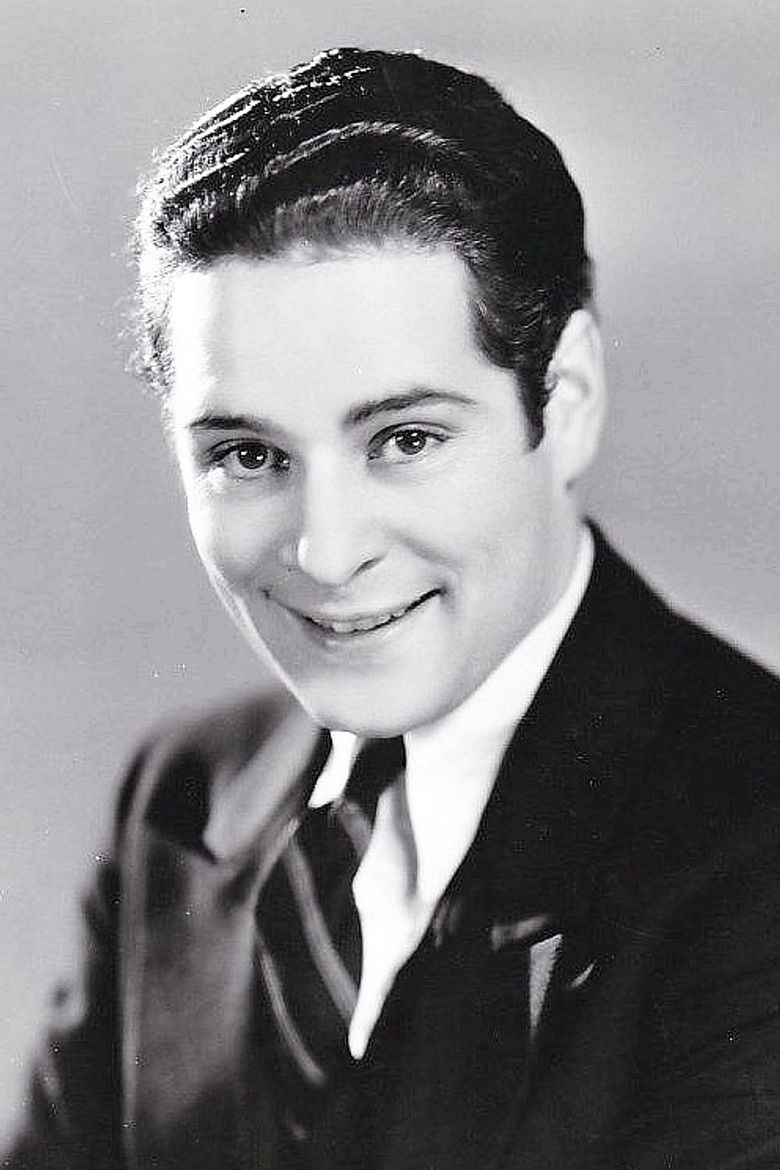
Duncan Renaldo
To most audiences, Duncan Renaldo will always be identified as film and TV's "The Cisco Kid." However, this role occurred late in his career, which consisted of much more than just this western character. Not much is known about Renaldo's early life. In fact, his date and place of birth is still questioned. The usual given birth date is April 23, 1904. His birthplace has been generally stated as Spain--he has said that his first memories as a child were in Spain--although Romania and even New Jersey have been mentioned as well. An orphan, he never knew his actual parents and was never able to ascertain the exact date and place of his birth. He was raised and educated in various European countries and arrived in the US in the early 1920s as a stoker on a Brazilian coal ship. Entering the country on a 90-day seaman's permit, he stayed when his ship caught fire at the dock and burned to the waterline. A paltry existence as a portrait painter forced him to seek other work, and he somehow found his way into films as a producer of short features, which in turn led to on-camera work as an actor with MGM in 1928. The studio capitalized on his dashing Hispanic looks and initially typed him as a "Latin lover", but it didn't last long. In the early 1930s his career was interrupted when he was arrested and faced deportation due to his illegal immigrant status. The actor was eventually pardoned by President Franklin D. Roosevelt--his wife, Eleanor Roosevelt, had bought one of Renaldo's paintings, looked into his case and persuaded her husband to pardon him. He returned to minor films for both Republic and Monogram, alternating as heroic sidekick and villain. He co-starred as one of the Three Mesquiteers in the revamped film series, and showed up regularly in 1930s and 1940s cliffhangers, including The Painted Stallion (1937), Jungle Menace (1937), Zorro Rides Again (1937), King of the Mounties (1942), Secret Service in Darkest Africa (1943) The Tiger Woman (1944). In 1945 he began the Cisco Kid film series and transferred the character successfully to TV in the early 1950s, with Leo Carrillo as faithful sidekick Pancho. Renaldo made the character clean-shaven and more of a do-gooder than the roguish bandit who actually was in the books. Renaldo retired soon after the series' demise and died years later at Goleta Valley Community Hospital in California of lung cancer in 1980.
Main movies and TV shows
- For Whom the Bell Tolls (1943) — Lt. Berrendo
- The Fighting Seabees (1944) — Construction Worker at Party
- Trader Horn (1931) — Peru
- Mission to Moscow (1943) — Italian Reporter (uncredited)
- The Capture (1950) — Carlos
- Spawn of the North (1938) — Ivan
- The Cisco Kid (1950) — The Cisco Kid
- The Mad Empress (1939) — Col. Miguel López
- A Yank in Libya (1942) — Sheik David
- Sky Racket (1937) — Count Barksi
- Jungle Flight (1947) — Police Captain Costa
- Hands Across the Border (1944) — Juan Morales
- Bad Men of Missouri (1941) — Dan
- Tropic Holiday (1938) — Young Blood (uncredited)
- Moonlight Murder (1936) — Pedro
- Satan's Cradle (1949) — The Cisco Kid
- Around the World (1943) — Dragoman
- Border Patrol (1943) — Commandante
- Rough Riders' Round-up (1939) — Alcalde Don Enriguez
- The Painted Stallion (1937) — Zamorro
Facts
- Born: April 23, 1904
- Place of birth: Oancea, Romania
- Died: September 3, 1980, Goleta, United States, aged 76
- Nationality: Romania, United States
- Occupations: Actor, Screenwriter, Producer, Director
- Languages: Romanian, English
Detailed biography
Early years
Renaldo told some interviewers that he actually did not know where he was born. The prosecution in his immigration case entered into evidence a copy of a birth certificate forwarded by the Romanian consul stating that he was born in Oancea, Romania, as Vasile Dumitru Cugheanos, the natural son of Dumitru and Teodora Cugheanos. Renaldo claimed in his defense that he was born in Camden, New Jersey, and only later raised in Romania as Basil Couyanos by people whom he sometimes referred to as "mother" and "father", but at other times by their Christian names, Demetri and Theodora.
Renaldo claimed never to have known his biological parents and to have been raised in several European countries. He emigrated to America in the 1920s. He claimed Romanian nationality when he took a job on a French freighter and entered the United States in 1917, registering as a foreign seaman; in court records, he claimed that this occurred four years later in 1921, but the prosecution produced evidence that he was listed as a coal passer on the S.S. Puget Sound in 1917 and first entered the United States when this ship landed at Baltimore, Maryland, that year. Failing to support himself as a portrait painter, he tried producing short films. He eventually took up acting and signed with Metro-Goldwyn-Mayer in 1928, where he worked in at least two major films, The Bridge of San Luis Rey and Trader Horn. In January 1933, Renaldo was sentenced to serve two years in federal prison and fined $2000 on conviction of falsely claiming American citizenship, falsifying a passport, and perjury, but he eventually was pardoned by President Franklin D. Roosevelt and returned to acting.
Renaldo found minor roles at Republic Studios and other Poverty Row studios until he persuaded Republic head Herbert Yates in 1939 to introduce a Latin cowboy into The Three Mesquiteers series. The character only lasted a year, though, and Renaldo was back to minor roles in B-films, for example Tiger Fangs (1943). Renaldo did play some roles in mainstream films, as well, including Spawn of the North (1938) with George Raft, Henry Fonda, and John Barrymore and For Whom the Bell Tolls with Gary Cooper and Ingrid Bergman. He was also a producer, writer, and director.
Television star
In the late 1940s, Renaldo starred in several Hollywood Westerns as the Cisco Kid, and in 1950, he began playing the role in a popular television series that ran until 1956. In the age of black-and-white television, the show was filmed in color. As Cisco, Renaldo roamed the Old West on a black-and-white horse named Diablo, accompanied by his constant companion Pancho, played by Leo Carrillo, who was 24 years Renaldo's senior.
Renaldo illustrated a book of poetry by Moreton B. Price titled Drifter's Dreams. His illustrations are ink sketches of idyllic scenes, primarily seascapes and landscapes. He also painted in oils. Two of his large paintings of members of the Maasai tribe whom he met in Kenya while filming Trader Horn were prominently displayed in his Santa Barbara home in 1971.
Death
Renaldo died of lung cancer in 1980, aged 76, in Goleta, California. His interment took place in Calvary Cemetery in Santa Barbara, California.
Legacy
For his contributions to the television industry, Renaldo has a star on the Hollywood Walk of Fame at 1680 Vine Street. He is pictured with the band War on their 1974 album War Live, which includes the group's 1973 song "The Cisco Kid".
Source: Wikipedia — Text licensed under CC BY-SA 4.0