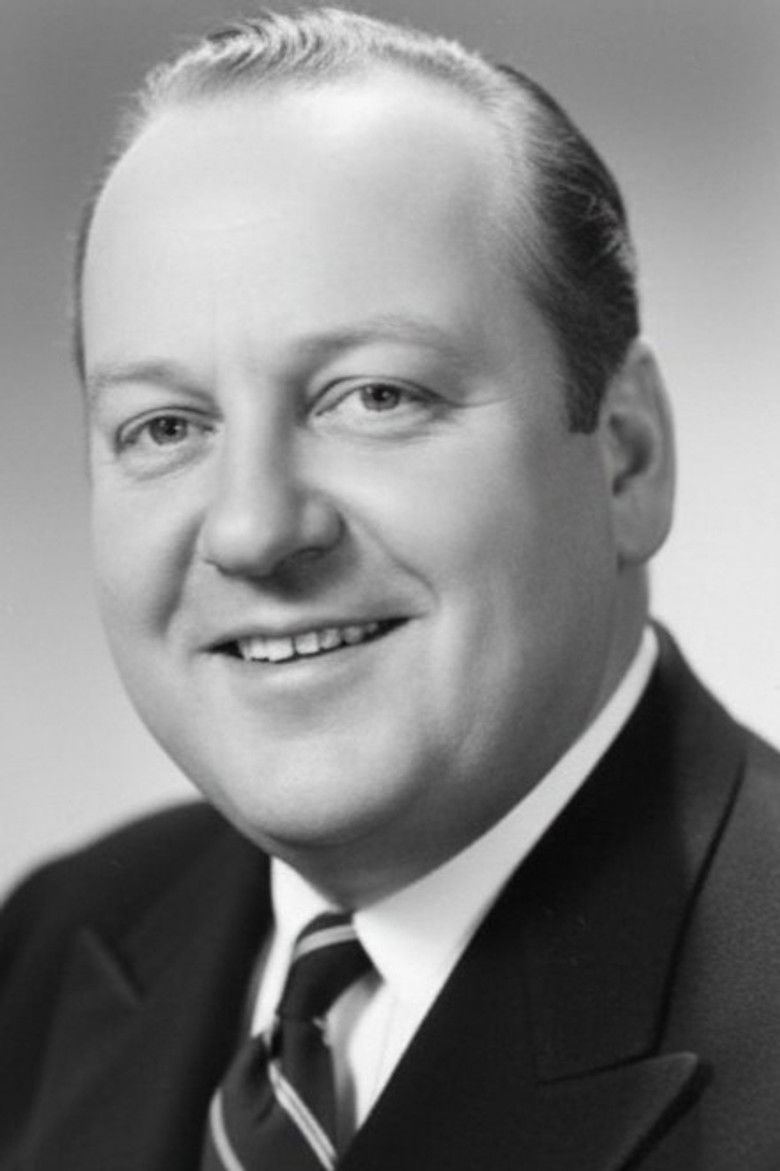
Arthur Q. Bryan
Arthur Quirk Bryan (May 8, 1899 – November 30, 1959) was an American actor, comedian and radio personality, best remembered for his longtime recurring role as well-spoken, wisecracking Dr. Gamble on the radio comedy Fibber McGee and Molly and for creating the voice of the Warner Bros. cartoon character Elmer Fudd. Bryan started voicing Elmer in 1938 in A Feud There Was and voiced the character all the way until his death.
Main movies and TV shows
- The Greatest Show on Earth (1952) — Ice-Cream Eating Spectator (uncredited)
- I Love Lucy (1951) — Mr. Chambers
- Samson and Delilah (1949) — Fat Philistine Merchant Wearing No Robe
- The Bugs Bunny/Road Runner Movie (1979) — Elmer Fudd (voice)
- What's Opera, Doc? (1957) — Elmer Fudd as Siegfried (voice) (uncredited)
- Bugs Bunny's 3rd Movie: 1001 Rabbit Tales (1982) — Elmer Fudd (voice)
- Rabbit of Seville (1950) — Elmer Fudd (voice) (uncredited)
- Rabbit Seasoning (1952) — Elmer Fudd (voice) (uncredited)
- Rabbit Fire (1951) — Elmer Fudd (voice) (uncredited)
- Duck! Rabbit, Duck! (1953) — Elmer Fudd (voice) (uncredited)
- Broken Lance (1954) — Bit Part (uncredited)
- The Devil Bat (1940) — Joe McGinty
- A Corny Concerto (1943) — Elmer Fudd (voice) (uncredited)
- The Two Mouseketeers (1952) — Sir Girard (voice) (uncredited)
- A Wild Hare (1940) — Elmer Fudd (voice) (uncredited)
- Hare Tonic (1945) — Elmer Fudd (voice) (uncredited)
- Road to Singapore (1940) — Bartender (uncredited)
- What's Up, Doc? (1950) — Elmer Fudd (voice) (uncredited)
- Road to Rio (1947) — Mr. Stanton (uncredited)
- Wabbit Twouble (1941) — Elmer Fudd (voice) (uncredited)
Facts
- Born: May 8, 1899
- Place of birth: Brooklyn, United States
- Died: November 18, 1959, Hollywood, United States, aged 60
- Nationality: United States
- Occupations: Actor, Voice actor, Cinematographer
- Languages: English
Detailed biography
Early life
Arthur Q. Bryan was born in Brooklyn, New York City, on May 8, 1899. He sang in a number of churches in the New York City area and had plans to be a professional singer. In 1918, he began working as an insurance clerk at the Mutual Life Insurance Company. He sang tenor with the Seiberling Singers and the Jeddo Highlanders on NBC radio.
Radio
He started as a singer in 1926 on WGBS and he continued as a tenor soloist on WEAF in 1928. In 1929, Bryan was an announcer at WOR radio in New Jersey. Contemporary radio listings in a daily newspaper indicate that he was still at WOR as late as September 13, 1931. In October 1931, he began working as an announcer at WCAU in Philadelphia, and in 1933 he moved to Philadelphia's WIP By 1934, he was heard on WHN in New York. In 1938–1940, he was a regular on The Grouch Club, which aired on the CBS Pacific network and was featured in some short-subject films made by the group. Bryan started voicing Elmer in 1940 in Elmer's Candid Camera and voiced the character all the way until his death.
Bryan's work in animation did not go unnoticed by radio producers. Although his first forays into that medium were accompanied by instructions that he use the Fudd voice, Bryan soon came to the attention of Don Quinn and Phil Leslie, the production and writing team responsible for Fibber McGee and Molly and their supporting characters, two of whom spun off into their radio hits, The Great Gildersleeve and Beulah. The Gildersleeve character, played by Harold Peary, became series broadcasting's first successful spin-off hit; that plus the onset of World War II (which cost Fibber McGee & Molly their Mayor La Trivia, when Gale Gordon went into the Coast Guard in early 1942, and "The Old Timer" Bill Thompson was drafted almost a year later) nabbed nearly every other remaining male voice.
Bryan was first hired for the new Great Gildersleeve series, to play the part of Cousin Octavia's secretary/assistant, Lucius Llewellyn (using the Elmer Fudd voice), and later one of Gildersleeve's cronies, Floyd Munson, the barber. His work on the series (in Bryan's natural voice) so impressed Quinn and Leslie, that Bryan was added to the cast of their main show, Fibber McGee and Molly, in 1943.
In the early 1940s, Bryan played Waymond Wadcliffe on the Al Pearce & His Gang program on CBS. Bryan starred as Major Hoople (from June 22, 1942, to April 26, 1943), appeared in the cast of The Charlotte Greenwood Show, and played Lt. Levinson on radio's Richard Diamond, Private Detective (from September 6, 1950, to June 29, 1951). In the mid-1940s, he had the role of Duke on Forever Ernest.
On May 5th 1949, Bryan appeared as "Clarence, the Guardian Angel" on the Screen Directors Playhouse radio series' rendition of Frank Capra's film It's a Wonderful Life. The episode also starred James Stewart reprising his film role as "George Bailey".
Death
Bryan died of a sudden heart attack at age 60 on November 30, 1959, in Hollywood. Bryan is buried in Valhalla Memorial Park Cemetery.
Legacy
The DVD specials for some cartoons such as What's Opera, Doc?, in Looney Tunes Golden Collection, include bits of conversation between Bryan and Mel Blanc, affording a rare opportunity to hear them working together and to hear Bryan's natural voice. Bryan's natural voice is also heard as the tired hotel guest in A Pest in the House, in which Bryan "talks to himself"; Elmer Fudd is the hotel manager.
Source: Wikipedia — Text licensed under CC BY-SA 4.0