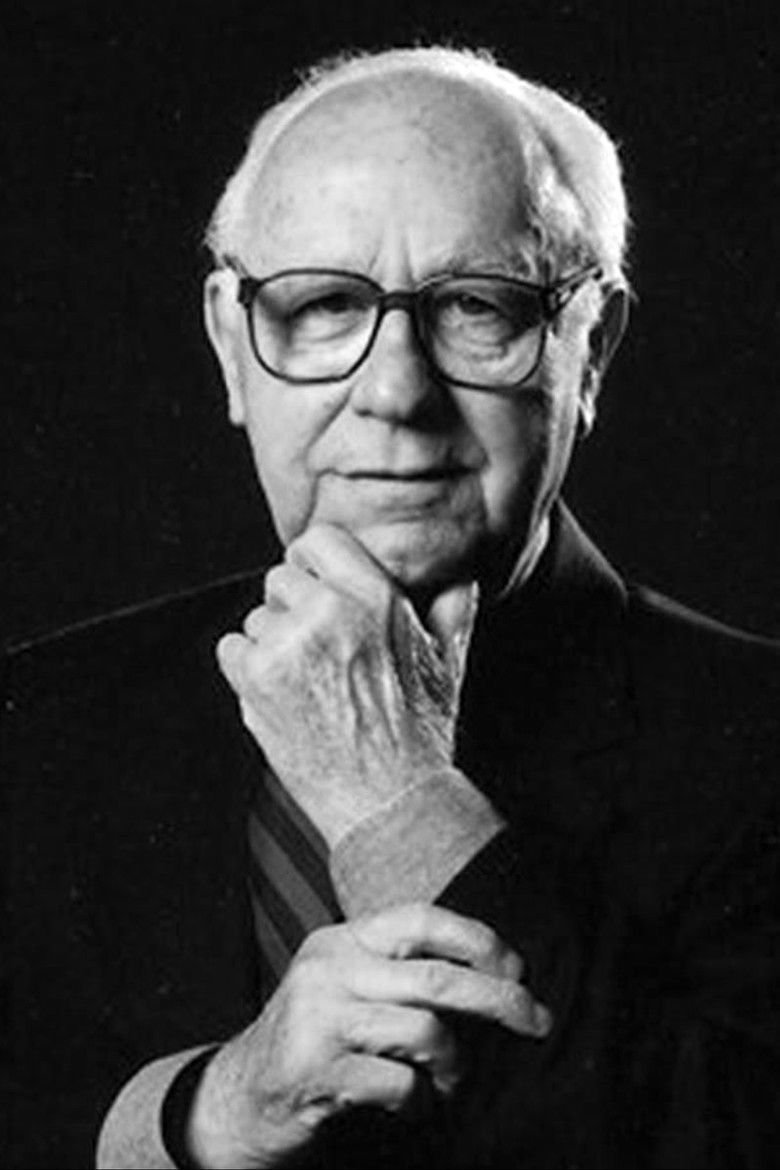
David Raksin
From Wikipedia, the free encyclopedia David Raksin (August 4, 1912 – August 9, 2004) was an American composer who was renowned for his work in film and television. With over 100 film scores and 300 television scores to his credit, he became known as the "Grandfather of Film Music."
Facts
- Born: August 4, 1912
- Place of birth: Philadelphia, United States
- Died: August 9, 2004, Van Nuys, United States, aged 92
- Nationality: United States
- Occupations: Composer, Musician, Film score composer, Conductor
- Languages: English
- Education: University of Pennsylvania
Detailed biography
Early life and education
David Raksin was born in Philadelphia, Pennsylvania, United States, to Jewish parents of Russian heritage. His father was an orchestra conductor. Raksin played professionally in dance bands while attending Central High School of Philadelphia. He went on to study composition with Harl McDonald at the University of Pennsylvania, and later with Isadore Freed in New York and Arnold Schoenberg in Los Angeles. In New York, Raksin worked as an arranger for Harms/Chappell.
Career
One of his earliest film assignments was as assistant to Charlie Chaplin in the composition of the score for Modern Times (1936). He is perhaps best remembered for his score for Laura (1944). The theme music for "Laura", with lyrics by Johnny Mercer, became a major hit. During Raksin's lifetime, "Laura" was reportedly the second most-recorded song in history after "Stardust" by Hoagy Carmichael and Mitchell Parish.
Raksin's theme song, "The Bad and the Beautiful" (also called "Love is For the Very Young") for the 1953 film The Bad and the Beautiful (1953) was also a hit, although not as popular as "Laura". Raksin insisted that the song be released as an instrumental, because he had resented having to split the proceeds from "Laura" with a lyricist. Raksin's theme for "The Bad and the Beautiful" was initially disliked by the film's director Vincente Minnelli and producer John Houseman, but was saved from rejection by the intervention of Adolph Green and Betty Comden, who both liked it. The theme has since been praised by Stephen Sondheim, Leonard Rosenman, Richard Rodney Bennett, and Alexander Courage. Sondheim reportedly called it "one of the best themes ever written in films."
Raksin also scored the 1958 film Separate Tables, for which he earned an Academy Award nomination.
In the 1960s, Raksin wrote the theme for (and scored the pilot of) the medical drama television series Ben Casey. Later in life, Raksin taught at the University of Southern California and the University of California, Los Angeles.
Death and legacy
Raksin died on August 9, 2004 in Los Angeles. At the time of his death, it was announced that Raksin had completed his autobiography, titled If I Say So Myself. The book was eventually published under the title The Bad and the Beautiful: My Life in a Golden Age of Film Music.
In 2012, he was named for a Lifetime Achievement Award for a Past Film Composer.
His son Alex is a Pulitzer Prize-winning editorial writer for the Los Angeles Times.
Personal life
Raksin married twice. He had a daughter with his first wife and a son with his second.
Source: Wikipedia — Text licensed under CC BY-SA 4.0