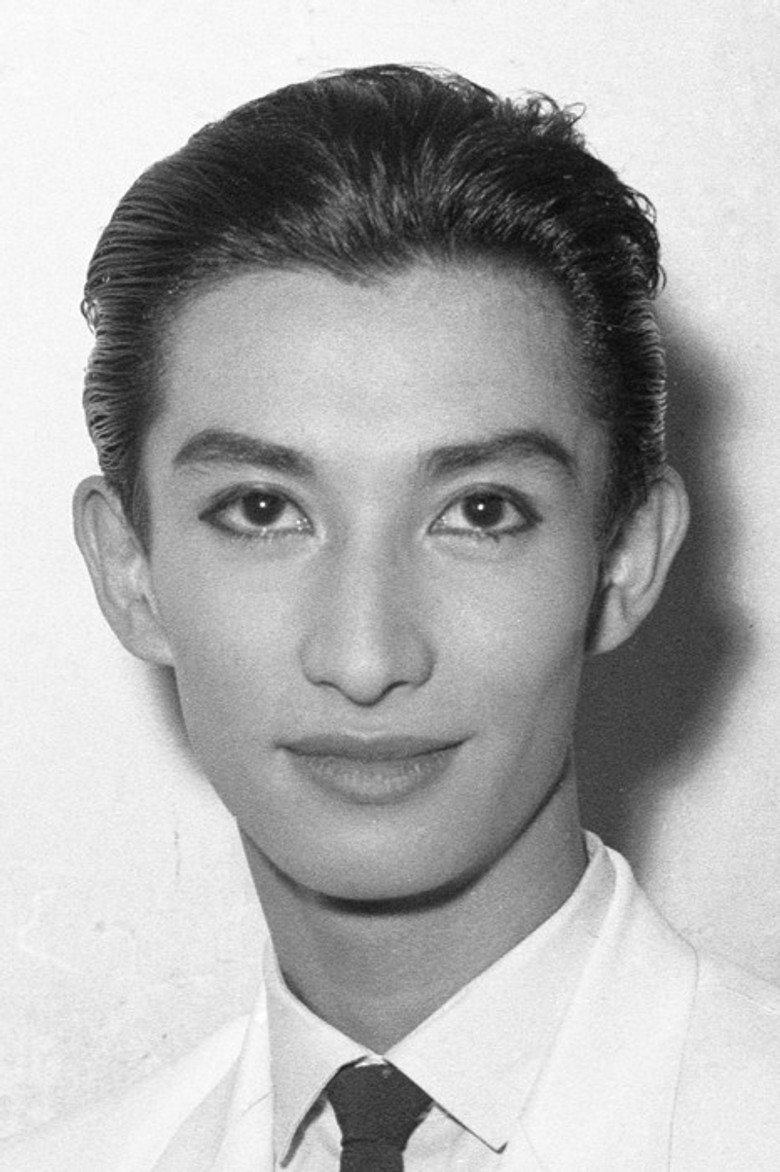
Akihiro Miwa
Akihiro Maruyama (May 15, 1935 - June 20, 2026), better known by his stage name Akihiro Miwa, was a Japanese singer, actor, author and drag queen. As an actor he is known for voicing characters in Hayao Miyazaki films Princess Mononoke (1997) and Howl's Moving Castle (2004).
Main movies and TV shows
- Howl's Moving Castle (2004) — Witch of the Waste (voice)
- Princess Mononoke (1997) — Mrs. Moro (voice)
- Pokémon: Arceus and the Jewel of Life (2009) — Arceus (voice)
- Throw Away Your Books, Rally in the Streets (1971) — Maya at the Hell
- Black Lizard (1968) — Black Lizard (Mrs. Midorikawa)
- Harmagedon (1983) — Froy (voice)
- The Japanese Belly Button (1977) — Business man / Yakuza / Assistant professor
- Black Rose Mansion (1969) — Ryuko
- Yoshitsune (2005) — KI-ichi Hougen (Yoshitune's tutor)
- Toy Reanimator (2002)
- The Hunter's Diary (1964) — Singer
- Hanako & Anne (2014) — Narrator
- Warm Current (1957) — Singer
- Woman Unveiled (1958) — Singer
- Nagasaki: In the Shadow of the Flash (2025)
- La Marie-vison (1983) — Marie in Fur
- Maeterlinck's Blue Bird: Tyltyl and Mytyl's Adventurous Journey (1980) — Queen of the Night (voice)
- The Three Ginza Rascals (1976)
- Invitation to the Enchanted Town (1961)
- Maria of the Ant Village (1958)
Facts
- Born: May 15, 1935
- Place of birth: Nagasaki, Japan
- Died: June 20, 2026, aged 91
- Nationality: Japan
- Birth name: 寺田臣吾
- Occupations: Actor, Singer, Theatre director, Writer
- Languages: Japanese
- Education: Kunitachi College of Music Junior & Senior High School
Detailed biography
Early life
Akihiro Maruyama was born in Nagasaki on May 15, 1935, as one of ten siblings. His family operated a café and a restaurant. He attended Sako National Elementary school.
The epicenter of the atomic bombing of Nagasaki was 3.6 kilometers from Miwa's family's house. Miwa was drawing when the atomic bomb went off and he experienced an intense flash of light. The blast shook his house and caused the windows to explode. The family maid evacuated Miwa and his brother, seeking cover at the nearby Daitokuji air raid shelter as they worried further bombs might be dropped. The entire family later evacuated to Tadewara-machi. Following the explosion Miwa witnessed naked victims with their entire bodies covered in burns and people trapped under buildings. Miwa suffered from radiation exposure and developed anemia.
In junior high school Miwa's music teacher invited him to join a female soprano group. Miwa moved to Tokyo in 1951 after graduating from junior high school. He became a student at the National College of Music High School, but dropped out. When Miwa returned to Nagasaki he was angry that his father abandoned relatives who were financially struggling and his father disowned him after an argument. Miwa started working as a bartender after losing his family allowance.
Singing
At age 16, Miwa started his singing career at chanson cafes in Tokyo, becoming a resident singer at Ginpari in 1952. By the age of 17 he was working in cabaret at gay bars. He performed in the style of French singers Yvette Guilbert and Édith Piaf. Miwa began cross dressing in these shows and became known to the press as "the prettiest boy since Emperor Jimmu”. Miwa's cover of the French chanson song "Mé Qué Mé Qué" became a hit in 1957. He was noted for his entirely purple outfit.
Miwa was well known for their most popular song, "Yoitomake no Uta" which was released in 1965. Miwa later explained that the song was inspired by the mother of one of his classmates, who had an injured leg and worked on building sites. The phrase Yoitomake comes from the cry of "yoitto make", which roughly translates to "heave and wind it up" and it was often used as a chant on building sites.
Writing
Miwa wrote columns and articles for multiple newspapers. From 2008 to 2011, he wrote a column for Sports Nippon. In 2012 he began writing a life advice column in The Asahi Shimbun titled Nayami no Rutsubo (The Crucible of Troubles).
Hibakusha advocacy
Survivors of the atomic bombs dropped on Japan were called Hibakusha. As a survivor of the bombing of Nagasaki, Miwa supported abolition of nuclear weapons. In 2021, he criticized the Japanese government over their refusal to sign the Treaty on the Prohibition of Nuclear Weapons. In 2025, Miwa narrated Nagasaki: In the Shadow of the Flash as the director, Junpei Matsumoto, wished to include the voice of a survivor in the film.
Personal life
Miwa came out as gay in the 1960s. He was in a relationship with Yukio Mishima. Mishima's friendship with Miwa inspired Mishima to write Onnagata (1957).
Miwa was a follower of the Lotus Sutra. He changed his name from Maruyama to Miwa in 1972 after having an experience that he perceived as a divine message while reciting sutras. In 2000, during an interview with Tanba Tetsurō, Miwa declared that they were the reincarnation of Amakusa Shirō.
Miwa was hospitalized after suffering a mild stroke in 2019. He died on June 20, 2026.
Source: Wikipedia — Text licensed under CC BY-SA 4.0