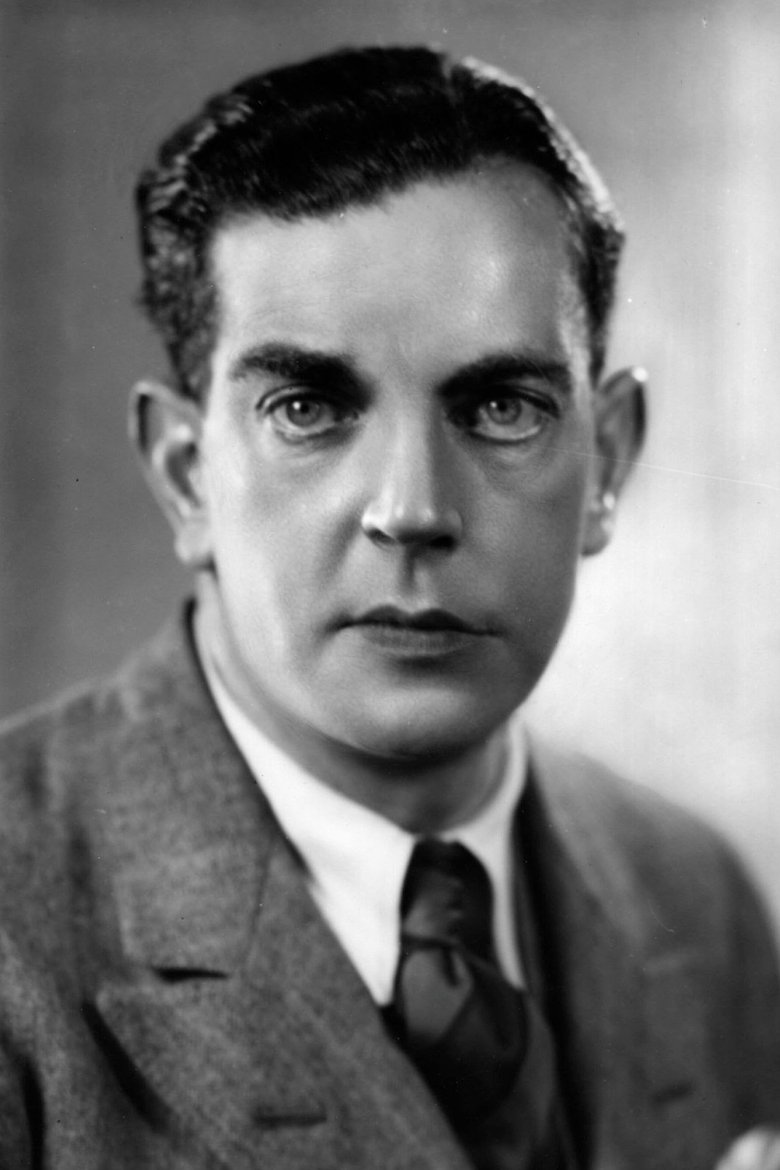
Leslie Banks
Leslie Banks, CBE (9 June 1890 – 21 April 1952) was an English theatre and cinema actor, director and producer, now best remembered playing gruff, menacing characters in black and white movies of the 1930s and 1940s. Description above from the Wikipedia article Leslie Banks, licensed under CC-BY-SA, full list of contributors on Wikipedia.
Main movies and TV shows
- The Man Who Knew Too Much (1934) — Bob Lawrence
- The Most Dangerous Game (1932) — Count Zaroff
- Jamaica Inn (1939) — Joss Merlyn
- Henry V (1944) — Chorus
- The Small Back Room (1949) — Col. A. K. Holland
- Went the Day Well? (1942) — Oliver Wilsford
- Fire Over England (1937) — The Earl of Leicester
- Madeleine (1950) — James Smith
- 21 Days (1940) — Keith Durrant
- The Door with Seven Locks (1940) — Dr. Manetta
- The Tunnel (1935) — Frederick 'Robbie' Robbins
- Cottage to Let (1941) — John Barrington
- The True Glory (1945) — Commentator
- Busman's Honeymoon (1940) — Inspector Kirk
- Sanders of the River (1935) — R.G. Sanders
- The Arsenal Stadium Mystery (1939) — Anthony Slade
- Your Witness (1950) — Col. Roger Summerfield
- Wings of the Morning (1937) — Lord Clontarf
- Red Ensign (1934) — David Barr
- The Fire Raisers (1934) — Jim Bronton
Facts
- Born: June 9, 1890
- Place of birth: Liverpool, United Kingdom
- Died: April 21, 1952, London, United Kingdom, aged 61
- Nationality: United Kingdom
- Occupations: Actor
- Languages: English
- Education: Glenalmond College
Detailed biography
Early life and career
Leslie Banks was born in West Derby, Liverpool, Lancashire, to George and Emily (née Dalby) Banks. He attended school at Glenalmond College in Scotland, and later studied at Keble College, Oxford with the intention of becoming a parson, but decided against this.
He joined Frank Benson's company, and made his acting debut in October 1911 at the town hall in Brechin, playing Old Gobbo in The Merchant of Venice. He then toured the United States and Canada with Henry V. Esmond and Eva Moore in 1912 and 1913. Returning to London, he appeared for the first time on the West End stage at the Vaudeville Theatre on 5 May 1914, as Lord Murdon in The Dangerous Age.
During the First World War he served with the Essex Regiment. He received injuries that left his face partially scarred and paralysed. In his acting career he would use this injury to good effect, by showing the unblemished side of his face when playing comedy or romance and the scarred, paralysed side of his face when playing drama or tragedy. After the war, Banks joined the Birmingham Repertory Theatre. He returned to London in 1921, and established himself as a leading dramatic actor and West End star known for his powerful yet restrained performances.
Working in both London and New York City, he gained prominence on both sides of the Atlantic, and it was when he was in New York that Kenneth Macgowan persuaded him to go to Hollywood and make his first credited movie debut there in The Most Dangerous Game in 1932.
Film career
His intimidating aspect served him well in his Hollywood debut, as a diabolical Russian hunter of human prey in The Most Dangerous Game (1932). After two more Hollywood films he returned to Britain where he divided his time between film and theatre. His other film roles included Alfred Hitchcock's The Man Who Knew Too Much (1934), Sanders of the River (1935), Erich Pommer's Fire Over England (1937), Jamaica Inn (1939, for Hitchcock and Pommer again), The Arsenal Stadium Mystery (1939), Cottage to Let (1941), Went the Day Well (1942), Laurence Olivier's Henry V (1944), Michael Powell and Emeric Pressburger's The Small Back Room (1949) and David Lean's Madeleine (1950).
His theatre roles included Eliza Comes to Stay (his American debut in 1914), Captain Hook in Peter Pan (his New York debut in 1924), the title role in Clive of India (1934), Petruchio in The Taming of the Shrew (1937), the schoolmaster in Goodbye, Mr Chips (1938), and James Jarvis in the Kurt Weill musical Lost in the Stars (1950).
Personal life
He married Gwendoline Haldane Unwin in 1915; they had three daughters, Daphne, Virginia, and Evangeline. Banks was appointed a Commander of the Order of the British Empire (CBE) for his services to theatre in 1950, the year of his last appearances on stage and screen. He died in 1952, aged 61, from a stroke he suffered while walking, and is buried in St Nicholas Churchyard in the village of Worth Matravers, Dorset.
Source: Wikipedia — Text licensed under CC BY-SA 4.0