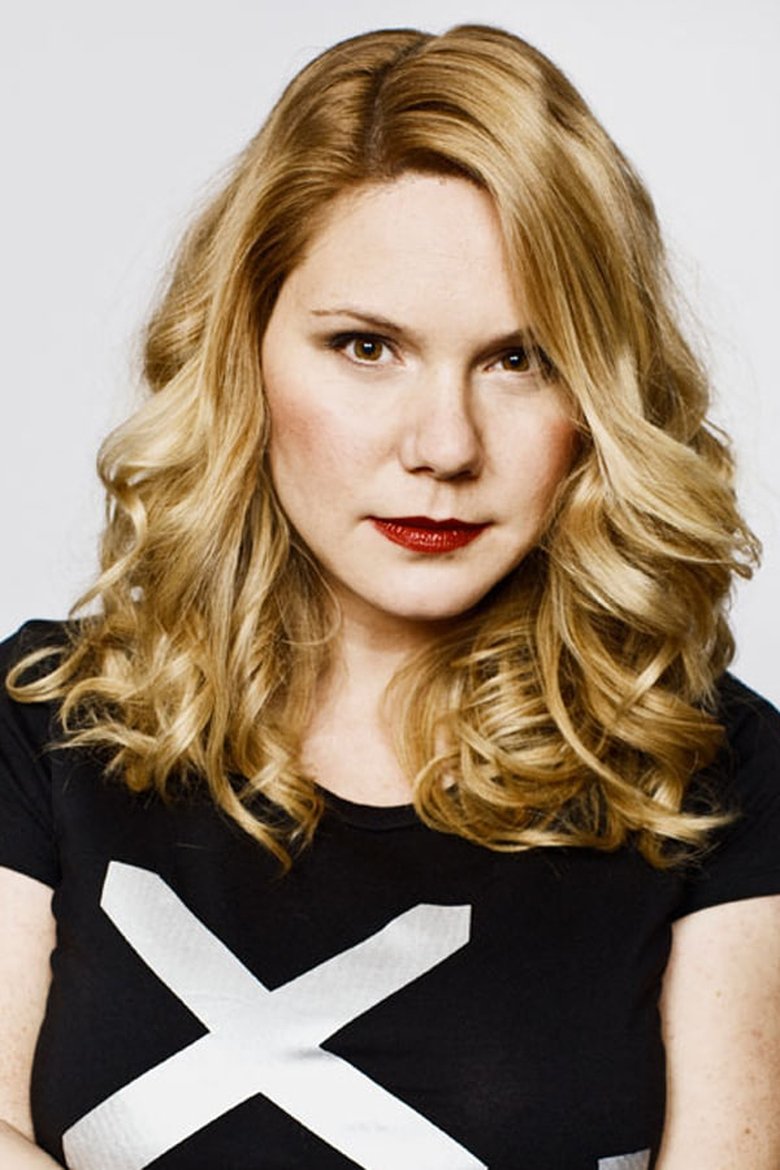
Erika Lust
Based in Barcelona, born in 1977 in Sweden, Erika Lust studied political sciences, feminism and gender studies. Tired of chauvinistic and tacky mainstream porn, she burst into the adult industry in 2004, with the indie short film The Good Girl – a humorous statement of principles. The immediate success of this first attempt encouraged her to pursue a film career. Erika has since then directed three multi-awarded erotic films: Five Hot Stories for Her, Life Love Lust and Cabaret Desire. She also directed the experimental documentary Barcelona Sex Project and wrote several books.
Main movies and TV shows
- Cabaret Desire (2011) — Director, Writer
- The Intern: A Summer of Lust (2019) — Director
- Life Love Lust (2010) — Director, Writer
- Five Hot Stories for Her (2007) — (voice)
- XConfessions 9 (2017) — Director
- Handcuffs (2009) — Director
- XConfessions (2013) — Director, Writer
- Barcelona Sex Project (2009) — Director
- A Burlesque Story (2020) — Creator
- La journée des framboises (2020) — Director
- XConfessions 19 (2019) — Director
- XConfessions 2 (2014) — Director, Writer
- XConfessions 3 (2014) — Director
- The Wedding (2023) — Director
- Safe Word (2020) — Director, Writer
- XConfessions 17 (2019) — Director
- XConfessions 15 (2018) — Director
- XConfessions 16 (2018) — Director
- XConfessions 11 (2017) — Director
- XConfessions 4 (2015) — Director
Facts
- Born: April 5, 1977 (age 49)
- Place of birth: Stockholm, Sweden
- Nationality: Sweden
- Occupations: Writer, Director, Producer, Screenwriter
- Languages: Swedish, English, Spanish
- Education: Lund University
Detailed biography
Background
Lust was born Erika Hallqvist in Stockholm, Sweden, in 1977. She developed an interest in film and theatre.
She attended Lund University, where she studied political science. While there, she read Linda Williams' 1989 book Hard Core: Power, Pleasure, and the "Frenzy of the Visible", which later influenced her filmmaking. She graduated with a BA in 1999, with a specialization in human rights and feminism. After graduation she moved to Barcelona, Spain in 2000 and began studying filmmaking.
Career
Lust made her first film, the explicit short The Good Girl, in 2004. Released free online under a Creative Commons licence, it was downloaded widely online. The film was shown at the Barcelona International Erotic Film Festival the next year and won a Ninfa Award.
In 2005, she founded her video production company Lust Films. The company has since produced erotic short films and compilations. Five Hot Stories For Her, an anthology of five vignettes including The Good Girl, won the Barcelona International Erotic Film Festival's 2007 Best Spanish Screenplay award, the Venus Berlin Fair's 2007 Eroticline Award for Best Adult Film for Women, and the 2008 Feminist Porn Award for Movie of the Year. Her work has continued to appear on the adult cinema festival circuit, and in 2020 one of her films received a conventional cinema release.
Development
Lust's films have been noted for their casting and production values in adult film. She has said that explicit film can be both pleasurable and educational, and that it can contribute to discussion of sexuality and gender roles. She has described pornography as the "most important discourse on gender and sexuality".
In 2010, Lust launched an online erotic cinema called Lust Cinema, which exhibits her own films and those of other directors working in explicit film. In 2013, she launched the crowd-sourced project XConfessions. It later became a major part of her work.
In 2017, Glamour included Lust Cinema in a list of feminist porn sites. In 2019, Lust was named as one of the BBC's 100 Women of 2019.
Other projects
Lust has written several books on eroticism and sexuality; her first book, Good Porn, was published in 2009 by Seal Press. The book discusses recurring themes and conventions in mainstream heterosexual pornography.
Lust runs an online store that sells her books and films, as well as sex toys and other products. In February 2016, her company had about 15 employees.
In 2017, in consultation with sex educators, Lust and her husband Pablo Dobner created the website The Porn Conversation, intended as a resource for parents. The site links to research and offers advice on discussing the unrealistic aspects of mainstream pornography with children.
Reception
Film scholar Álvaro Martín Sanz has described Lust as part of a feminist turn in pornography that rejects the heteronormativity of traditional pornographic cinema, while also arguing that her work remains limited by its emphasis on beauty and fantasy rather than more realistic portrayals of sex.
Lust has argued that no sexual acts, including temporary and consensual self-objectification, BDSM, risk-aware violence, or extreme fantasy, should be labeled "non-feminist". Philosopher Richard Kimberly Heck defended Lust against criticism by Hans Maes, who had argued that Lust's film The Good Girl differed little from mainstream pornography because of the female protagonist's passivity and the inclusion of a facial in the final scene. Heck argued instead that the character's behavior was more realistic than stereotypical pornographic representations and that consensual sexual practices commonly viewed as degrading may still be compatible with feminist pornography.
Personal life
Lust married businessman Pablo Dobner, who is the co-founder and CEO of Lust film. The couple resides in Barcelona, Spain with their two daughters.
Source: Wikipedia — Text licensed under CC BY-SA 4.0