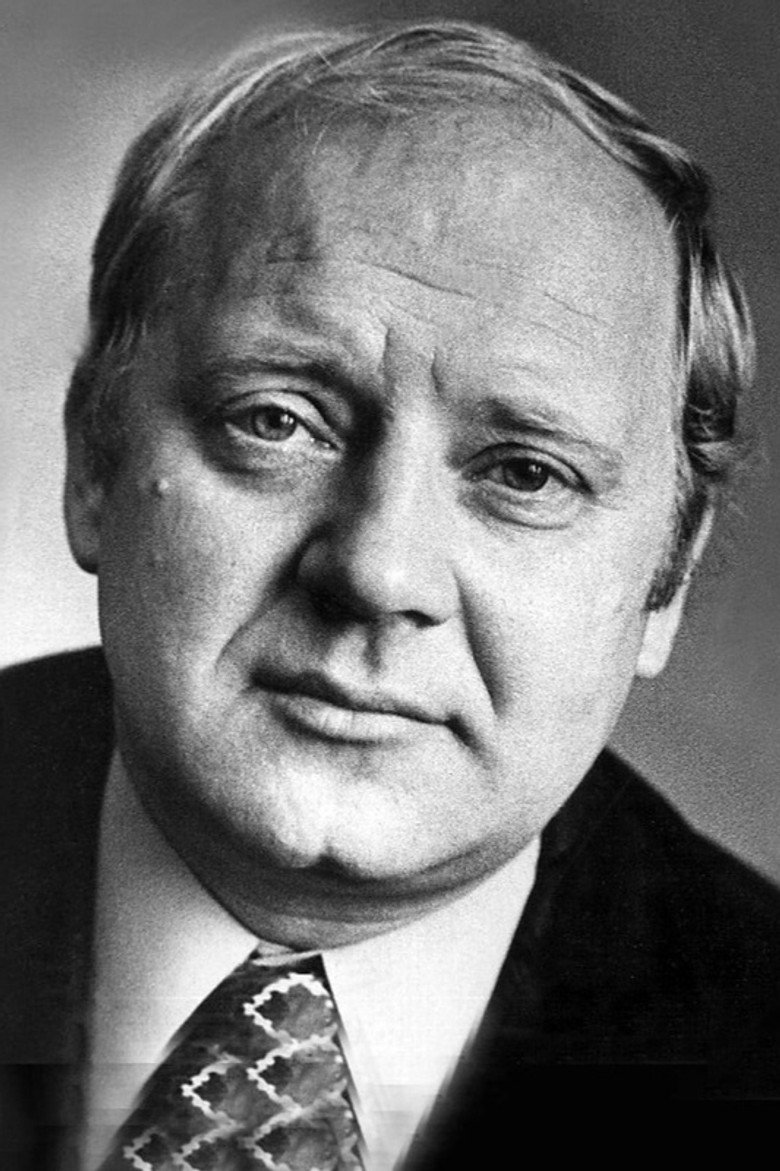
Yuri Vizbor
Soviet songwriter (bard), film actor, journalist, writer, screenwriter, poet, one of the founders of the author’s song genre, creator of the reportage song genre, author of more than 300 songs. In 1955 he graduated from the faculty of Russian language and literature of the Moscow Pedagogical Institute. In the same year, he wrote the text for his first song - Madagascar (the music was borrowed from the performance of Sergei Obraztsov “Under the rustle of your eyelashes”). While studying at the institute, he began to write songs - usually in his own poems. From 1950 to 1960 - composed about 40 songs. He worked as a teacher, served in the army. Since 1958 he worked on the All-Union Radio, in 1962 he initiated the creation of the youth radio station "Youth". Since 1964, together with a group of like-minded people, he published the magazine Krugozor, where he created the unique genre of "song-reporting". Since 1970, he worked as a screenwriter and editor of the cinema association "Screen" of the Central Television. The first role was played in the film "July Rain." Among the most interesting roles of Vizbor are Begounyok in the Red Tent, Sasha in You and Me, Balashov in the Belorussky Train Station, Borman in Seventeen Moments of Spring. More than forty documentaries, as well as the feature film "Year of the Dragon" and the television movie "Captain Frackass", have been delivered according to the scripts of Vizbor. Vizbor is considered one of the founders and the most prominent representatives of the author's song. He wrote a number of scripts and plays that were performed in many theaters in the country. The tales and stories of Vizbor were published mostly after his death. The book "I left my heart in the blue mountains" (1986-1989) had a circulation of 250 thousand copies. Passed away on September 17, 1984 from liver cancer in the Moscow Cancer Center on Kashirskoye Highway. He was buried at the Kuntsevsky cemetery of the capital.
Main movies and TV shows
- Seventeen Moments of Spring (1973) — Martin Bormann - Head of the NSDAP Party Chancellery
- The Red Tent (1969) — Frantisek Behounek
- The Beginning (1970) — Stepan Ivanovich
- Byelorussian Station (1971) — episode
- July Rain (1967) — Alik
- You and Me (1971) — Sasha
- Retribution (1969) — Константин Прокофьевич Захаров, член ВоенСовета, бригадный комиссар
- Rudolfio (1970) — Rudolph
- When Idols Were Gone (2005) — Himself / ArchiveFootage
- Tenderness for the Roaring Beast (1982) — Одинцов
- Passing Through Moscow (1972) — сотрудник «Вечерней Москвы»
- Night Shift (1971)
- Step Over the Threshold (1970)
- A Moment of Luck (1977)
- Encounters in Yakutia (1970) — Narrator (voice)
Facts
- Born: June 20, 1934
- Place of birth: Moscow, Russia
- Died: September 17, 1984, Moscow, Russia, aged 50
- Nationality: Soviet Union
- Birth name: Юрий Юзефович Визборас
- Occupations: Journalist, Actor, Composer, Screenwriter
- Languages: Russian
- Education: Moscow Pedagogical State University
Family
- Spouse: Ada Yakusheva, Yevgeniya Uralova
- Children: Tatyana Vizbor
Detailed biography
Early years
Vizbor's father, a commander in the Red Army, was of Lithuanian descent. His family name was originally Vizbaras. His mother was an ethnic Ukrainian from Krasnodar. In 1937, his father fell victim to Stalin's purges. In 1941, Yuri and his mother moved to Siberia. This period influenced the artist's distaste for politics and his fascination with the wilderness.
In 1951, he graduated from high school and after several failed attempts to start studies in several high-ranking universities (he was denied the place as the "son of the enemy of the People") was accepted as a student of the Moscow State Pedagogical Institute. It was here that he wrote his first song, entitled "Madagascar".
Professional activities
After graduating with a degree in Russian language and literature in 1955, Vizbor worked as a teacher in Arkhangelsk. In 1957, he was conscripted to the army where he worked as a radio operator. He married in 1958. In the late 1950s and early 1960s, Vizbor began to acquire fame as a songwriter by circulating homemade tapes.
Vizbor is often compared with his contemporaries, Vladimir Vysotsky and Bulat Okudzhava. The topics of Vizbor's songs were observational, focusing on his love of nature and of travel. By using his extremely varied professions as a template, Vizbor attempted to document various aspects of "normal life" at the height of Brezhnev's era of stagnation. His trademark was a relaxed singing style that often sounded on the verge of laughter. Vizbor recorded songs with a traditional Russian seven-string guitar that was often slightly out of tune.
While most Russian bards relied on a rhythmic strumming pattern as the basis for their musical accompaniment, Vizbor was fond of a slow plucking style epitomized by songs such as "Fanskie Gory". His best-known tune was a romantic ballad called "Milaya Moya" or "My Dear." On a more somber note, his song "Seryoga Sanin" told the story of a free-spirited friend who dies tragically.
Illness and death
In March 1984, Vizbor wrote his last song, having written over 250 of them during the past thirty-three years. His poetry had also been set to music by numerous musicians. His last writings were letters to his daughter from his sickbed while he lay dying of liver cancer from April to September 1984.
Legacy
A minor planet 3260 Vizbor discovered by Soviet astronomer Lyudmila Zhuravlyova in 1974 is named after him.
Source: Wikipedia — Text licensed under CC BY-SA 4.0