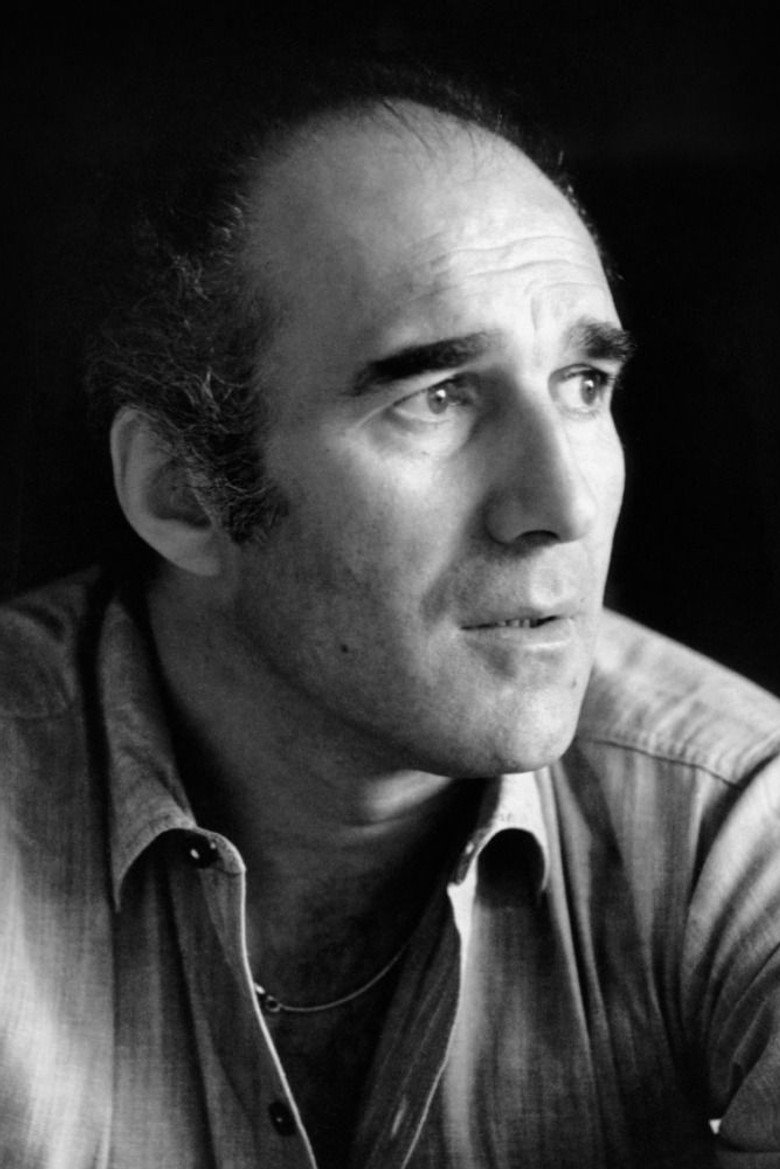
Michel Piccoli
Michel Jacques Daniel Piccoli was the son of Henri Piccoli, violinist and Marcelle Expert-Bezançon (1892-1990), pianist and daughter of the French industrialist and politician Charles Expert-Bezançon. In 1954, Michel Piccoli married actress Éléonore Hirt with whom he had a daughter, Anne-Cordélia Piccoli. In 1966, he married the singer Juliette Gréco, then in 1978 the screenwriter Ludivine Clerc, with whom he adopted two children of Polish origin, Inord and Missia. Placed in an establishment for problem children, the commitments of the young Piccoli, are made in opposition to his maternal grandfather, senator of the Third Republic, financier of the Radical Party, and important industrial painter, accused by the trade union left and by Georges Clemenceau, of having intoxicated his workmen through lead white which causes lead poisoning. Michel Piccoli then trained as an actor first with Andrée Bauer-Théraud and then during Simon. After an appearance as an extra in "Sortilèges" by Christian-Jaque in 1945, Michel Piccoli made his film debut in "Le Point Du Jour" by Louis Daquin. In the theater he distinguished himself with the Renaud-Barrault and Grenier-Hussot companies as well as at the Théâtre de Babylone. Noticed in the film "French Cancan" in 1954, he continued on stage and worked with directors Jacques Audiberti, Jean Vilar, Jean-Marie Serreau, Peter Brook, Luc Bondy, Patrice Chéreau and André Engel, and became also know in popular TV movies. Having become an atheist after a family bereavement, he met Luis Buñuel in 1956, and ironically took on the role of a priest in "La Mort En Ce Jardin". In 1959, he shot "Le Rendez-Vous De Noël", a short film by André Michel based on the short story by Malek Ouary "Le Noël Du Petit Cireur", in Algiers. The 1960s sounded his consecration, noticed in "Le Doulos" by Jean-Pierre Melville, he was revealed internationally with "Le Mépris" by Jean-Luc Godard alongside Brigitte Bardot. From then on, he toured with the greatest French and international filmmakers such as Alfred Hitchcock, Luis Buñuel, Youssef Chahine, Manoel de Oliveira... He began the 1980s with the interpretation prize at the Cannes festival in 1980, with "Le Saut Dans Le Vide" by Marco Bellocchio, and that of the Berlin festival in 1982, with "Une Étrange Affaire" by Pierre Granier-Deferre. . He worked with Jacques Doillon, Leos Carax, before trying his hand at directing. In 2001 he received the IX Europe Prize for Theatre. He was part of the jury of the 60th Cannes Film Festival in 2007, chaired by Stephen Frears. In 2011, he played in "Habemus Papam" by Nanni Moretti. The last film in which Michel Piccoli appears is the film "Le Goût Des Myrtilles", by Thomas de Thiers in 2013. Politically committed to the left, member of the Peace Movement (communist), Michel Piccoli distinguished himself by his positions against the National Front, and mobilized for Amnesty International. Michel Piccoli died on May 12, 2020 following a stroke in his mansion in Saint-Philbert-sur-Risle in Eure. His funeral takes place in Évreux on May 19, 2020, where he is cremated, his ashes are scattered within the family property.
Main movies and TV shows
- Holy Motors (2012) — Man with the Wine Stain
- Belle de Jour (1967) — Henri Husson
- Contempt (1963) — Paul Javal
- The Discreet Charm of the Bourgeoisie (1972) — Interior Minister
- The Young Girls of Rochefort (1967) — Simon Dame
- We Have a Pope (2011) — Melville
- La Grande Bouffe (1973) — Michel
- That Obscure Object of Desire (1977) — Mathieu Faber (voice) (uncredited)
- Topaz (1969) — Jacques Granville
- The Phantom of Liberty (1974) — Police Prefect #2
- Le Doulos (1962) — Nuttheccio
- Atlantic City (1980) — Joseph
- La Belle Noiseuse (1991) — Edouard Frenhofer
- Mauvais Sang (1986) — Marc
- The Things of Life (1970) — Pierre Bérard
- Danger: Diabolik (1968) — Inspector Ginko
- Diary of a Chambermaid (1964) — Monsieur Monteil
- Is Paris Burning? (1966) — Edgar Pisani
- The Milky Way (1969) — Marquis de Sade
- Cesar and Rosalie (1972) — Narrator (voice)
Facts
- Born: December 27, 1925
- Place of birth: 13th arrondissement of Paris, France
- Died: May 12, 2020, Saint-Philbert-sur-Risle, France, aged 94
- Nationality: France
- Height: 1.84 m
- Birth name: Michel Jacques Daniel Piccoli
- Occupations: Actor, Director, Screenwriter, Producer
- Languages: French
- Education: École alsacienne, Cours Simon, Collège Sainte-Barbe
Family
- Spouse: Juliette Gréco, Eléonore Hirt, Ludivine Clerc
Detailed biography
Life and career
Piccoli was born in Paris to a musical family; his mother Marcelle Expert-Bezançon was a pianist and his father Henri Piccoli was a violinist whose Swiss grandfather was from the canton of Ticino.
He appeared in many different roles, from seducer to cop to gangster to Pope, in more than 170 movies. He appeared in six films directed by Luis Buñuel including Belle de Jour (1967) and The Discreet Charm of the Bourgeoisie (1972), but also appeared as Brigitte Bardot's husband in Jean-Luc Godard's Contempt (1963) and as the main antagonist in Alfred Hitchcock's Topaz (1969). He also appeared in many films by Claude Sautet, sometimes co-starring in them with Romy Schneider, and became a frequent collaborator of director Marco Ferreri, with whom he worked on several films, including Dillinger Is Dead and La Grande Bouffe. In 1973 he starred in Luis García Berlanga's Grandeur nature (Life Size), a controversial film that suffered censorship during the Franco era and was not released in Spain until 1978.
In the 1990s, Piccoli also worked as a director on three films. One of his last leading roles was his portrayal of a depressed, newly elected pope in Nanni Moretti's We Have a Pope (2011), for which he was awarded with the David di Donatello Award for Best Actor.
Europe Theatre Prize
In 2001, he was awarded the IX Europe Theatre Prize, in Taormina, with the following citation:
Michel Piccoli began his career on the stage - his Don Juan remains celebrated - before crossing to the "other shore", the cinema, finally coming to accept the relativity of travelling back and forth between the two and taking full advantage of their potential interaction. Piccoli captivates us because he is halfway between the clearly defined identity of the film actor and the ductile identity of the stage actor. When Bondy, Brook, and Chéreau turned to him, despite his reputation as a cinema performer, it was undoubtedly because of this receptiveness and adaptability. He was not trapped by an image, but brought a unique presence. He was also ready to take on an unprecedented variety of roles, which took him from Schnitzler to Chekhov and Pirandello, from Shakespeare to Koltès. The film actor was able of step back and make way for his double, the stage actor. What is it that we love about Piccoli? The fact that he is an artist who has lasted over time without turning into an effigy… he provides certainty and maintains a hidden dimension. The light does not expel the shadow, which always accompanies the brilliance of the legendary actor that he is. There is nothing one-dimensional about him. Michel Piccoli is a European figure. In him we do not see so much an international star unaware of borders, but an open-minded actor who strives to cross them. A free citizen, he does not want to become a prisoner and his whole life bears witness to this unquenched desire to go beyond limits. National as well as artistic limits. Michel Piccoli refuses civil indifference. He has never lacked commitment, and has always taken sides and got involved. His ethic is constant, whether as an actor or as a citizen. If he is taken as a model, it is always despite himself. He is not a hero who puts himself on display. More than anyone else, Piccoli has managed to maintain his humanity. A vibrant humanity that continues to guide his actions and his words. Michel Piccoli is an exemplary actor, responsible towards himself and towards his art.
Political views
Piccoli was part of the Saint-Germain-des-Prés circle in the 1950s, which included Jean-Paul Sartre and Simone de Beauvoir. He was a member of the French Communist Party in this era. A lifelong left-winger, he objected to repression in the Soviet bloc, and supported the Solidarity trade union in Poland.
Personal life and death
Piccoli married three times and divorced twice. His first marriage was to Éléonore Hirt. They had one daughter together. He was then married for eleven years to singer Juliette Gréco. His final marriage was to Ludivine Clerc, with whom he adopted a daughter and a son.
Piccoli died from complications of a stroke on 12 May 2020, at the age of 94.
Source: Wikipedia — Text licensed under CC BY-SA 4.0