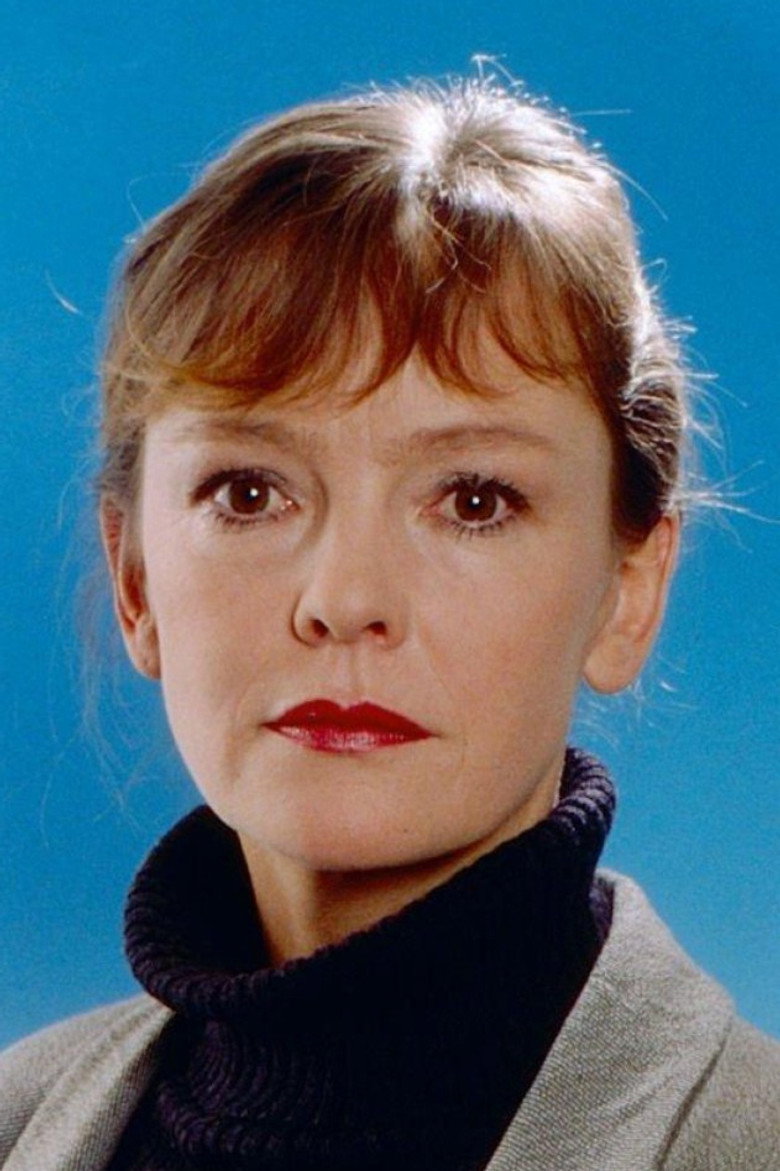
Katrin Sass
Katrin Sass (German: [ˈkatʁiːn ˈzas], for a time Katrin Saß) is a German actress. She became known internationally for playing the idealistic socialist mother Christiane Kerner in the 2003 tragicomedy Good Bye, Lenin!
Source: Wikipedia — Text licensed under CC BY-SA 4.0
Main movies and TV shows
- Good Bye, Lenin! (2003) — Mother
- The Silence (2010) — Elena Lange
- Dogs of Berlin (2018) — Eva Grimmer
- Scene of the Crime (1970) — Sylvia
- Back on Track (2013) — Rita
- Sweethearts (2019) — Sandra
- Give Me Your Hand (2008) — La Femme du Train
- The Weissensee Saga (2010) — Dunja Hausmann
- Polizeiruf 110 (1971) — Tanja Voigt
- The Old Fox (1977) — Jadwiga Bultan
- A Case For Two (1981) — Susanne Böhm
- Schimanski (1997) — Elke Dorn
- Wer weiß denn sowas? (2015)
- Policewoman (2000) — Frau Kubitschek
- Lulu and Jimi (2009) — Gertrud
- Kiss me Kismet (2006) — Helena Schinkel
- Donna Leon (2000) — Eleonora Ford
- Unter anderen Umständen (2006) — Hilla Bendixen
- Bella Block (1993) — Monika Hoffmann
- Heiratsschwindler küsst man nicht (2012) — Thea
Facts
- Born: October 23, 1956 (age 70)
- Place of birth: Schwerin, Germany
- Nationality: Germany, East Germany
- Occupations: Actress, Singer, Musician, New media artist
- Languages: German
- Education: Rostock University of Music and Drama
Family
- Spouse: Siegfried Kühn
- Mother: Marga Heiden
Detailed biography
Biography
She was born in Schwerin, in the former East Germany, which is now the capital of the Federal State of Mecklenburg-Vorpommern. Before German reunification, she was a well-known film and stage actress in the German Democratic Republic. She made her film debut at age 23 in the 1979 film Bis daß der Tod euch scheidet, where she portrayed a disillusioned young wife. She won the Silver Bear for Best Actress at the 32nd Berlin International Film Festival for her role in the 1981 film Bürgschaft für ein Jahr. In 2011, she appeared in the music video of "Wir Sind am Leben" by the Berlin music duo Rosenstolz.
Sass said the GDR required her to spell her name with a "ß" presumably because "Sass" was associated with the Nazi SA and SS.
Source: Wikipedia — Text licensed under CC BY-SA 4.0