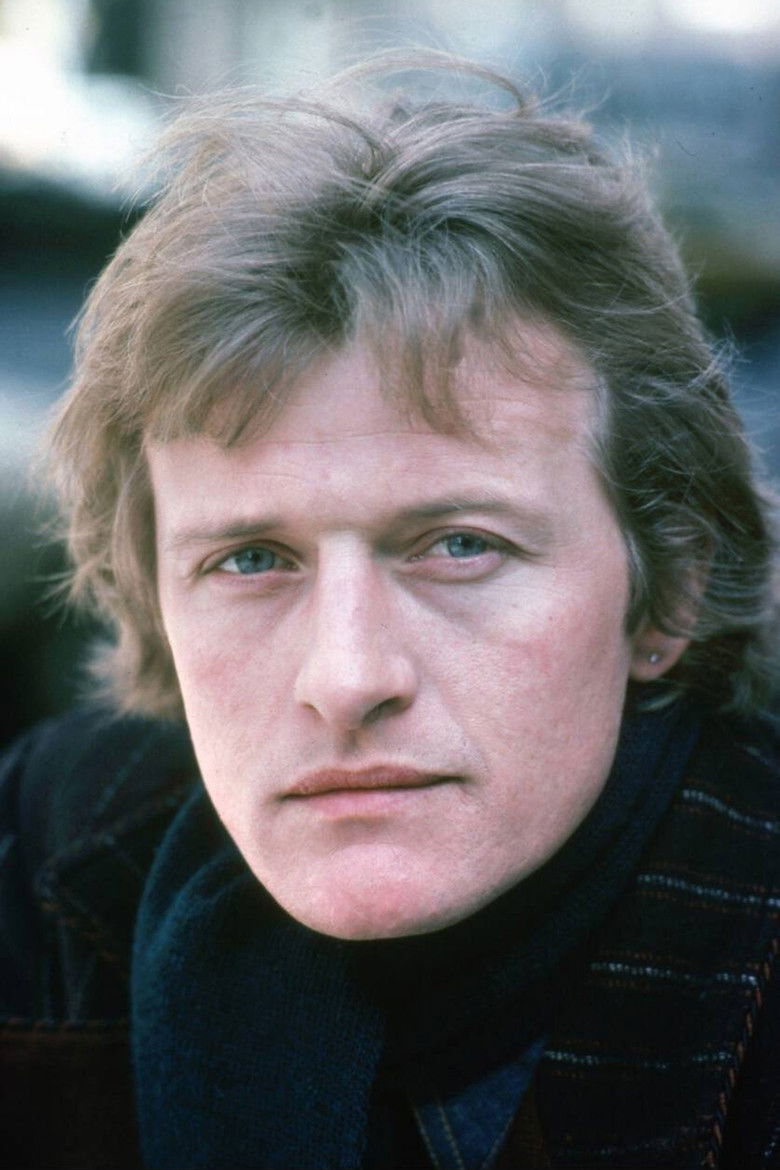
Rutger Hauer
Rutger Oelsen Hauer (January 23, 1944 – July 19, 2019) was a Dutch film actor. He was well known for his roles in Flesh + Blood, Blind Fury, Blade Runner, The Hitcher, Nighthawks, Sin City, Ladyhawke, The Blood of Heroes and Batman Begins. Hauer was born in Breukelen, Netherlands, to drama teachers Arend and Teunke, and grew up in Amsterdam. Since his parents were very occupied with their careers, he and his three sisters (one older, two younger) were raised mostly by nannies. At the age of 15, Hauer ran off to sea and spent a year scrubbing decks aboard a freighter. Returning home, he worked as an electrician and a carpenter for three years while attending acting classes at night school. He went on to join an experimental troupe, with which he remained for five years before he was cast in the lead role in the very successful 1969 television series Floris, a Dutch Ivanhoe-like medieval action drama. The role made him famous in his native country. Hauer's career changed course when director Paul Verhoeven cast him as the lead in Turkish Delight (1973) (based on the Jan Wolkers book of the same name). The movie found box-office favour abroad as well as at home, and within two years, its star was invited to make his English-language debut in the British film The Wilby Conspiracy (1975). Set in South Africa and starring Michael Caine and Sidney Poitier, the film was an action melodrama with a focus on apartheid. Hauer's supporting role, however, was barely noticed in Hollywood, and he returned to Dutch films for several years. Hauer made his American debut in the Sylvester Stallone vehicle Nighthawks (1981), cast as a psychopathic and cold-blooded terrorist named "Wolfgar" (after a character in the Old English poem Beowulf). The following year, he appeared in arguably his most famous and acclaimed role as the eccentric, violent, yet sympathetic replicant Roy Batty in Ridley Scott's 1982 sci-fi thriller, Blade Runner. Hauer was a dedicated environmentalist. He fought for the release of Greenpeace's co-founder, Paul Watson, who was convicted in 1994 for sinking a Norwegian whaling vessel. Hauer has also established an AIDS awareness foundation called the Rutger Hauer Starfish Foundation. He married his second wife, Ineke, in 1985 (they had been together since 1968); and he has one child, actress Aysha Hauer, who was born in 1966 and who made him a grandfather in 1988. In April 2007, he published his autobiography All Those Moments: Stories of Heroes, Villains, Replicants, and Blade Runners (co-written with Patrick Quinlan) where he discussed many of his movie roles. Proceeds of the book go to Hauer's Starfish Foundation.
Main movies and TV shows
- Batman Begins (2005) — Earle
- Blade Runner (1982) — Batty
- Sin City (2005) — Cardinal Roark
- Valerian and the City of a Thousand Planets (2017) — President of the World State Federation
- Smallville (2001) — Morgan Edge
- The Rite (2011) — Istvan Kovak
- The Sisters Brothers (2018) — The Commodore
- True Blood (2008) — Niall Brigant
- The Last Kingdom (2015) — Ravn
- Confessions of a Dangerous Mind (2002) — Keeler
- Ladyhawke (1985) — Captain Etienne Navarre
- The Hitcher (1986) — John Ryder
- Buffy the Vampire Slayer (1992) — Lothos
- 24 Hours to Live (2017) — Frank
- Alias (2001) — Anthony Geiger
- Hobo with a Shotgun (2011) — Hobo
- Goal II: Living the Dream (2007) — Rudi van der Merwe
- Knockin' on Heaven's Door (1997) — Curtiz
- Iron Mask (2019) — English Ambassador
- Blind Fury (1989) — Nick Parker
Facts
- Born: January 23, 1944
- Place of birth: Breukelen, Netherlands
- Died: July 19, 2019, Beetsterzwaag, Netherlands, aged 75
- Nationality: Kingdom of the Netherlands
- Height: 1.85 m
- Birth name: Rutger Oelsen Hauer
- Occupations: Actor, Director
- Languages: Dutch, English
Family
- Spouse: Heidi Merz, Ineke ten Cate
- Children: Aysha Hauer
- Father: Arend Hauer
- Mother: Teunke Mellema
- Siblings: Karen Hauer
Detailed biography
Early life
Hauer was born in Breukelen, in the Province of Utrecht, on 23 January 1944, while the Netherlands was under German occupation during World War II. He stated in a 1981 interview, "I was born in the middle of the war, and I think for that reason I have deep roots in pacifism. Violence frightens me." His parents were Teunke (née Mellema) and Arend Hauer, both actors who operated an acting school in nearby Amsterdam. He had three sisters. According to Hauer, his parents were more interested in their art than their children. He did not have a close relationship with his father, and writer Erik Hazelhoff Roelfzema later became a father figure to Hauer after they met during the filming of Soldier of Orange.
Hauer attended a Rudolf Steiner school, as his parents wanted him to develop his creativity. At the age of 15, he left school to join the Dutch merchant navy. He spent a year travelling the world aboard a freighter, but was unable to become a captain due to his colourblindness. Returning home, he worked in odd jobs while finishing his high school diploma at night. He then entered the Academy for Theater and Dance in Amsterdam for acting classes, but soon dropped out to join the Royal Netherlands Army. He received training as a combat medic, but left the service after a few months as he opposed the use of deadly weapons. He subsequently returned to acting school and graduated in 1967.
Early works
Hauer had his first acting role at the age of 11, as Eurysakes in the play Ajax. After graduating from the Academy for Theater and Dance, he became a stage actor with the Toneelgroep Noorder Compagnie. Hauer made his screen debut in 1969 when Paul Verhoeven cast him in the lead role of the television series Floris, a Dutch medieval action drama. The role made him famous in his native country, and Hauer reprised his role for the 1975 German remake Floris von Rosemund.
Hauer's career changed course when Verhoeven cast him in Turkish Delight (1973), which received an Oscar nomination for best foreign-language film. The film found box office favour abroad and at home, and Hauer looked to appear in more international films. Within two years, Hauer made his English-language debut in the British film The Wilby Conspiracy (1975). Set in South Africa, the film was an action-drama with a focus on apartheid. Hauer's supporting role, however, was barely noticed in Hollywood, and he returned to Dutch films for several years. During this period, he made Katie Tippel (1975) and worked again with Verhoeven on Soldier of Orange (1977), and Spetters (1980). These two films paired Hauer with fellow Dutch actor Jeroen Krabbé. At the 1981 Netherlands Film Festival, Hauer received the Golden Calf for Best Actor for his overall body of work.
American breakthrough
Hauer made his American debut in the Sylvester Stallone film Nighthawks (1981) as a psychopathic, cold-blooded terrorist named Wulfgar. With his sights set on a long-term career in Hollywood, Hauer worked with an accent coach in the early 1980s to develop a convincing American accent. Unafraid of controversial roles, he portrayed the German architect and Nazi minister Albert Speer in the 1982 American Broadcasting Company production Inside the Third Reich. The same year, Hauer appeared in arguably his most famous and acclaimed role as the eccentric and violent but sympathetic antihero Roy Batty in Ridley Scott's 1982 science fiction thriller Blade Runner, in which he delivered the famous tears in rain monologue. Hauer composed parts of the monologue the evening prior to filming, "cutting away swathes of the original script before adding the speech's poignant final line". He went on to play the adventurer courting Theresa Russell in Eureka (1983), an investigative reporter opposite John Hurt in The Osterman Weekend (1983), the hardened mercenary Martin in Flesh & Blood (1985), and a knight paired with Michelle Pfeiffer in Ladyhawke (1985).
He appeared in The Hitcher (1986) as the titular mysterious hitchhiker tormenting a lone motorist, murdering anyone in his way. He received the 1987 Golden Globe Award for Best Supporting Actor for his role in the television film Escape from Sobibor. At the height of Hauer's fame, he was set to be cast as RoboCop (1987), but Verhoeven, the film's director, considered his frame as too large to move comfortably in the character's suit. Also in 1987, Hauer starred as Nick Randall in Wanted: Dead or Alive as the descendant of the character played by Steve McQueen in the television series of the same name.
In 1988, he played a homeless man in Ermanno Olmi's The Legend of the Holy Drinker. This performance won Hauer the Best Actor award at the 1989 Seattle International Film Festival. Hauer was chosen to portray a blind martial artist superhero in Phillip Noyce's action film Blind Fury (1989). He initially struggled with the implausibility of the character, but learned to "unfocus my eyes, to react to smells and sounds" after meeting with blind judo practitioner Lynn Manning during his research for the role. Hauer returned to science fiction in 1989 with The Blood of Heroes, in which he played a gladiator in a post-apocalyptic world.
Commercials and later roles
By the 1990s, Hauer was well known for his humorous Guinness commercials as well as his screen roles, which had increasingly involved low-budget films, such as Split Second (1992); The Beans of Egypt, Maine (1994); Omega Doom (1996) and New World Disorder (1999). In 1992, he appeared in the horror-comedy film Buffy the Vampire Slayer as the main antagonist vampire Lothos. He also appeared in the Kylie Minogue music video "On a Night Like This" (2000). During this time, Hauer acted in several British, Canadian and American television productions, including Amelia Earhart: The Final Flight (1994) as Earhart's navigator Fred Noonan, Fatherland (1994), Hostile Waters (1997), The Call of the Wild: Dog of the Yukon (1997), Merlin (1998), The 10th Kingdom (2000), Smallville (2003), Alias (2003), and Salem's Lot (2004).
Hauer played an assassin in Confessions of a Dangerous Mind (2003), a villainous cardinal with influential power in Sin City (2005) and a devious corporate executive running Wayne Enterprises in Batman Begins (2005). Also in 2005, he played the title role in Patrick Lussier's film Dracula III: Legacy. Seven years later, he portrayed the vampire hunter Abraham Van Helsing in Dario Argento's Dracula 3D. Hauer hosted the British reality television documentary Shock Treatment in 2005, and featured in Goal II: Living the Dream (2007) as Real Madrid coach Rudi Van der Merwe. He also recorded voice-overs for the British advertising campaign for the Danish butter brand Lurpak.
In 2008, Hauer received the Golden Calf Culture Prize for his contributions to Dutch cinema. The award recognised his work as an actor as well as his efforts to aid the development of young filmmakers and actors, through initiatives such as the Rutger Hauer Film Factory. In 2009, his role in avant-garde filmmaker Cyrus Frisch's Dazzle received positive reviews; it was described in Dutch press as "the most relevant Dutch film of the year". The same year, Hauer starred in the title role of Barbarossa, an Italian film directed by Renzo Martinelli. In April 2010, he was cast in the live action adaptation of the short and fictitious Grindhouse trailer Hobo with a Shotgun (2011). Hauer played Freddie Heineken in The Heineken Kidnapping (2011), for which he received the 2012 Rembrandt Award for Best Actor. Also in 2011, Hauer appeared in the supernatural horror film The Rite as an undertaker named Istvan, the protagonist's father.
From 2013 to 2014, Hauer featured as Niall Brigant in HBO's True Blood. In 2015, he starred as Ravn in The Last Kingdom and as Kingsley in Galavant. In 2016, he joined the film jury for ShortCutz Amsterdam, an annual film festival promoting short films in Amsterdam. Hauer voiced the role of Daniel Lazarski in the 2017 video game Observer, set in post-apocalyptic Poland. Lazarski is a member of a special elite police unit that can hack into minds and interact with memories within. Hauer also provided the voice of Xehanort in the 2019 video game Kingdom Hearts III, replacing the late Leonard Nimoy. (When Hauer himself died, he was replaced by Christopher Lloyd). Also in 2019, Hauer was originally cast as the Ghost of Christmas Future in the 2019 British television dark fantasy drama A Christmas Carol; when he became too ill to film his scenes, he was replaced by Jason Flemyng.
Personal life
Hauer was married twice. Hauer and his first wife, Heidi Merz, had one child. Hauer was in a relationship with his second wife, Ineke ten Cate, from 1968. They married in a private ceremony on 22 November 1985.
Although born in Utrecht, Hauer had strong links to Friesland. He once stated in an interview with the Algemeen Dagblad that he "needed to feel the Frisian clay under [his] feet". Hauer was an environmentalist. He supported the Sea Shepherd Conservation Society and was a member of its board of advisors. He also established an AIDS awareness organization called the Rutger Hauer Starfish Association. In April 2007, he published his autobiography, All Those Moments: Stories of Heroes, Villains, Replicants, and Blade Runners (co-written with Patrick Quinlan), in which he discussed many of his acting roles.
Hauer died from pancreatic cancer on 19 July 2019 at his residence in the Netherlands, age 75.
Source: Wikipedia — Text licensed under CC BY-SA 4.0