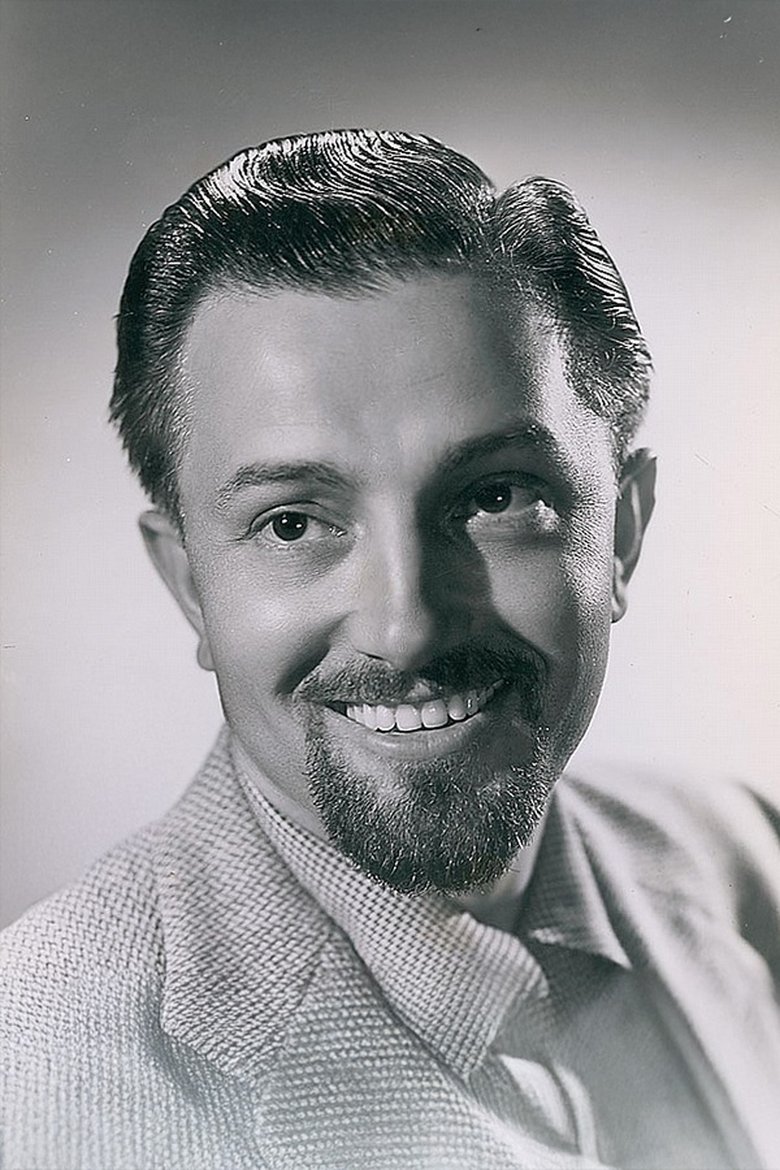
Edward Dmytryk
Edward Dmytryk (September 4, 1908 – July 1, 1999) was an American film director who was amongst the Hollywood Ten, a group of blacklisted film industry professionals who served time in prison for being in contempt of Congress during the McCarthy-era 'red scare'. Although born in Grand Forks, British Columbia, Canada, Dmytryk grew up in San Francisco when his Ukrainian parents moved to the United States. At the age of 31, he became a naturalized citizen. His best known films from the pre-McCarthy period of his career were film noirs Crossfire, for which he received a Best Director Oscar nomination, and Murder, My Sweet, the latter an adaptation of Raymond Chandler's Farewell My Lovely. In addition, he made two World War II films: Hitler's Children, the story of the Hitler youth and Back to Bataan starring John Wayne. The late 1940's was the time of the Second Red Scare, and Dmytryk was one of many filmmakers investigated. Summoned to appear before the House Committee on Un-American Activities (HUAC), he refused to cooperate and was sent to jail. After spending several months behind bars, Dmytryk made the decision to testify again, and give the names of his fellow members in the American Communist Party as the HUAC had demanded. On April 25, 1951, Dmytryk appeared before HUAC for the second time, answering all questions. He spoke of his own Party past, a very brief membership in 1945, including the naming of twenty-six former members of left-wing groups. He explained how John Howard Lawson, Adrian Scott, Albert Maltz and others had pressured him to include communist propaganda in his films. His testimony damaged several court cases that others of the so-called "Hollywood 10" had filed. He recounted his experiences of the period in his revealing 1996 book, Odd Man Out: A Memoir of the Hollywood Ten (Southern Illinois University Press, Carbondale, IL). For a time, Dmytryk moved to England, and Stanley Kramer hired him to direct a trio of low-budget films before handing Dmytryk The Caine Mutiny. He made films for major studios Columbia, 20th Century Fox, MGM and Paramount Pictures, including, among others, Raintree County, The Left Hand of God, The Young Lions, a remake of the Marlene Dietrich classic The Blue Angel, and The Carpetbaggers. Later into the 60' and 70's, he directed Where Love Has Gone, Anzio, Alvarez Kelly, Shalako, and his final film Bluebeard. The films which he directed featured stars such as Humphrey Bogart, Clark Gable, Gene Tierney, Spencer Tracy, Elizabeth Taylor, Bette Davis, Montgomery Clift, Marlon Brando, Sean Connery, Robert Mitchum, Richard Burton, Richard Widmark and Henry Fonda. After his film career tapered off in the 1970s, he entered academia and taught at the University of Texas at Austin, and at the University of Southern California. He wrote several books on the art of filmmaking (such as "On Film Editing") and lectured at various colleges and theaters, such as the Orson Welles Cinema. Dmytryk died from heart and kidney failure on 1 July, 1999, aged 90, in Encino, California.
Main movies and TV shows
- The Caine Mutiny (1954) — Director
- Murder, My Sweet (1944) — Director
- Warlock (1959) — Director
- Crossfire (1947) — Director
- The Young Lions (1958) — Director
- Mirage (1965) — Director
- Shalako (1968) — Director
- Broken Lance (1954) — Director
- Anzio (1968) — Director
- The Sniper (1952) — Director
- Walk on the Wild Side (1962) — Director
- Back to Bataan (1945) — Director
- Alvarez Kelly (1966) — Director
- Bluebeard (1972) — Director, Writer
- Obsession (1949) — Director
- Raintree County (1957) — Director
- The Mountain (1956) — Director
- The Left Hand of God (1955) — Director
- Cornered (1945) — Director
- The Carpetbaggers (1964) — Director
Facts
- Born: September 4, 1908
- Place of birth: Grand Forks, Canada
- Died: July 1, 1999, Encino, United States, aged 90
- Nationality: United States
- Occupations: Director, Producer, Film editor, Screenwriter
- Languages: English
Family
- Spouse: Jean Porter
Detailed biography
Background
Dmytryk was born on September 4, 1908, in Grand Forks, British Columbia, Canada. His Ukrainian immigrant parents were Frances (Berezowski) and Michael Dmytryk, a severe disciplinarian who bounced among jobs as truck driver, smelter worker, and motorman. The family moved to San Francisco, California, and then to Los Angeles. After his mother died, his father remarried.
Career
Dmytryk worked as a messenger at Famous Players–Lasky (forerunner of Paramount Pictures) for $6 per week while attending Hollywood High School. He progressed to projectionist, film editor, and by age 31, a director and a naturalized citizen of the United States.
1930–1940s
Dmytryk worked in the editing department on films such as The Dance of Life (1929), Only Saps Work (1930), The Royal Family of Broadway (1930), Make Me a Star (1932), The Phantom President (1932), and If I Had a Million (1932). He helped edit two Leo McCarey movies: Duck Soup (1933) and Six of a Kind (1934). He edited College Rhythm (1934), followed by Leo McCarey's Ruggles of Red Gap (1935).
Dmytryk made his directorial debut with The Hawk (1935), a low-budget, independent Western. He returned to editing duties at Paramount, but was assigned to B films:Too Many Parents (1936), Three Cheers for Love (1936), Three Married Men (1936), Easy to Take (1936), Murder Goes to College (1937), Turn Off the Moon (1937), Double or Nothing (1937) with Bing Crosby, and That Navy Spirit (1937). Dmytryk also edited Bulldog Drummond's Peril (1938) and Prison Farm (1938). He moved his way to A movies with Zaza (1938), directed by George Cukor. McCarey asked him over to RKO to edit Love Affair (1939). He returned to Paramount to edit the Bob Hope comedy Some Like It Hot (1939).
Dmytryk did some uncredited directing on Million Dollar Legs (1939) with Betty Grable. This encouraged Paramount to allow him to direct Television Spy (1939). He followed it with Emergency Squad (1940), Golden Gloves (1940), and Mystery Sea Raider (1940) with Carole Landis.
Dmytryk went to Monogram Pictures to direct the musical Her First Romance (1940).
He went over to Columbia to direct for its B picture unit: The Devil Commands (1941) with Boris Karloff, Under Age (1941), Broadway Ahead (1941), Hot Pearls (1941), Secrets of the Lone Wolf (1941), Confessions of Boston Blackie (1941), and Counter-Espionage (1942), a "Lone Wolf" movie.
Dmytryk signed a contract to RKO, where he continued to direct B movies, starting with Seven Miles from Alcatraz (1942). However, he then made Hitler's Children (1943), which turned out to be a massive "sleeper" hit, earning over $3 million.
The one-time success did not immediately change his career, and he remained in B movies such as The Falcon Strikes Back (1943), and then went to Universal for Captive Wild Woman (1943). Back at RKO, he directed Behind the Rising Sun (1943), a Hitler's Children-style thriller about the Japanese. It was another box-office sensation, and Dmytryk was promoted to A films.
Dmytryk directed Ginger Rogers, RKO's biggest star, in the melodrama Tender Comrade (1943), which was a huge hit. He followed it with the popular film noir Murder, My Sweet (1944), adapted from Raymond Chandler's novel Farewell, My Lovely by John Paxton and produced by Adrian Scott; the star was Dick Powell, whose performance as Philip Marlowe completely revitalized Powell's career. Dymtryk did Back to Bataan (1945), a war film starring John Wayne, then he was reunited with Powell, Paxton, and Scott for another film noir, Cornered (1945). He did Till the End of Time (1946), a drama about soldiers coming back from the war, which was a big hit, and went to England to make So Well Remembered (1947) with Paxton and Scott.
Dmytryk, Scott, and Paxton then collaborated on the hugely successful thriller Crossfire (1947), for which Dmytryk received a Best Director Oscar nomination. The success of his pictures and recognition from his peers established him as RKO's leading director.
Hollywood Ten
Dmytryk was among those called to testify before the House Un-American Activities Committee (HUAC) in 1947. Dmytryk briefly had been a Communist Party member in 1944 and 1945. He was persuaded by his former party associates to join nine other Hollywood figures in a public refusal to testify. The Hollywood Ten were cited for contempt of Congress and sentenced to prison terms. Dmytryk was fired from RKO.
Dmytryk fled to England and unofficially was ostracized by the American film industry and his former friends in it. In England, he made two films for producer Nat Bronstein: a thriller Obsession (1949), and Give Us This Day (1949), a neo-realistic movie sympathetic to the working man, based on the novel Christ in Concrete. The latter movie, which was successful in Europe, was released as Christ in Concrete in the United States and quickly suppressed. When his U.S. passport expired, Dmytryk returned to the United States, where he was arrested and imprisoned. He served four months and 17 days in Millspoint Prison, West Virginia.
On April 25, 1951, Dmytryk appeared before HUAC for the second time and answered all questions. He spoke of his own brief party membership in 1945 and named party members, including seven film directors: Arnold Manoff, Frank Tuttle, Herbert Biberman, Jack Berry, Bernard Vorhaus, Jules Dassin, and Michael Gordon, and 15 others. He said that he was prompted to change his mind by the Alger Hiss case, the discovery of spies in the U.S. and Canada, and the invasion of South Korea. He said that John Howard Lawson, Adrian Scott, Albert Maltz, and others had pressured him to include communist elements in his films. His testimony damaged several court cases that others of the "Ten" had filed.
He recounted his experiences of the period in his 1996 book, Odd Man Out: A Memoir of the Hollywood Ten (see bibliography).
1950s–1980s
Dmytryk's first film after his testimony was Mutiny (1952) from the King Brothers. Independent American producer Stanley Kramer then hired Dmytryk to direct a trio of low-budget films for Kramer's company, which were released through Columbia: The Sniper (1952), Eight Iron Men (1952) and The Juggler (1953) with Kirk Douglas. In between, he directed Three Lives (1953), a short film for the United Jewish Appeal.
Kramer then selected Dmytryk to direct Humphrey Bogart and Van Johnson in Columbia's The Caine Mutiny (1954), a World War II naval drama adapted from Herman Wouk's Pulitzer Prize-winning novel. It proved to be a great critical and commercial success, ranking second among high-grossing films of the year, and in 1955, received Oscar nominations for Best Picture and Best Actor.
Dmytryk went over to 20th Century Fox, where he directed Spencer Tracy and Robert Wagner in Broken Lance (1954). He went to England to do The End of the Affair (1955) with Deborah Kerr and Van Johnson for Columbia, then returned to Fox to make Soldier of Fortune (1955) with Clark Gable, The Left Hand of God (1955) with Bogart, and The Mountain (1956) with Tracy and Wagner. Dmytryk produced the latter.
He went to MGM, then under his old RKO boss Dore Schary, to make Raintree County (1957) with Montgomery Clift and Elizabeth Taylor. At Fox, he did The Young Lions (1958), a popular war film with Clift and Marlon Brando, then the Western Warlock (1959) (which he produced), and a flop remake of The Blue Angel (1959).
Dmytryk made Walk on the Wild Side (1962) for producer Charles Feldman, which was a difficult production. He produced and directed The Reluctant Saint (1962). He had a huge hit with The Carpetbaggers (1964) from the novel by Harold Robbins for producer Joseph E. Levine. He was given Where Love Has Gone (1964), another Robbins adaptation by Levine. This was followed by the Gregory Peck thriller Mirage (1965), the William Holden Western Alvarez Kelly (1966), the war film Anzio (1968), and Shalako (1968), a Western with Sean Connery and Brigitte Bardot.
Dmytryk wrote and directed Bluebeard (1972) with Richard Burton. He did the little-seen He Is My Brother (1975) and The 'Human' Factor (1975). His last film was Not Only Strangers (1979).
In the 1980s, Dmytryk entered academic life. He taught about film and directing at the University of Texas at Austin and at the University of Southern California film school. He wrote several books on the art of filmmaking (such as On Film Editing and On Screenwriting). He also appeared on the lecture circuit, speaking at various colleges and theaters, such as the Orson Welles Cinema.
Legacy and honors
1948: Best Director (Oscar nomination) for Crossfire
1955: Best Picture (Oscar nomination) for The Caine Mutiny
1955: Directors Guild Award (nomination) for Outstanding Directorial Achievement in Motion Pictures
Bibliography
Dmytryk, Edward (1996). Odd Man Out: a Memoir of the Hollywood Ten. Carbondale, Illinois, USA: Southern Illinois University Press. ISBN 0-8093-1999-3.
Personal life and death
Dmytryk married his second wife, actress Jean Porter, on May 12, 1948.
He died at age 90 on July 1, 1999, in Encino, California, from heart and kidney failure. He was the penultimate survivor of the Hollywood Ten. The tenth, Ring Lardner Jr., died on October 31, 2000. Dmytryk was buried at the Forest Lawn Memorial Park, in Hollywood.
Source: Wikipedia — Text licensed under CC BY-SA 4.0