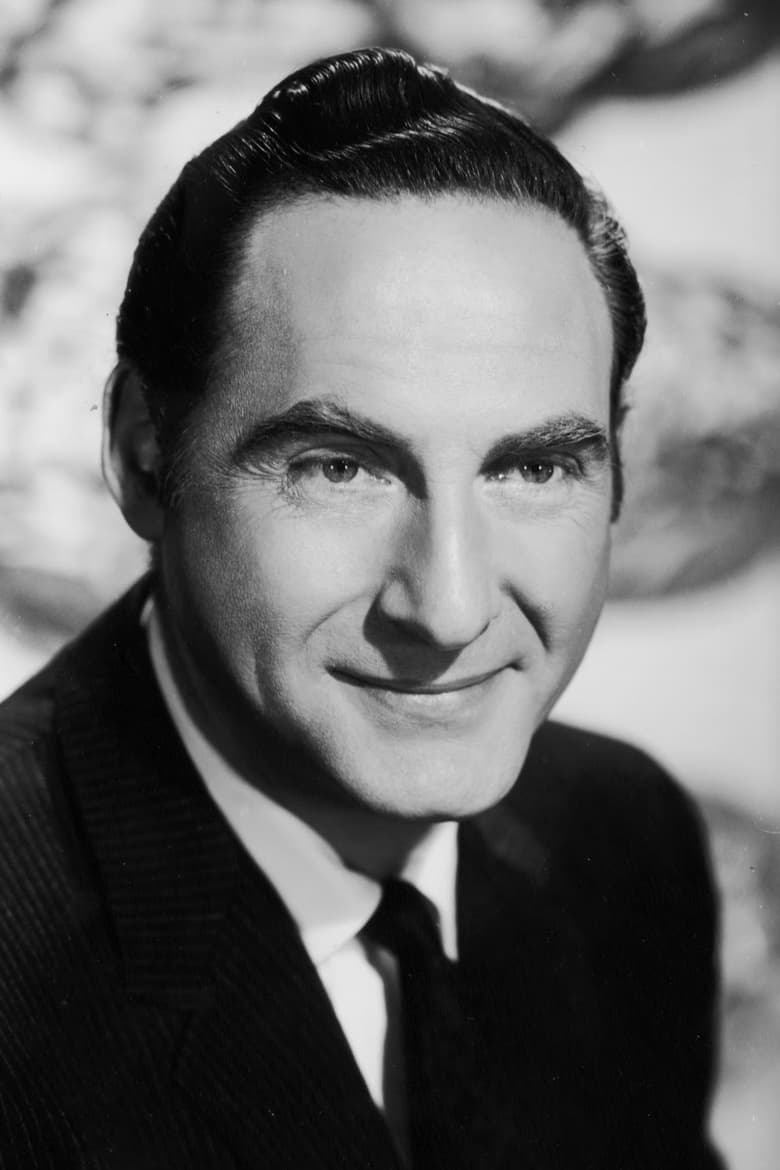
Sid Caesar
Sid Caesar (September 8, 1922 – February 12, 2014) was an American comic actor and writer, known as the leading man on the 1950s television series Your Show of Shows and as Coach Calhoun in Grease and Grease 2.
Main movies and TV shows
- Grease (1978) — Coach Calhoun
- History of the World: Part I (1981) — Chief Caveman
- Grease 2 (1982) — Coach Vince Calhoun
- Vegas Vacation (1997) — Mr. Ellis
- It's a Mad, Mad, Mad, Mad World (1963) — Melville Crump
- Cannonball Run II (1984) — Fisherman #2
- Silent Movie (1976) — Studio Chief
- Airport 1975 (1974) — Barney
- Mad About You (1992) — Uncle Harold
- Amazing Stories (1985) — Lou Bundles
- The Love Boat (1977) — Michael Harmon
- The Cheap Detective (1978) — Ezra Dezire
- The Lucy Show (1962) — Sid Caesar
- A Guide for the Married Man (1967) — Technical Adviser
- The Fiendish Plot of Dr. Fu Manchu (1980) — Joe Capone
- Alice in Wonderland (1985) — Gryphon
- That Girl (1966) — Marty Nickels
- The Munsters' Revenge (1981) — Dr. Dustin Diablo
- Matt Houston (1982)
- Comic Book: The Movie (2004) — Old Army Buddy
Facts
- Born: September 8, 1922
- Place of birth: Yonkers, United States
- Died: February 12, 2014, Beverly Hills, United States, aged 91
- Nationality: United States
- Birth name: Isaac Sidney Caesar
- Occupations: Actor, Writer, Musician, Producer
- Languages: English
Detailed biography
Early life
Isaac Sidney Caesar was born in Yonkers, New York, to a Jewish family. His father was born Max Ziser (1874–1946) and his mother was Ida (née Raffel; 1887–1975). They were probably from Dąbrowa Tarnowska, Poland. It is often claimed that the surname "Caesar" was given by an immigration official at Ellis Island, but there are no documented cases of names changed at Ellis Island.
Max and Ida ran a restaurant, a 24-hour luncheonette.
Being in this environment, their son absorbed the distinct accents, rhythms, and mannerisms of a diverse clientele. He later used these observations to pioneer his signature double-talk technique — a comedic style where he improvised convincing gibberish that perfectly mimicked the sound and feel of real foreign languages, which he used throughout his career. He first tried double-talk with a group of Italians, his head barely reaching above the table. They enjoyed it so much that they sent him over to a group of Poles to repeat his native-sounding patter in Polish, and so on with Russians, Hungarians, Frenchmen, Spaniards, Lithuanians, and Bulgarians. Sid Caesar's older brother, David, was his comic mentor and "one-man cheering section." They created their earliest family sketches from movies of the day like Test Pilot and the 1927 silent film Wings.
As a boy, Caesar took saxophone lessons and played in small bands to make money during the Great Depression. When he was 14, Caesar went to the Catskill Mountains as a tenor saxophonist in the Swingtime Six band and occasionally performed in sketches in the Borscht Belt.
Style and technique
Caesar was not a stand-up comedian but a "sketch comic, and actor," wrote one historian. "He conjured up ideas and enhanced scenes, but never wrote a word," and thereby depended on his writers for dialogue. Caesar was skilled at pantomime, dialects, monologs, foreign language double-talk and general comic acting.
His sketches were often long, sometimes 10 or 15 minutes, with numerous close-ups showing the expressions on the faces of Caesar and other actors. Caesar relied more on body language, accents, and facial contortions than simply spoken dialogue. Unlike slapstick comedy, which was standard on TV, his style was considered avant garde. Caesar "...was born with the ability to write physical poetry," notes comedian Steve Allen, a technique like that used for a silent film comedian. An example of this "silent film" style is a live sketch with Nanette Fabray, where they both pantomime an argument choreographed to the music of Beethoven's Fifth Symphony.
Writer Mel Tolkin stated that Caesar "didn't like one-line jokes in sketches because he felt that if the joke was a good one, anybody could do it. One-liners would take him away from what drove his personal approach to comedy." Larry Gelbart called Caesar's style theatrical, and called him "...a pure TV comedian." In describing his control during the live performances, actress Nanette Fabray recalled that unlike most comedians, such as Red Skelton, Bob Hope or Milton Berle, Caesar always stayed in character: "He was so totally into the scene he never lost it."
Caesar was able to pantomime a wide variety of things: a tire, a gumball machine, a lion, a dog, a punching bag, a telephone, an infant, an elevator, a railroad train, a herd of horses, a piano, a rattlesnake and a bottle of seltzer. On the Dick Clark show in 1978, he played a chewing gum machine and a slot machine. He was also able to create imaginary characters. Alfred Hitchcock compared him to Charlie Chaplin, and critic John Crosby felt "he could wrench laughter out of you with the violence of his great eyes and the sheer immensity of his parody." In an article in The Saturday Evening Post in 1953, show business biographer Maurice Zolotow noted that "Caesar relies upon grunts and grimaces to express a vast range of emotions."
Of his double-talk routines, Carl Reiner said, "His ability to doubletalk every language known to man was impeccable," and during one performance Caesar imitated four different languages but with almost no real words. Despite his apparent fluency in many languages, Caesar could actually speak only English and Yiddish. In 2008, Caesar told a USA Today reporter, "Every language has its own music... If you listen to a language for 15 minutes, you know the rhythm and song." Having developed this mimicry skill, he could create entire monologs using gibberish in numerous languages, as he did in a skit in which he played a German general.
Subjects
Among his primary subjects were parodies and spoofs of various film genres, including gangster films, westerns, newspaper dramas, spy movies and other TV shows. Compared to other comedy shows at the time, the dialogue on his shows was considered sharper, funnier and more adult oriented. In his sketches for Your Show of Shows and Caesar's Hour, he would also typically "skewer the minutiae of domestic life" along with lampooning popular or classic movies.
Contemporary movies, foreign movies, theater, television shows and opera were targets of satire by the writing team. Often the publicity generated by the sketches boosted the box office of the original productions. Some notable sketches included: "From Here to Obscurity" (From Here to Eternity), "Aggravation Boulevard" (Sunset Boulevard), "Hat Basterson" (Bat Masterson), and "No West for the Wicked" (Stagecoach).
They also performed some recurring sketches. "The Hickenloopers", television's first bickering-couple sketch, predated The Honeymooners. As "The Professor", Caesar was the daffy expert who bluffed his way through his interviews with earnest roving reporter Carl Reiner. In its various incarnations, "The Professor" could be Gut von Fraidykat (mountain-climbing expert), Ludwig von Spacebrain (space expert), or Ludwig von Henpecked (marriage expert). Later, "The Professor" was inspiration for Mel Brooks' "The Two Thousand Year Old Man". The most prominent recurring sketch on the show was "The Commuters", which featured Caesar, Reiner, and Morris involved with everyday working and suburban life situations. Years later, the sketch "Sneaking through the Sound Barrier", a parody of the British film The Sound Barrier, ran continuously as part of a display on supersonic flight at the National Air and Space Museum in Washington, D.C.
Working with writers
Steve Allen claimed, "Sid's was the show to which all comedy writers aspired. It was the place to be." While Caesar did not write his dialogue, he made all final decisions. His writers, such as Mel Brooks, felt they "had a great instrument in Caesar that we could all play, and we played it very well." As for Caesar, Nachman describes him basically as an "inspired idea man who allowed the writers to take more risks" than other TV shows. Woody Allen remembers that "...you wrote situations," instead of jokes, as in "This Is Your Story" with Carl Reiner, a parody of the popular TV show This Is Your Life. That April 1954 sketch was said to be "Caesar's personal favorite." Even more, though it aired seventy-two years ago, it's claimed to have "produced what is probably the longest and loudest burst of laughter—genuine laughter, neither piped in nor prompted—in the history of television."
In many cases, sketch dialogue was not even written down, but simply indicated by describing a scene, as in, "Sid does man coming home from business mad." Sometimes, said Larry Gelbart, it was "organized chaos," and when watching the writers create from offstage, felt, "...it was a religious experience." To Mel Brooks, "it was a zoo. Everyone pitched lines at Sid. Jokes would be changed fifty times." Naturally there were some explosive episodes: "Mr. Caesar once dangled a terrified Mr. Brooks from an 18th-story window until colleagues restrained him. With one punch, he knocked out a horse that had thrown his wife off its back, a scene that Mr. Brooks replayed in his movie Blazing Saddles."
Neil Simon recalled that after writing out a sketch and giving it to Caesar, "Sid would make it ten times funnier than what we wrote. Sid acted everything out, so the sketches we did were like little plays." Simon also remembered the impact that working for Caesar had on him: "The first time I saw Caesar it was like seeing a new country. All other comics were basically doing situations with farcical characters. Caesar was doing life."
Some of his writers, like Woody Allen, initially didn't like being among the large team of writers coming up with routines for Caesar, feeling it was too competitive and contributed to hostility among writers. An Allen biographer wrote that Allen "...chafed under the atmosphere of inspired spontaneity", although Allen did say that, "Writing for Caesar was the highest thing you could aspire to—at least as a TV comedy writer. Only the presidency was above that." Neil Simon noted that "we were competitive the way a family is competitive to get dad's attention. We all wanted to be Sid's favorite." As part of the competitive atmosphere in The Writer's Room, as it was called, friendship was also critical. Larry Gelbart explained:
We were able to be urbane. Between us we read every book. Between us we saw every movie. Between us we saw every play on Broadway. You could make jokes about Kafka or Tennessee Williams. We also had dinner together. We went to movies together. We were all friends. And that was very important. We appreciated each other a lot.
Impact on television
Nachman concludes that "the Caesar shows were the crème de la crème of fifties television," as they were "studded with satire, and their sketches sharper, edgier, more sophisticated than the other variety shows." Likewise, historian Susan Murray notes that Caesar was "...best known as one of the most intelligent and provocative innovators of television comedy."
According to actress Nanette Fabray, who acted alongside Caesar, "He was the first original TV comedy creation." His early shows were the "...gold standard for TV sketch comedy." In 1951, Newsweek noted that according to "the opinion of lots of smart people, Caesar is the best that TV has to offer," while Zolotow, in his 1953 profile for The Saturday Evening Post, wrote that "in temperament, physique, and technique of operation, Caesar represents a new species of comedian."
However, his positive impact on television became a negative one for Broadway. Caesar fans preferred to stay home on Saturday nights to watch his show instead of seeing live plays. "The Caesar show became such a Saturday-night must-see habit—the Saturday Night Live of its day," states Nachman, that "...Broadway producers begged NBC to switch the show to midweek." Comedy star Carol Burnett, who later had her own hit TV show, remembers winning tickets to see My Fair Lady on Broadway: "I gave the tickets to my roommate because I said, Fair Lady's gonna be running for a hundred years, but Sid Caesar is live and I'll never see that again."
Faded success and personal problems
After nearly 10 years as a prime-time star of television comedy with Your Show of Shows followed by Caesar's Hour, his stardom ended rapidly and he nearly disappeared from the spotlight. Nachman describes this period:
Caesar slid into a personal and career abyss... [he] had no interest in movies... He would live and die by the tube. His career was short-circuited by alcohol and pills... The pressures of sudden stardom, of headlining and co-producing a weekly hit show, crushed him.
Caesar himself felt, "It had all come too fast, was too easy, and he didn't deserve the acclaim." Writer Mel Brooks, who also became his close friend, said, "I know of no other comedian, including Chaplin, who could have done nearly ten years of live television. Nobody's talent was ever more used up than Sid's. He was one of the greatest artists ever born. But over a period of years, television ground him into sausages."
In 1977, after blacking out during a stage performance of Neil Simon's The Last of the Red Hot Lovers in Regina, Saskatchewan, Caesar gave up alcohol "cold turkey". In his 1982 autobiography, Where Have I Been?, and his second book, Caesar's Hours, he chronicled his struggle to overcome his alcoholism and addiction to sleeping pills.
Later years
Throughout the 1970s and 1980s, Caesar continued to make occasional television and theatrical appearances and starred in several movies including Silent Movie and History of the World, Part I (both reuniting him with Mel Brooks), Airport 1975, and as Coach Calhoun in Grease and its sequel Grease 2 in 1982. In 1971, he starred opposite Carol Channing and a young Tommy Lee Jones in the Broadway show Four on a Garden.
In 1973, Caesar reunited with Imogene Coca for the stage play The Prisoner of Second Avenue, written in 1971 by Neil Simon. Their play opened in Chicago in August 1973. That same year, Caesar and Max Liebman mined their own personal kinescopes from Your Show of Shows (NBC had lost the studio copies) and they produced the feature film Ten From Your Show of Shows, a compilation of some of their best sketches. In 1974, Caesar said, "I'd like to be back every week" on TV and appeared in the NBC skit-based comedy television pilot called Hamburgers.
In 1980, he appeared as a double-talking Japanese father for Mei and Kei's Pink Lady and opposite Jeff Altman in the Pink Lady and Jeff show.
In 1983, Caesar hosted an episode of Saturday Night Live, where he received a standing ovation at the start of the show and was awarded a plaque at the conclusion of the show declaring him an honorary cast member. He released an exercise video, Sid Caesar's Shape Up!, in 1985. In 1987–89, Caesar appeared as Frosch the Jailer in Die Fledermaus at the Metropolitan Opera in New York. In 1987, Caesar starred in the David Irving film The Emperor's New Clothes with Robert Morse as the Tailor. Caesar remained active by appearing in movies, television and award shows, including the movie The Great Mom Swap in 1995.
In 1996, the Writers Guild of America, West reunited Caesar with nine of his writers from Your Show of Shows and Caesar's Hour for a two-hour panel discussion featuring head writer Mel Tolkin, Caesar, Carl Reiner, Aaron Ruben, Larry Gelbart, Mel Brooks, Neil Simon, Danny Simon, Sheldon Keller, and Gary Belkin. The event was taped, broadcast on PBS in the United States and the BBC in the UK, and later released as a DVD titled Caesar's Writers.
In 1997, he made a guest appearance in Vegas Vacation and, the following year, in The Wonderful Ice Cream Suit based on a Ray Bradbury novel. Also that year, Caesar joined fellow television icons Bob Hope and Milton Berle at the 50th anniversary of the Primetime Emmy Awards. Billy Crystal also paid tribute to Caesar that night when he won an Emmy for hosting that year's Oscar telecast, recalling seeing Caesar doing a parody of Yul Brynner in The King & I on Your Show of Shows. Caesar performed his double-talk in a "foreign dub" skit on the November 21, 2001, episode of Whose Line Is It Anyway?
On September 7, 2001, Caesar, Carl Reiner and Nanette Fabray appeared on CNN's live interview program Larry King Live along with actor, comedian and improvisationist Drew Carey.
In 2003, he joined Edie Adams and Marvin Kaplan at a 40th anniversary celebration for It's a Mad, Mad, Mad, Mad World. In 2004, Caesar's second autobiography, Caesar's Hours, was published, and in 2006, Billy Crystal presented Caesar with the TV Land Awards' Pioneer Award. In what TV Land called "...a hilarious, heartfelt, multilingual, uncut acceptance speech," Caesar performed his double-talk for over five minutes.
In a November 2009 article in the Toluca Lake, California, Tolucan Times, columnist Greg Crosby described a visit with Caesar and his wife Florence at their home. Of the couple's meeting, Florence said, "Well, I thought he was nice for the summer... I thought he would be just a nice boyfriend for the summer. He was cute-looking and tall, over six feet.... I was in my last year at Hunter College; we were still dating when Sid went into the service, the Coast Guard. Luckily he was stationed in New York so we were able to continue seeing each other, even though my parents weren't too happy about it. They never thought he would amount to anything, that he'd never have a real career or make any money. But we were married one year after we met, in July of 1943." She also pointed out, "You know, he's not funny all the time. He can be very serious." At the time of the interview, the couple had been married for 66 years. Florence Caesar died on March 3, 2010, aged 88.
Death
Caesar died on February 12, 2014, at his home in Beverly Hills, California, at the age of 91, after a short illness.
On Caesar's death, Carl Reiner said, "He was the ultimate, he was the very best sketch artist and comedian that ever existed." Mel Brooks commented, "Sid Caesar was a giant, maybe the best comedian who ever practiced the trade. And I was privileged to be one of his writers and one of his friends." And as Brooks very often said: "No Sid Caesar, no Mel Brooks." Woody Allen stated, "He was one of the truly great comedians of my time". Jon Stewart and The Daily Show paid tribute to Caesar at the show's close on February 12, 2014. Vanity Fair republished a brief tribute written by Billy Crystal in August 2005, in which he said of Caesar and his contemporaries:
I get nervous when I am with these giants. I always feel like I want to say, Thank you. I am blessed to have grown up in their time of perfection, to have witnessed the utter force of Sid. Live, uncut, daring but not risqué. Never stooping beneath themselves, Sid and this team of icons put forth a raucous, hilarious, and truthful brand of comedy that, 50 years later, is still funny and inspiring, and makes me think... What kind of comedy would I be doing if I hadn't seen Sid Caesar? Would I be a comedian at all?
Yet, Mel Brooks, a major source in David Margolick's 2025 biography, while highly praising it, also sadly warned in its epigraph, "People are going to say...'Just one question...Who's Sid Caesar?' You're going to get that. 'Who was Sid Caesar.'"
His interment was at Mount Sinai Memorial Park Cemetery. He was predeceased by his wife, Florence (2010) and survived by his children Karen, Michelle, and Rick, and two grandsons. His son, Dr. Richard (Rick) Caesar died several months after his father on July 16, 2014.
Personal life
Caesar was married to Florence Levy for 67 years until her death in 2010.
Caesar asserted that he was "proud to be Jewish" and that "Jews have a good sense of humor. Jews appreciate humor because in their life it's not too funny. We've been trodden down for a long time, thousands of years. So we've had to turn that around because if you take it all too seriously you're going to eat yourself. And we're very good at being self-deprecating. Either we do it or somebody's going to do it for us. We might as well do it first."
Source: Wikipedia — Text licensed under CC BY-SA 4.0