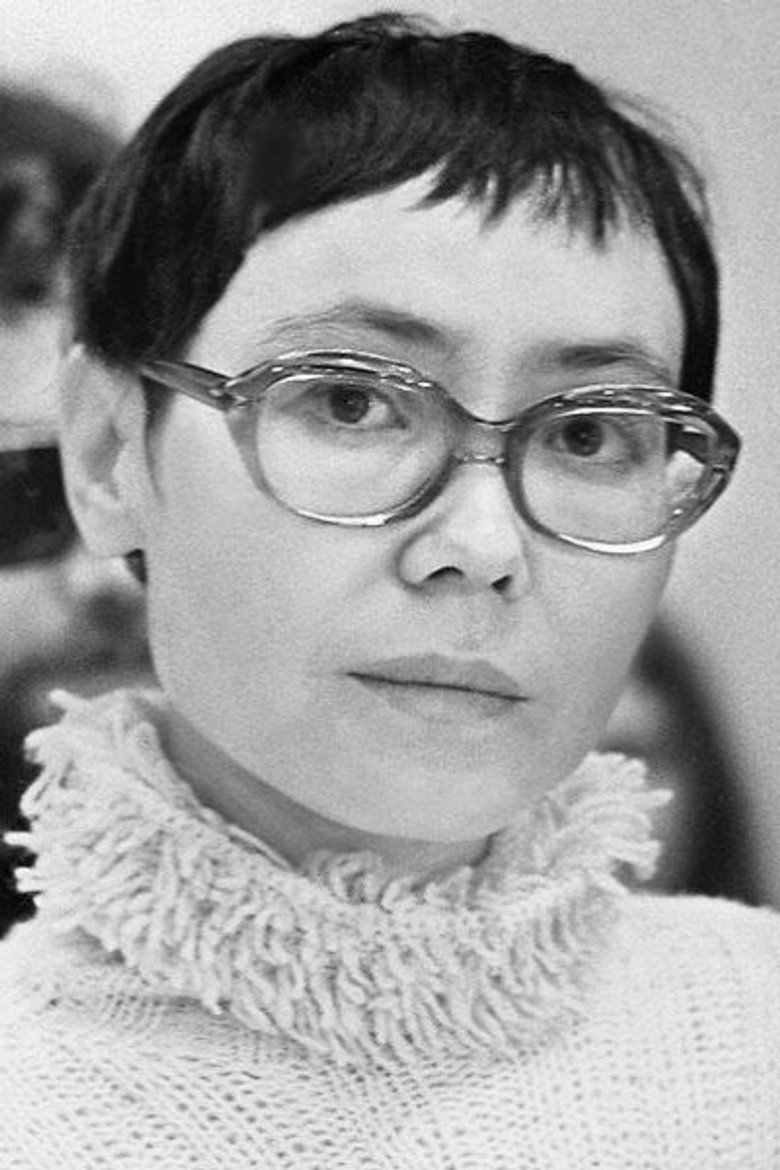
Dinara Asanova
Dinara Asanova was a Kyrgyzstani-Soviet film director and one of the few notable and acclaimed female filmmakers of the late Soviet Union. She is best known for her films Woodpeckers Don't Get Headaches (1975) and Tough Kids or Boys (1983). Asanova’s movies were known for their perceptive treatment of contemporary issues and social problems, such as generational gaps and adolescent life during the time in which she was active. She often chose to include both professional actors and non-actors in order to facilitate a more realistic feeling in the interactions and films in general. She remains largely unknown in Western countries but had great success in the Soviet Union.
Main movies and TV shows
- Tough Kids (1983) — Director
- The Key That Should Not Be Handed On (1977) — Director
- Woodpeckers Don't Get Headaches (1975) — Director
- The Useless Girl (1982) — Director
- The Wife Has Left (1980) — Director
- Trouble (1978) — Director
- Dear, Dearest, Beloved, Unique... (1985) — Director
- Rudolfio (1970) — Director, Writer
- What Would You Choose? (1981) — Director
- Stranger (1985) — Director
- Children of Strife (1984) — Director, Writer
Facts
- Born: October 24, 1942
- Place of birth: Bishkek, Kyrgyzstan
- Died: April 4, 1985, Murmansk, Russia, aged 42
- Nationality: Soviet Union
- Occupations: Director, Actress, Screenwriter
- Languages: Russian
- Education: Gerasimov Institute of Cinematography
Detailed biography
Career
Dinara Asanova was born in Bishkek (formally Frunze), Kyrgyzstan, on 24 October 1942. After graduating high school in 1959, Asanova began her film career as an assistant director, cutter and actress at the Kyrgyzfilm studio from 1960-1962. During her time at the studio, she worked with Larisa Shepitko on her 1963 film Heat (Znoi). Asanova then began studying at the Gerasimov Institute of Cinematography or VGIK, a Soviet state film school in Moscow. She studied alongside Mikhail Romm and Aleksandr Stolper, two other famous Soviet directors. For Asanova’s graduation project, she made her first film Rudolfio (1970) Asanova graduated from the university in 1969 and later moved to Leningrad in 1974 to begin working at the Lenfilm Studio. At the studio, Asanova made her first feature film The Woodpecker Doesn’t Get Headaches (1975) which helped establish her position in Soviet Cinema. Asanova would go on to make 8 other films with the studio. Boys (1983) was her most famous work and biggest box office hit - for the film she received the USSR State Film Prize. She died on 4 April 1985 in Murmansk, Soviet Union, from a heart ailment at the age of 42.
Narrative
Dinara Asanova’s films often depict people’s and youths’ struggles in everyday life. Her most notable films such as Rudolfio, The Woodpecker Doesn’t Get Headaches and Tough Kids deal with troubled adolescence and the difficult shift from childhood to adulthood. They also focus on personal issues, the difficulties of Soviet life and questions related to the human predicament. Asanova is considered a member of the “Leningrad School” of filmmakers. This was a group of filmmakers known for their similar film form. The other key members were Vitaly Melnikov, Alexei German, Gleb Panfilov and Ilya Averbahk. Their films were characterized as realistic, ambiguous and incorporated critiques on everyday and Soviet society.
Style
Dinara Asanova’s film style can be described as realistic, documentary style and an unadorned portrayal of the world. She incorporated realism within her work to contribute to her films’ narratives which often focused on the individual and a realistic portrayal of common life. Asanova is known for incorporating improvisation in her films in the form of dialogue and plot to add to her films’ gritty and realistic feel. Also, Asanova mixed both known and unknown actors in her films. The young actors were often unknown and featured for the first time.
Khrushchev's thaw on Asanova’s film form
The form of Dinara Asanova’s films and the films of the other directors within the “Leningrad School” represent the changing views and use of the arts during the years of the Soviet Union known as Khrushchev’s Thaw. The Thaw took place during Khrushchev’s presidential term in the 50s and 60s. It was a period of change from Stalin’s cultural politics and strict censorship to allowing writers, artists and filmmakers to criticize Soviet social problems and focus on individual experiences rather than only the collective. The effects of the Thaw continued during the later part of the Soviet Union era after Khrushchev's term ended. Asanova is a prominent filmmaker that represents the artists during this period. She was often outspoken on her critiques of Soviet society, particularly on issues of sexuality, gender and everyday Soviet life. These critiques can be found in all her films and are often depicted through her young and teenage characters. Although censorship was not as stringent during and after the period of the Thaw, Asanova was strategic at depicting these critiques in her films as to avoid them from being shelved.
Legacy
Dinara Asanova remains as a significant female filmmaker from the late Soviet Union. Despite her early death at age 42, she created several films that contributed to shaping late Soviet Cinema. She was rewarded with the USSR State Prize for her work on Tough Kids and was named Merited Artist of The Russian Federation in 1980, Bishkek, Kyrgyzstan. Asanova's film Dear, Dearest, Beloved, Unique... was screened in the Un Certain Regard section at the 1985 Cannes Film Festival. Three documentaries were made about her after she died, the first being I Love You All Very Much (1987), the second being Dinara (1988) and the third being Dinara Asanova (2003).
Source: Wikipedia — Text licensed under CC BY-SA 4.0