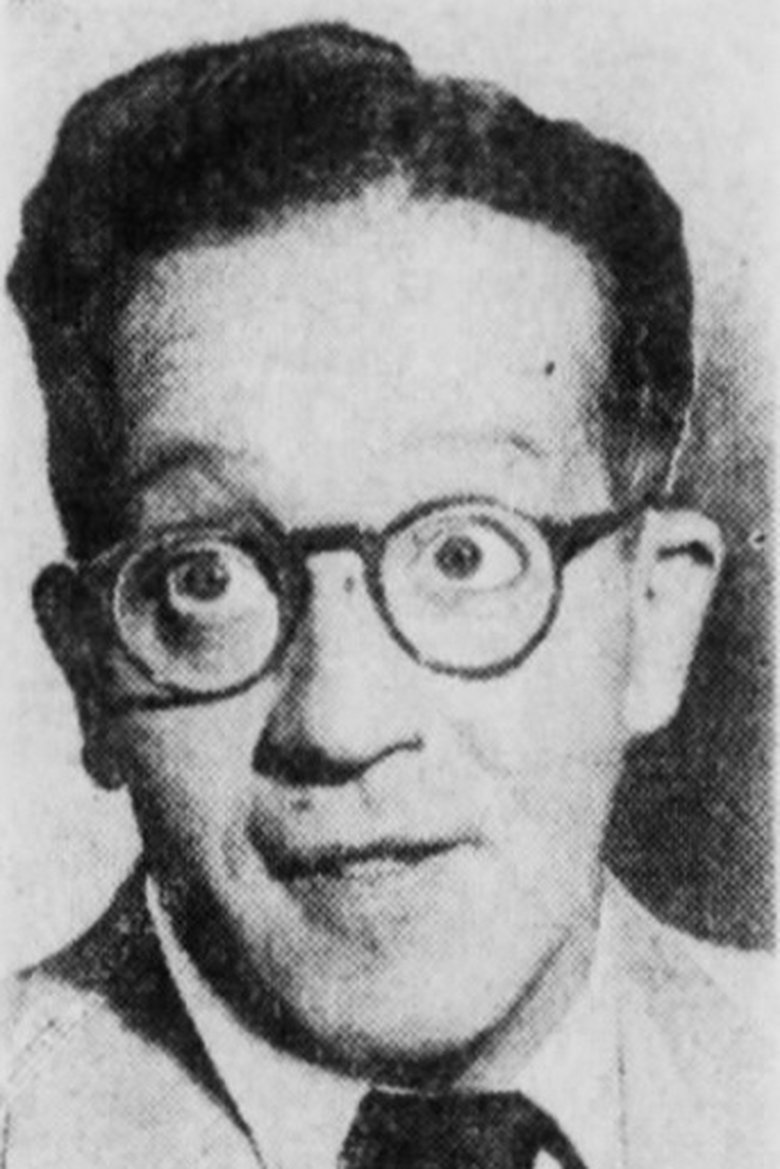
Danny Webb
Danny Web was an American voice and film actor, active in Hollywood from 1935-1951. The son of a Hungarian-born furrier, by the time he arrived in Hollywood in 1935, he was already a seasoned radio comedian. A series of clever celebrity impersonations on the 'Burns & Allen' show led to gigs as a celebrity impersonator in Charles Mintz's Screen Gems cartoons. The short, bespectacled comic simultaneously worked at Columbia, Metro and, most importantly, for Warner Brothers. He worked in the US Army Signal Corps during WWII, and after returned to radio and local television.
Main movies and TV shows
- Tugboat Mickey (1940) — Goofy (voice) (uncredited)
- Goofy and Wilbur (1939) — Goofy (voice)
- Coal Black and de Sebben Dwarfs (1943) — Queen (voice) (uncredited)
- Woody Woodpecker (1941) — Owl (voice)
- Mother Goose Goes Hollywood (1938) — Fats Waller / Stepin Fetchit (voice) (uncredited)
- Baggage Buster (1941) — Goofy (voice) (uncredited)
- The CooCoo Nut Grove (1936) — Mouse (voice) (uncredited)
- Pantry Panic (1941) — Woody Woodpecker / Korny Kat / Moose (voice) (uncredited)
- Daffy Duck & Egghead (1938) — Egghead (voice) (uncredited)
- Porky in Egypt (1938) — Humpty Bumpty / Various
- Clean Pastures (1937) — Various (voice)
- Murder Most Horrid (1991) — Tony Smedley
- Boogie Woogie Bugle Boy of Company "B" (1941) — Drill Sergeant (voice) (uncredited)
- Porky's Last Stand (1940) — Customer (voice) (uncredited)
- The Lone Stranger and Porky (1939) — Indian in Mirror (voice)
- Plenty of Money and You (1937) — Weasel (voice) (uncredited)
- September in the Rain (1937) — Various (voice) (uncredited)
- Believe It or Else (1939) — Egghead (voice) (uncredited)
- Chicken Jitters (1939) — Fox (voice)
- Life Begins for Andy Panda (1939) — Papa Panda/Mr. Whippletree/Snuffy Skunk/Walter Finchell/Pygmies (voice) (uncredited)
Facts
- Born: May 24, 1906
- Place of birth: New York City, United States
- Died: September 16, 1983, Far Rockaway, United States, aged 77
- Nationality: United States
- Occupations: Actor, Voice actor, Military personnel
- Languages: English
Detailed biography
Early life
Webb was born David Weberman on May 24, 1906, in New York City to Herman Weberman, a Hungarian Jewish furrier, and Lena (née Rubin) Weberman. Herman left Budapest and moved to the United States in 1887. He worked as a salesman.
Voice actor
The young comedian arrived in Hollywood in 1935, using the professional name Dave Weber. He did celebrity impersonations on the Burns & Allen anniversary show along with doing voice work for a Screen Gems cartoon called Sing Time, where he impersonated Bing Crosby, Rudy Vallee, Eddie Cantor, Andy Devine, and others. He started working for Warner Bros. Cartoons in the mid-1930s and his first cartoon was The Coo-Coo Nut Grove. He also voiced Egghead in Daffy Duck & Egghead, Elmer Fudd in Cinderella Meets Fella (1938) and in Believe It or Else (1939). Weber also did voices for the 1939 Merrie Melodies short A Day at the Zoo.
Weber voiced the Disney character Goofy for four years, after Goofy's traditional voice Pinto Colvig had a falling out with Walt Disney and left the studio temporarily.
Actor in Hollywood films
Dave Weber's comedic versatility was noticed by Columbia Pictures. In September 1938 Columbia signed him to star in 12 two-reel comedies. Columbia changed his professional name from Dave Weber to Danny Webb, and his first film was to be Behind the Eight Ball. The film was released as A Star Is Shorn (1939), directed by Mack Sennett veteran Del Lord, with Webb as a hot-shot talent agent. Webb's screen personality resembled that of 1950s star Bobby Van. Columnist Erskine Johnson reported, "When Jules White, the producer of the comedy shorts, saw Danny Webb on the screen for the first time, he said: 'That Danny Webb is terrific -- we'll ballyhoo him as another Eddie Buzzell.'" (Buzzell had appeared in Columbia shorts in the early 1930s before becoming a director.)
Danny Webb's short-subject series was abruptly called off, however, after the one film. Webb was transferred to Columbia's Community Sing series -- also directed by Del Lord that season -- where Webb made comic remarks between vocals by the King Sisters. While at Columbia he was scheduled to work with action star Jack Holt in Wreckage, (released as Flight into Nowhere), but Webb does not appear in the finished film.
Webb left Columbia for industrial-film producer Wilding Pictures, where he worked on promotional films for Chrysler automobiles, and then joined Warner Bros. as an actor.
Return to voice work
Webb returned to Columbia to provide voices for its animated cartoons, and continued to work behind the scenes in Hollywood, offering his trick voices in feature films like Universal's Sing Another Chorus and Hellzapoppin' (both 1941). Also in 1941, after Mel Blanc signed a contract with Leon Schlesinger in which he exclusively did voice work for Warner Bros., Webb became the first person to succeed Blanc as the voice of Woody Woodpecker for Walter Lantz Productions. He only partially voiced the character in Pantry Panic, which also contained a few spoken lines Blanc had recorded prior to leaving the Lantz studio, before Webb enlisted in the army and was succeeded by Kent Rogers (sources claiming that Ben Hardaway was the first person to succeed Blanc as Woody's voice are incorrect, as Hardaway would not voice the character until The Barber of Seville in 1944).
Webb enlisted in the U.S. Army Signal Corps, worked his way up to staff sergeant, and entertained troops in North Africa. Dwight D. Eisenhower was sufficiently impressed by his technique to call him a "Comedy Commando", a tag which stuck for several years after World War II had ended. Webb later returned to radio, became the voice of Sad Sack, and hosted the quiz show "Guess Who" starting May 11, 1945, replacing Peter Donald.
Death
Danny Webb died on September 16, 1983, according to The New York Times; he was 77. He died of Parkinson's disease.
Source: Wikipedia — Text licensed under CC BY-SA 4.0